

The beauty of Vietnam's orchids
Orchids (family Orchidaceae) are often called the queens of beauty for their elegant form, vivid colors and rich fragrance.
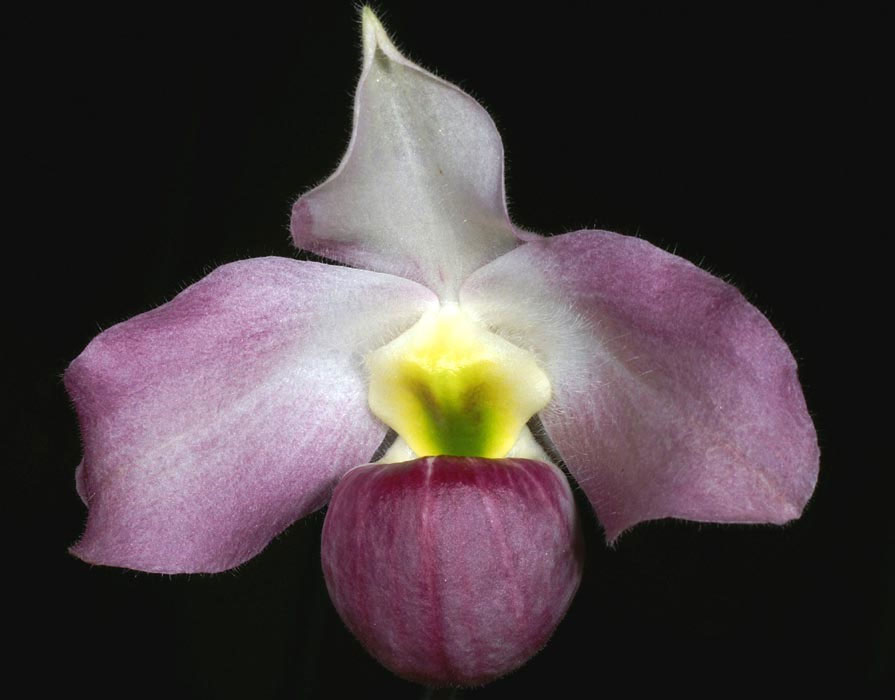
The Vietnamese slipper orchid, Paphiopedilum vietnamense. This species was discovered in Vietnam's northwestern border region next to China, together with Paphiopedilum emersonii, but it was not until 1999 that this orchid, endemic to Vietnam, was named and published by O. Gruss and H. Perner. The flower has very large petals, 8–10 cm, pink in color; the lip is deep purple at the front, fading toward the back, with incurved margins, and its inner surface bears many deep purple spots and a dense band of white hairs in the middle, just below the base of the column.
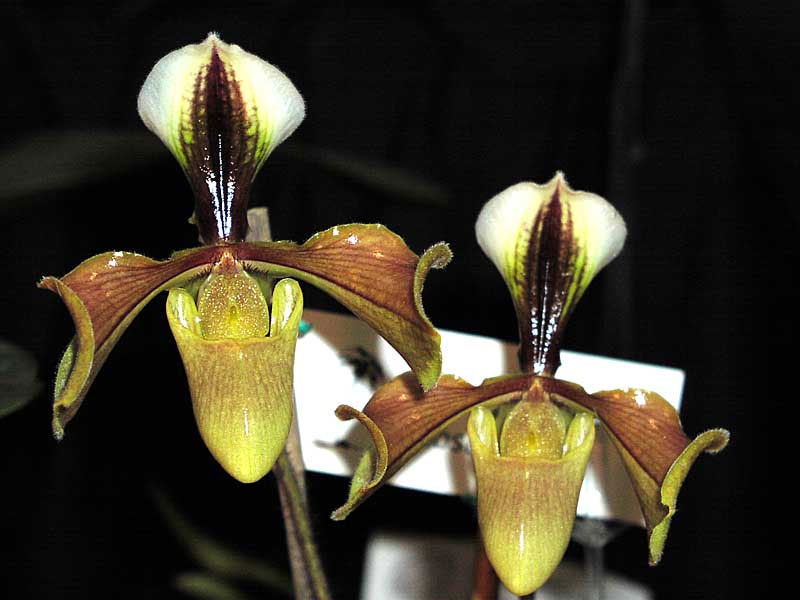
The yellow slipper orchid, Paphiopedilum villosum. It is considered the most common and easiest-to-grow species in Vietnam, with a green dorsal sepal marked by longitudinal veins and a white margin that curls slightly backward. The petals droop slightly and curve forward, with wavy margins and a broad reddish-brown stripe down the middle. The pouch-shaped lip is yellowish green tinged with brown, with yellowish-brown margins and side lobes curled inward.
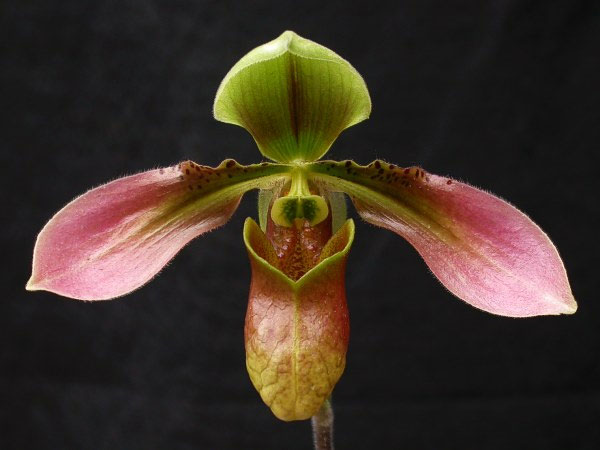
The curled-sepal slipper orchid, Paphiopedilum appletonianum. It grows very sparsely beneath the canopy of evergreen tropical rainforest at an altitude of about 1,500 m. The plant is fairly drought-tolerant. The species has a very limited distribution, with very few individuals in Lâm Đồng province in Vietnam's Central Highlands, around the city of Đà Lạt. It may be threatened with extinction as its forest habitat shrinks. The flowers are large, brown mixed with pale green. The oval dorsal sepal curves backward and rolls up; it is dark green with pinkish-red spots at the base, pale green margins and a white tip. The lip is purple flushed with yellow and green, with yellow margins.
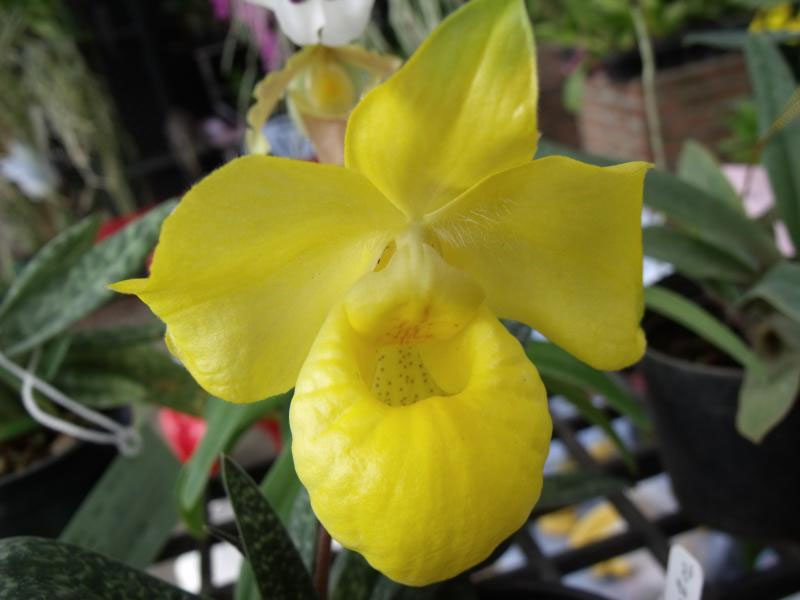
The golden slipper orchid, Paphiopedilum armeniacum. This brilliant yellow slipper orchid has an ovate to elliptic dorsal sepal, 2.2–2.8 cm long and 1.4–2.2 cm wide, slightly pointed, with margins curving inward in the upper part. The lateral sepals are fused and smaller than the dorsal sepal, with two keels on the back and just one rounded tooth at the tip; the inner surface is smooth. The species is thought to be completely extinct in Vietnam because local people overharvested it for sale in the limestone mountains along the border. Some scientists argue that the species does not occur in Vietnam, but in fact many documents have shown it to be a Vietnamese orchid. All Paphiopedilum species are protected under Vietnamese law and listed in CITES Appendix I; collecting or trading wild plants is illegal and can lead to criminal prosecution.
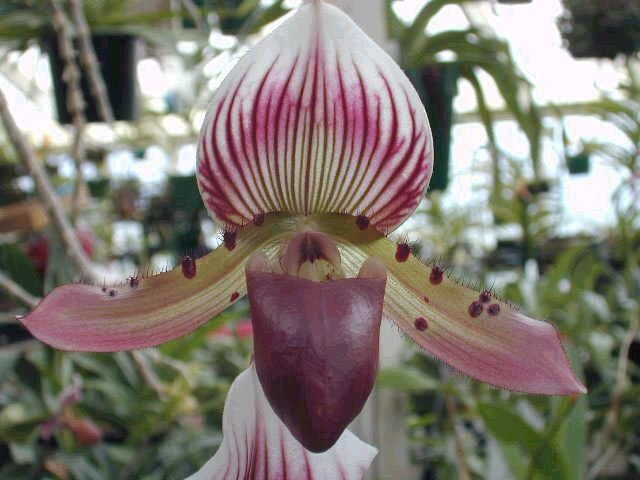
The veined slipper orchid, Paphiopedilum callosum. It is recognized as having a very wide range: Quảng Trị province, the city of Huế and the city of Đà Nẵng (including the former Quảng Nam province) in central Vietnam, Lâm Đồng and Gia Lai in the Central Highlands, and even the low-lying island of Phú Quốc in the south. The orchid usually blooms in spring and early summer, with tall, hairy, reddish-brown flower stalks. The nearly round dorsal sepal is slightly folded, with wavy margins; it is white tinged with pink, green at the base, with red veins at the tip. The lip is reddish brown, pale green at the base, with both side lobes curled inward and many deep red spots, features that have enchanted orchid lovers in Vietnam.
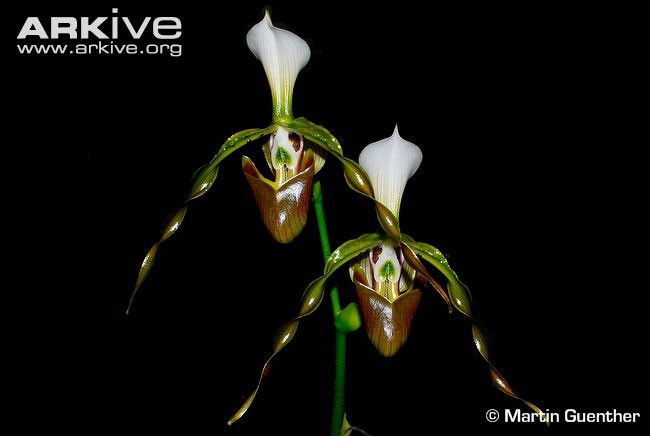
The bearded slipper orchid, Paphiopedilum dianthum. It is hard to confuse this species with other orchids in Vietnam, because its lateral sepals are fused into a boat shape. Its two long petals are twisted and drooping, brownish green, and 10–12 cm long. The pouch-shaped lip is 5 cm long, greenish brownish yellow, with incurved margins. In Vietnam, Paphiopedilum dianthum is found in the northern provinces of Cao Bằng, Lai Châu, the former Hà Giang province (now part of Tuyên Quang), Lào Cai and Sơn La, and it also grows in China, Myanmar and Thailand.
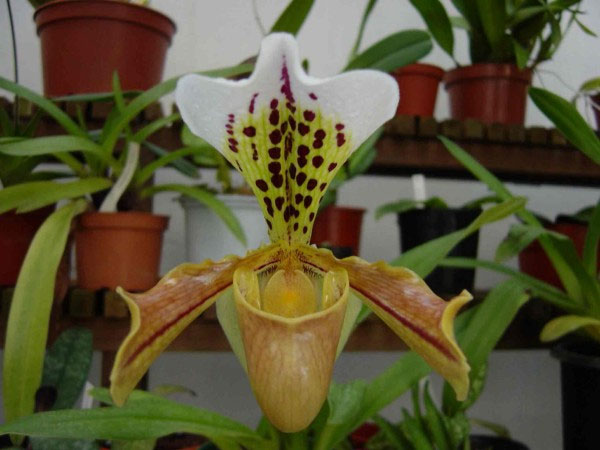
The spotted slipper orchid, Paphiopedilum gratrixianum. The towering peaks of the Tam Đảo range in the former Vĩnh Phúc province (now part of Phú Thọ), northern Vietnam, are home to this species. Its oval dorsal sepal is narrow at the base, with wavy margins; it is green at the base, white at the edge and has a large red spot in the middle. The petals spread wide like a peacock's dazzling tail, with wavy, pale brownish-green margins. The lip is pouch-shaped, dark brownish green, with two erect side lobes. Because of its splendid beauty, orchid collectors in Vietnam affectionately call it "Hài đuôi công" (the peacock-tail slipper).
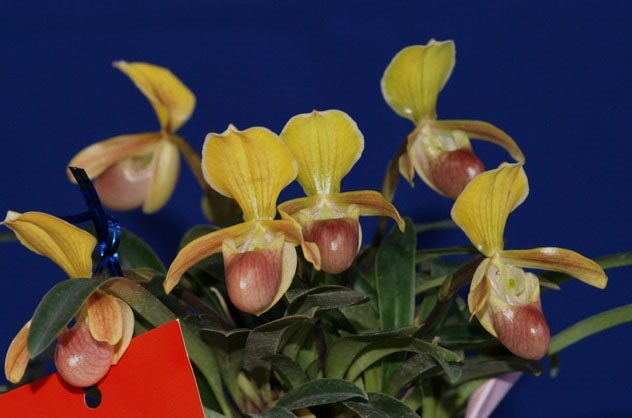
Helen's slipper orchid, Paphiopedilum helenae. This may be the smallest slipper orchid found in Vietnam, and botanist Averyanov's love story says it all about this endemic orchid: "One afternoon, after my colleagues and I had spent the whole day climbing many steep mountains, everyone was thinking of heading back. But the hill in front of us looked so inviting, and the vegetation was so ideal, that I had a feeling orchids grew there. Everyone was too exhausted to go on, so I climbed up alone. Near the top of the hill, I saw a cluster of brilliant yellow flowers close to the edge of a rock. It was truly special, because the flower was so large compared with the plant. I hurriedly took a few photos, dug up a few shoots and rushed back down the hill. Because my wife, Helen Averyanova, also has golden hair and a petite figure like this orchid, I named it after her."
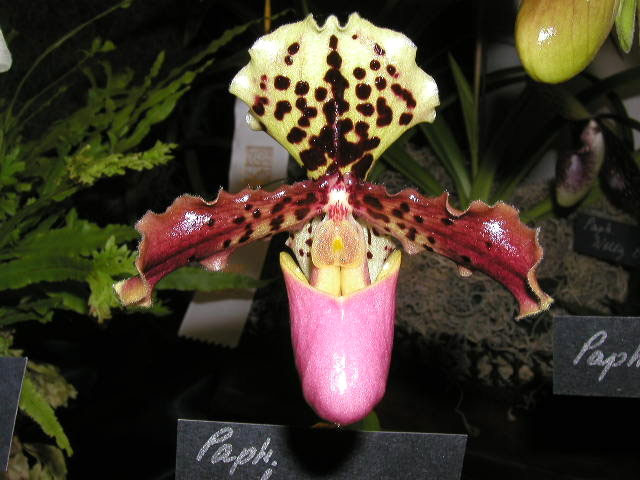
Henry's slipper orchid, Paphiopedilum henryanum. For a long time there were many doubts about whether this slipper orchid occurs in Vietnam, because almost all photographs had been taken in cultivated orchid collections around the world, and almost no scientist had seen it flowering in the wild in Vietnam. In spring 2001, Leonid Averyanov and D. Harder found the plant in the Phong Quang Nature Reserve in the former Hà Giang province (now part of Tuyên Quang). With its green sepal and deep purple spots on the inner surface, Henry's slipper orchid is one of the most beautiful works that nature has bestowed on us.
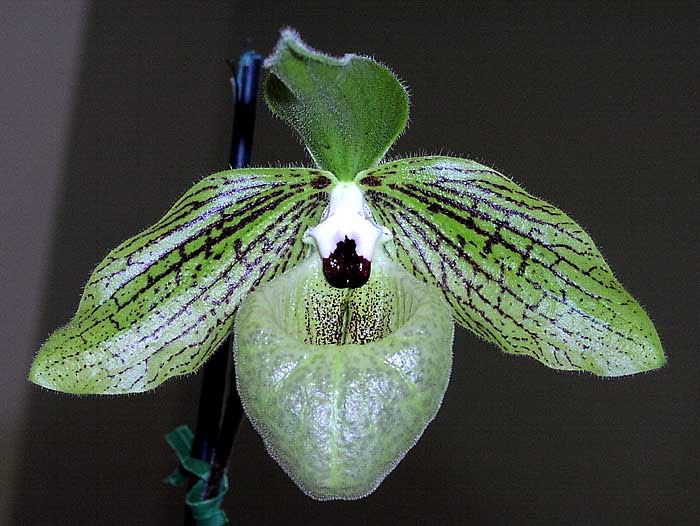
The Malipo slipper orchid, Paphiopedilum malipoense. This unusual slipper orchid typically blooms from March to April each year. It was first described by Chen and Tsi in 1984 based on a dried museum specimen. Chen and Tsi believed it had been collected in southern Yunnan, China. The specimen collected by K. M. Feng on November 11, 1947, now kept in Beijing, came from Malipo County in China. Averyanov found them in Vietnam, near the village of Can Ty in the former Hà Giang province (now part of Tuyên Quang), and southeast of the Mai Châu area in the former Hòa Bình province (now part of Phú Thọ), northern Vietnam.
