Decoding Vietnam's “ma đưa” ghost-led phenomenon and how to survive when lost in the forest
In Vietnam, folklore is full of eerie tales about the phenomenon known as “ma đưa” (being “led by ghosts”), often laced with mystical and supernatural details. Vietnamese people commonly use the idea of “ma đưa” to explain cases of people getting lost in the forest and behaving strangely: wandering in circles unable to find the way home; being “hidden” in dense, thorny thickets; eating unusual things; or showing odd psychological symptoms after being lost in the woods…
What is the “ma đưa” phenomenon?
- The “ma đưa” phenomenon and its causes
- Safety skills for when you are lost in the forest
- Prepare gear, a communication plan and a rescue plan before heading into the forest
- When moving through the forest, memorize the terrain and mark your route
- Conserve your strength and stay in control of your mind
- Locating yourself and finding direction
- Sheltering safely at night
- Finding food and water
- Moving and signaling
So why does the “ma đưa” phenomenon arise? And what should you do to get out safely if you are lost in the forest?
The “ma đưa” phenomenon and its causes
When people with forest survival skills get lost, they calmly deal with the situation and soon find their way back. However, for those who lack such skills and are not mentally resilient, getting lost often throws them into a state of panic, which directly affects their health, perception and behavior, giving rise to the “ma đưa” phenomenon. From a psychological perspective, “ma đưa” is a consequence of illusions (perceptual illusions).
An illusion is a distorted perception of the outward properties of objects and phenomena that exist objectively. Illusions can have many causes, but they essentially come down to three: physiological, physical and psychological.
People lost in the forest may experience “ma đưa” because of the same three basic causes:
Physiological causes: When you are lost in the forest, fatigue, hunger, thirst and declining health can make your senses more or less sensitive, leading to distorted perceptions of your surroundings. For example, a lost person who is extremely hungry and thirsty may hallucinate and fail to recognize things around them, so they may eat soil, mud or even animal droppings, or drink dirty water… Or, out of exhaustion and an instinctive need for safety, some people try to crawl into dense, thorny bushes to sleep; at that point they feel no pain because their senses have become significantly dulled.
That is why it is not uncommon for lost people to be found inside thorny bamboo thickets, unable to get out on their own. Rescuers also struggle to extract them and have to cut the bamboo stalks one by one from the outside in to bring them out.
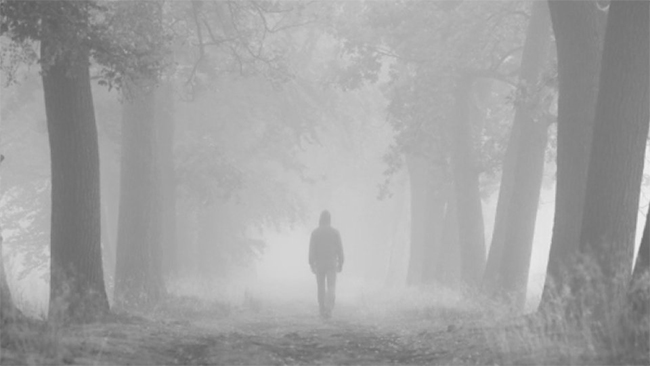
From a psychological perspective, the “ma đưa” phenomenon is a consequence of illusions.
Physical causes: In a dense forest, trees tend to grow thickly and many spots look alike, making it very hard for a lost person to get their bearings or tell places apart. In addition, when lost at night or deep in thick forest, poor lighting causes lost people to misperceive their surroundings. On top of that, because of the body's natural tendency to “walk in circles,” lost people often wander around and end up back where they started.
Thus, the physical layout of the space, the conditions for perception and so on often leave lost people unable to determine direction, walking in circles and even failing to recognize familiar places when they reach them.
Psychological causes: When lost in the forest, extreme worry, panic and an intense longing to get home inevitably lead to illusions. Lost people often feel the night is endless, lose track of time and space, hear sounds and see terrifying images, and are frequently haunted by those sounds and images even after they make it back. That is why many people who were lost in the forest return with mysterious, illogical and unrealistic stories, such as meeting ghosts or being guided by dead people…
Besides the causes of illusions described above, one of the factors that adds to the mystique of “ma đưa” often comes from the stories told by the lost people themselves. When they get home, lost people often want to be comforted, protected and encouraged, so they are unconsciously influenced by suggestion to present themselves as weak and unusual.
Moreover, as a common psychological tendency, people who have had an accident or been lost in the forest often do not admit that it was due to their own lack of skills or weak nerves, and instead blame external circumstances. In such cases, they may embellish their story with strange, mysterious events to excuse their own shortcomings.
Safety skills for when you are lost in the forest
Many people may scoff at the idea, arguing that nowadays, especially with rapid urbanization… there are few chances left to get lost in a forest, so there is no need to learn safety skills for getting lost in the forest.
In reality, however, there are still many cases of people getting lost, even those who work in the forest for a living. And that is not counting trips to mountainous and forested areas, even abroad: even when visiting a small primary forest, if you lack the skills, you are entirely at risk of getting lost.
So what should you do to avoid getting lost, and what should you do to stay safe if you are lost in the forest? Below are some basic safety skills.
To avoid getting lost when entering an unfamiliar forest, you need the following skills:
Prepare gear, a communication plan and a rescue plan before heading into the forest
This is a very important step that helps keep you from getting lost in the first place. If you are planning a trip into the forest, prepare some minimal essential items such as a sharp knife, a lighter, a compass, a phone, a flashlight, drinking water and dry rations… to help you survive if you get lost. If you are going in a group, agree in advance on a plan and on how to communicate and carry out a rescue if someone gets lost.
When moving through the forest, memorize the terrain and mark your route
When moving through the forest, memorize the terrain you have passed, paying attention to prominent features such as trail junctions, large trees, rivers and streams… so you can easily find your way back. If necessary, mark the route with your own symbols, or use a smartphone to photograph the terrain you have passed.
If you do get lost in the forest, follow these basic steps to stay safe:
Conserve your strength and stay in control of your mind
Once you realize you are lost, first find a suitable place to rest and conserve your strength. Do not rush back and forth trying to find the way home, which will only exhaust you and make you lose your composure. Sitting down to rest not only helps you conserve your energy but also helps you calm down and plan your next steps to escape. Stay calm, do not panic or think negatively; sit down and rest, and if you have brought water, drink some and relax to regain your composure.
Locating yourself and finding direction
If you have a smartphone with GPS and you are in an area with mobile coverage, pinpointing your location will not be difficult. Otherwise, you will need to rely on some traditional methods to work out where you are, such as climbing a tall tree or high point to look around, or estimating the time, speed and distance you have traveled to determine your current position…
Use a stick or knife to draw a map on the ground to work out your position. This not only helps you locate yourself but also makes you calmer and more confident.
Once you have located yourself, the next step is to find the direction to head back out of the forest. First, figure out which direction you entered the forest from, for example along an east–west or north–south line… and then take the opposite direction to head back. During the day, note the time and where the sun rises or sets to determine east or west.
Some people look at moss on tree bark and rocks to find direction, but this is unreliable, because moss grows wherever it is shaded and damp. Once you have determined east or west, stand with your arms outstretched, left hand pointing east and right hand pointing west: you will then be facing south, with north behind you. At night, you can use the stars to find direction, but this is usually complicated, so it is better to orient yourself and move during the day rather than at night.
If the terrain has rivers or streams and you know whether you entered the forest from downstream or upstream, follow the waterway to find your way out without worrying about east, west, south or north. Or, if you come across a river or stream you have not crossed before, follow it downstream, because rivers and streams almost always flow toward lowlands or inhabited areas, giving you a better chance of escape than any other direction.
If you climb a tree or high point, try to look around; if you see smoke or rooftops, head in that direction. At night, you can also climb a tree or high point to look for lights or fires. If they are close, you can move right away, but if they are far, rest for the night, note the direction and travel during the day.
You can also listen carefully for sounds that can help you get your bearings, such as traffic, church or temple bells, flowing streams and waterfalls…
Sheltering safely at night
As darkness approaches, if you still have not found a way out or are not sure you can get out of the forest safely, consider staying overnight and prepare in advance so you can spend the night safely. First, find a safe shelter, such as a high rock crevice, a cave or a large tree branch…
In the rainy season, choose a shelter protected from the rain, or use forest leaves to build a cover and create a safe shelter. You can pile dry wood and branches around you as a barrier against wild animals, or weave natural vines into a hammock to sleep off the ground away from insects, snakes and centipedes. Keep a long branch beside you while you sleep so you can defend yourself if attacked by a wild animal.
Gather plenty of dry branches to burn for warmth during the night. If you have a lighter, keep it safe so it does not get lost or wet and become unusable, and light the fire when it gets dark. If you do not have a lighter, you can make fire in various ways; the simplest is to use tinder and cut a notch in a dry branch, then sharpen another dry branch and rub it continuously against the first to generate heat until the tinder catches fire. During the day, you can also start a fire with a converging lens using sunlight. Try to keep a fire going at night: it not only keeps you warm and wards off wild animals but can also signal others and let you cook some food to get through the night.
Finding food and water
Check how much water you have left; if it is running low, find a water source to collect a reserve. It is best to take water from rivers, streams or the dew on leaves; avoid water from stagnant puddles, which could make you sick.
At night, only look for food near your shelter and do not stray far. You can prepare in advance by collecting wild fruit, catching insects or fish in the stream, or eating young shoots of plants and grasses that you know for certain are not poisonous to get through the night. If you have lit a fire, cook all the food you have gathered over it to be safe.
If you are lost in the forest for a long time, spend the daytime looking for food and water to stockpile and keep up your health. It is best to look for food near rivers and streams, which usually have plenty of fish, edible plants, insects… You can use common fishing techniques to catch fish, or catch insects such as grasshoppers, locusts and crickets… for food. In a genuine emergency, small common animals may help you survive, but remember that hunting wildlife in protected forests, or hunting protected species such as many snakes and geckos, is illegal in Vietnam.
Moving and signaling
If you have worked out your direction, you can move to get out of the forest. As you go, remember and mark the places you pass and leave signs along the way so rescuers can find you.
If you have not yet worked out your direction, it is best to shelter in a safe place and find ways to signal rescuers or local people. You can light a fire to make smoke, or find open ground and arrange branches and rocks in a triangle so rescuers can spot it from a helicopter. You can also try shouting in long calls at intervals of about 30 minutes to alert rescue teams.

Where does the Mid-Autumn Festival come from?
Every year on the full moon of the eighth lunar month, children eagerly prepare for their big day of moon-watching and feasting with friends.

The 8 longest rivers in Vietnam
Vietnam's heavy rainfall has created a vast network of waterways, with around 2,360 rivers and canals, large and small.

Expert explains the funnel-shaped vapor trail in the sky over Thanh Hóa
A strange vapor streak seen near the horizon over the former Hậu Lộc district in Thanh Hóa, Vietnam, was caused by jet engine exhaust, experts say.

5 places where the Sun never sets, lands "untouched by sunset"
In some high-latitude places near Earth's poles, summer brings round-the-clock daylight, when the Sun never sets.

The Vietnamese custom of lucky money at Tết
Giving lucky money has been an inseparable part of Vietnamese culture throughout history, carrying wishes of luck and health.

How chopsticks differ across cultures
Chopsticks are more than eating utensils: they carry the cultural imprint of each country, from China and Japan to Korea and Vietnam.