The Vietnamese custom of lucky money at Tết
The custom of giving lucky money has been an inseparable part of Vietnamese culture throughout history. It is bound up with good hopes for the first days of spring and the new year, carrying wishes of luck, health and success to everyone.
Giving lucky money (lì xì, or mừng tuổi) at Tết, the Lunar New Year, is a long-standing Vietnamese custom. In the Tết of old as in the Tết of today, the tradition has been preserved and has become an indispensable part of the holiday's cultural beauty. However, as society has developed, the custom has to some extent been exploited and distorted, drifting away from its original values. Preserving and promoting its symbolic meaning is therefore deeply worthwhile.
Giving lucky money at the start of the year, or on festive occasions, is a widespread custom in East Asian countries. In Vietnam it has long been popular at the Lunar New Year, where it is called lì xì. During Tết, adults usually give children a small sum of money in a beautifully patterned red envelope, which symbolizes luck and prosperity; this is called lucky money (tiền mừng tuổi).
The custom originated in China. Legend has it that long ago, in the Eastern Sea (Donghai), there stood a great peach tree that was home to many demons: fox spirits, rat spirits, old wolves and more. They were always eager to get out and cause harm, but normally immortals on earth kept watch over them, so none could escape.
Every New Year's Eve, however, all the immortals had to return to heaven to be given new duties, and the demons seized their chance to roam free while the gods changed shifts. One kind of demon would appear on New Year's Eve to pat the heads of sleeping children, startling them so that they woke up screaming and fell ill with a high fever or became simple-minded. Families with small children therefore stayed up all night to keep the demon from harming their little ones. Once, a few immortals passing by a house turned themselves into coins lying beside a child. The parents wrapped the coins in red cloth. When the demon came, the coins flashed brightly and it fled in fright. Word of this miracle spread, and from then on, each Tết, people put money into red pouches and gave them to children. That money is called lucky money.
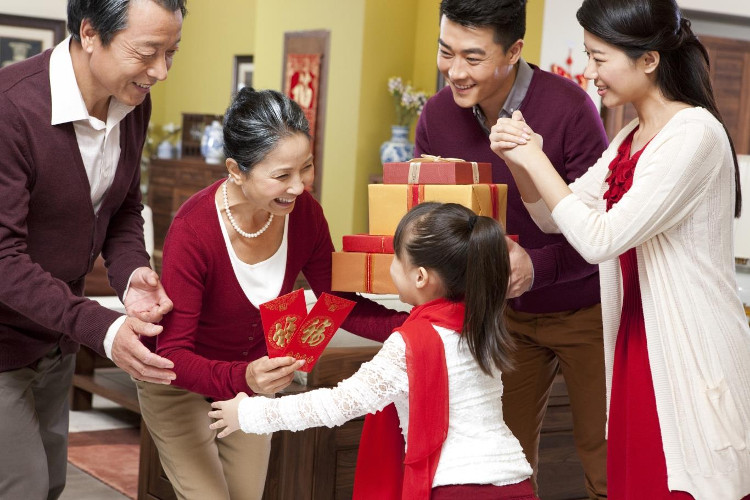
Lucky money at the start of the year also symbolizes health, luck and success...
Another legend says the custom began in the imperial palace of the Tang dynasty (China). That year, Consort Yang Guifei gave birth to a prince; on hearing the happy news, the emperor came in person and gave her some gold and silver wrapped in red paper. Yang Guifei regarded it both as a congratulatory gift and as a talisman from the emperor to protect the child from evil spirits. Word spread beyond the court and among ordinary people, many of whom began giving money in the same way, treating it as a gift that wards off misfortune and brings children good luck.
According to other studies, the custom of lucky money in China dates back to the Qin dynasty. At that time, people used red thread to string coins into a bundle shaped like a dragon or a sword and placed it at the foot of the bed or beside a child's pillow. This string of coins was called áp tuế money (yasuiqian), the same name Chinese people use today, meaning money given to a child in the hope that, blessed with money and fortune, the child would pass through that year of age with goodness and good luck.
In old China, lucky money was usually a red loop strung with 100 copper coins, expressing a wish for a long life of a hundred years. Today, lucky money given at the start of the year also symbolizes health, luck and success. It is placed in envelopes of red paper or red velvet, decorated with auspicious, joyful motifs and wishes of peace and prosperity such as "Peace and harmony for the family", "Gold and jade fill the hall", "May all things go as you wish"... For this reason, giving áp tuế money is also called giving a hongbao (red envelope).
The Vietnamese word "lì xì", commonly used in southern Vietnam, is believed to come from Chinese, as a reading of "lợi thị" or "lợi sự" (pronounced li shi in Mandarin and lì xì or lầy xì in Cantonese), originally meaning an item or sum of money that brings benefit, good fortune and luck. Giving lì xì means giving a child money that expresses good wishes and luck.
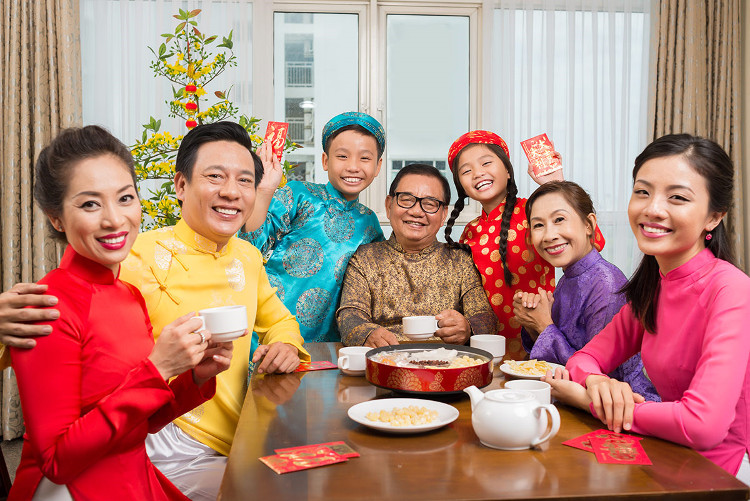
Today the custom has become more open: younger people who are married and have an income may also give lucky money to elders such as their parents and grandparents....
In Vietnam, lucky money was originally just coins placed in pinkish-red paper envelopes, or eye-catching gilded ones, which adults gave to children during Tết. Receiving lì xì makes children laugh, and children's laughter is thought to drive away bad things. That is why lucky money is also a way of praying for luck and blessings in the new year.
By custom in some localities, younger people do not give lucky money to their elders, as it would both miss the point and be considered "impertinent". Today, however, the custom has become more open: younger people who are married and have an income may give lucky money to elders such as their parents and grandparents to wish them luck, health and peace. Early on the morning of the first day of Tết, or "Chính đán", all daily activities stop, and children and grandchildren gather at the home of the head of the clan to make offerings to the ancestors, wish their grandparents and elders a happy new year, and exchange lucky money. By tradition, when the new year arrives, everyone, adults and children alike, naturally becomes one year older. Adults "celebrate the age" of children ("mừng tuổi") in a concrete way, with crisp new banknotes placed in "phong bao" (envelopes). Lucky money received on Tết is called "tiền mở hàng" (first-of-the-year money). In the past, there was also a practice of putting an odd sum (rather than a round one) in the envelope, implying that the money would multiply.
Some things to keep in mind when giving lucky money at Tết
- Give new money: Lucky money (lì xì) is a custom with good meaning in the first days of the new year. Giving new banknotes is like wishing the recipient a fresh, auspicious start.
- Give money in an envelope: The envelope symbolizes discretion, so that no one compares who got more or less, avoiding needless friction. Red envelopes are recommended because the red of a lì xì envelope stands for fulfilled wishes, good fortune and prosperity throughout the year. It is also considered the color of hope and luck.
- Do not use old envelopes: Do not reuse lì xì envelopes that are old, already used or left over from last year. Giving old things in the new year shows a lack of respect and suggests you do not value the recipient.
- Give round sums to symbolize good fortune: In East Asian belief, even numbers bring luck. So when putting money into a lì xì envelope at Tết, use a round, even amount rather than an odd one.
A "psychological hypnosis" trick to help you get more lucky money
How chopsticks differ across cultures
Chopsticks are more than eating utensils: they carry the cultural imprint of each country, from China and Japan to Korea and Vietnam.
How do the lunar and solar calendars differ?
The lunar calendar is a key part of East Asian tradition. Here is how it differs from the solar calendar and why it matters in Vietnam.
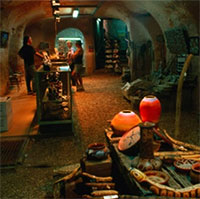
Could humans live underground to escape climate change?
Is living underground a viable solution to an approaching climate crisis? Scientists weigh the benefits and the risks.

Where women paint their nails, wear traditional robes and take spears to the sea to hunt squid
Oman's Bedouin women fishers hunt cuttlefish, rays and octopus with simple handmade spears, but their tradition may be dying out.

Time passes more slowly when you ride a crowded train
The more crowded a train or bus is, the slower time seems to pass for each passenger, a Cornell University VR study suggests.

Fascinating fact: The University of Oxford is older than the Aztec civilization
Did you know that the University of Oxford is more than 200 years older than the mysterious ancient Aztec civilization?