Could humans live underground to escape climate change?
Is living underground a viable solution to an approaching climate crisis?
According to the European Union's Copernicus Climate Change Service, July 2023 was the hottest month ever recorded on Earth, with many records broken.
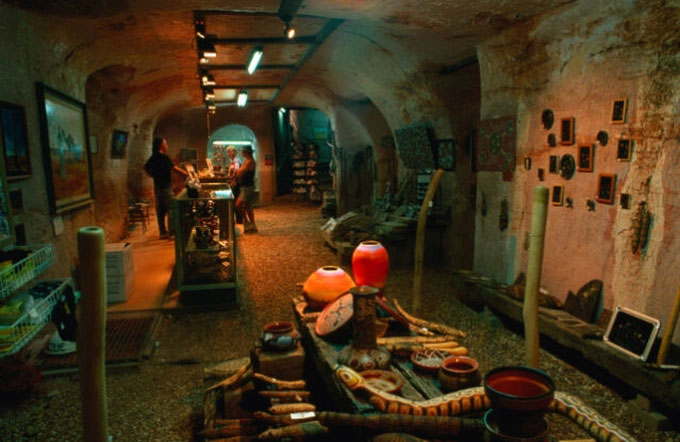
An underground museum in Coober Pedy. (Photo: Getty).
With the scorching heat, we are finally seeing the dire consequences of overusing fossil fuels and emitting greenhouse gases, which have altered the environment and made everything worse.
As scientists prepare for future scenarios to cope with climate change, one idea has been put forward.
It may be time for humanity to consider adapting to other habitats, such as underground.
Surrounded by a mass of soil and rock that absorbs and retains heat, underground environments can maintain far more stable temperatures than the surface, without relying on energy-hungry air conditioning or heating systems.
But is this a viable solution to an approaching climate crisis?
Many problems to solve
While most people would be willing to move underground for a short period, the idea of living there permanently seems much harder to accept.
"We don't belong there. Biologically, physiologically, our bodies are not designed for life underground," said Will Hunt, author of a book about the underground world.
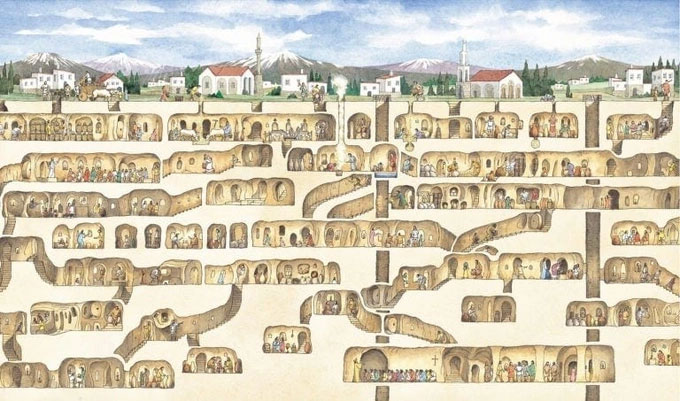
Could humans live in underground cities? (Photo: Wikipedia).
In fact, living underground for too long without exposure to sunlight can disrupt our circadian rhythm, causing our sleep-wake cycle to stretch to as long as 30 hours.
It can also cause a range of physical and mental health problems.
Another risk of underground living is flash flooding, which can lead to landslides. This is especially worrying as climate change is expected to bring more extreme weather events.
Then there is the matter of temperature. A study in Chicago's Loop business district found that underground temperatures have risen significantly since the 1950s because of heat-generating infrastructure built in the area, such as parking garages, train tunnels and basements.
Clearly, underground temperatures are also affected by what happens on the surface, so choosing it as a new refuge would not necessarily keep us safe.
Some research also suggests that rising temperatures can cause the ground to expand by up to 12 mm, causing structural damage to underground buildings.
How do we build a model underground city?
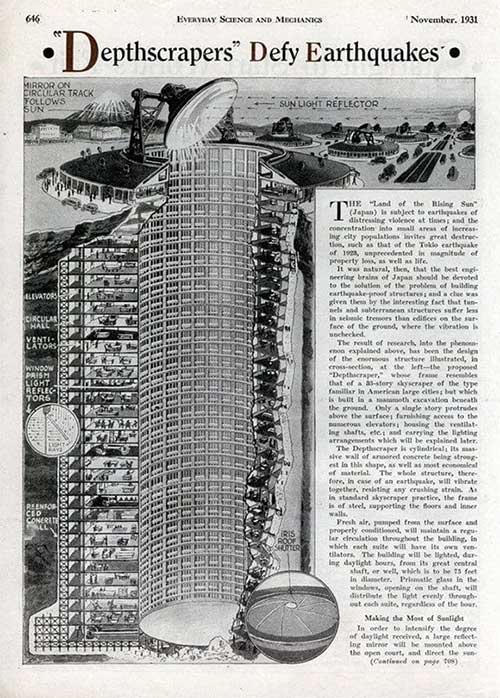
The concept of the earthscraper, an inverted design of the skyscraper. (Photo: Wikipedia).
We use the word "skyscraper" for very tall buildings. But if we turn these buildings upside down and sink them into the ground, we get a new concept: "earthscraper".
In fact, this model has existed for a very long time. Prehistoric humans lived in caves hundreds of meters underground before they began building the first huts on the surface.
In his 2017 book "Civilizaciones bajo tierra" (Underground Civilizations), author Juan José Revenga discusses the underground city of Derinkuyu, which has about 20 underground levels and could shelter thousands of people.
According to Ferrovial, the reason no one has built similar structures to date is not that we can't, but that there has been no real-world need for them.
Nevertheless, a 2015 paper titled "A review of underground construction toward thermal energy efficiency and sustainable development" highlights the efficiency of underground cities.
According to the paper, underground construction could help create cleaner cities even when considering only the impact of climate control, which accounts for nearly 40% of greenhouse gas emissions. It seems that living underground has certain advantages, too.
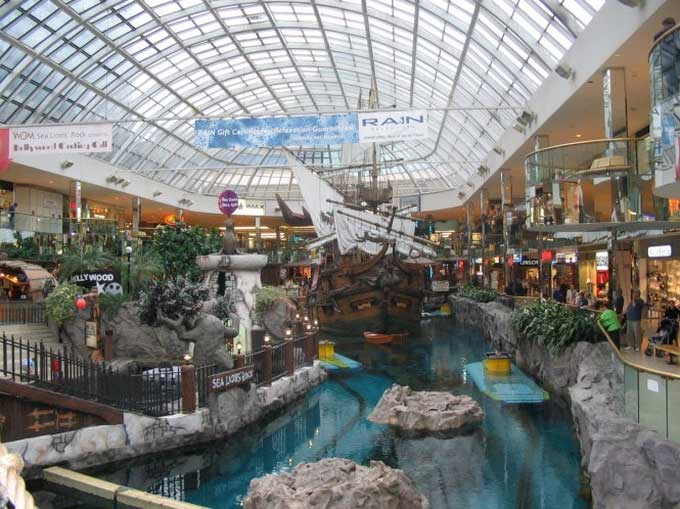
A corner of the RÉSO underground city. (Photo: Wordpress).
According to scientists, for underground environments to be accepted by people, they must be safe, have natural light, be well ventilated and provide a sense of connection to the world above.
Réso - a 32 km underground city in Montreal, Canada, with shopping centers, offices, hotels and schools - embodies this ideal. The underground complex connects buildings so people can avoid the sub-zero temperatures outside.
According to official figures, the network beneath Réso includes 10 metro stations, 2 bus terminals, 1,200 offices, about 2,000 shops, department stores, about 1,600 housing units, 200 restaurants, 40 banks, cinemas and other entertainment venues.
In 2023, climate change made parts of Iran, Pakistan and India so hot that it became life-threatening for humans.
If our planet keeps "boiling", perhaps within a few years humans will seriously consider building underground urban areas instead of skyscrapers?

Where women paint their nails, wear traditional robes and take spears to the sea to hunt squid
Oman's Bedouin women fishers hunt cuttlefish, rays and octopus with simple handmade spears, but their tradition may be dying out.
Fascinating fact: The University of Oxford is older than the Aztec civilization
Did you know that the University of Oxford is more than 200 years older than the mysterious ancient Aztec civilization?

Vietnamese scientists resolve a microalgae mix-up that lasted more than a century
Vietnamese researchers have re-described the dinoflagellate Ostreopsis siamensis, ending more than 100 years of taxonomic confusion.
3 breathtaking, treacherous mountain roads in Hà Giang that rival Mã Pí Lèng
The winding roads of Hà Giang in Vietnam's far north, graceful as silk ribbons yet full of danger, hold a strange allure for travelers.

The beauty of Longquan celadon, one of the most traded treasures on the Silk Road
You don't need to be an expert to judge the value of a piece of Longquan porcelain: its glaze tells you much of what you need to know.

Why is bánh chưng eaten with pickled onions? A fun explanation
The harmonious pairing of tangy pickles and rich, fatty flavors is what makes bánh chưng, Vietnam's Tết sticky rice cake, so appealing.