The beauty of Longquan celadon, one of the most traded treasures on the Silk Road
Longquan celadon is a renowned craft product of Longquan in Zhejiang province, China. The Longquan kilns have a history of more than 1,700 years in China and reached their peak during the Song dynasty.
Longquan ware was one of the most widely traded goods on the famous "Silk Road" between China and the West, prized for the graceful, delicate and clear beauty of its thick jade-green glaze. Today, Longquan porcelain is still regarded as a ceramic brand that represents the beauty of traditional Chinese ceramics.
To understand the beauty of Longquan porcelain, you have to look at its glaze. In this article, we explain some of the criteria used to judge celadon glaze.
Criterion one: Color and weight
Celadon glaze is usually built up by applying several coats, so the thicker the glaze, the deeper the color. Longquan glaze is typically 0.8 mm thick or more, and some pieces reach 3-4 mm, twice as thick as ordinary celadon glaze, giving the porcelain surface a liquid, glistening look.
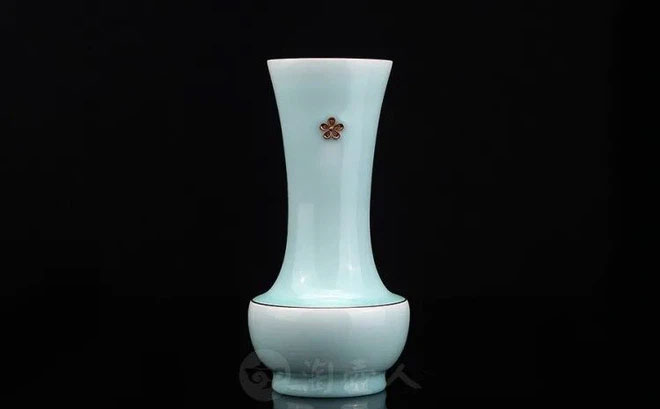
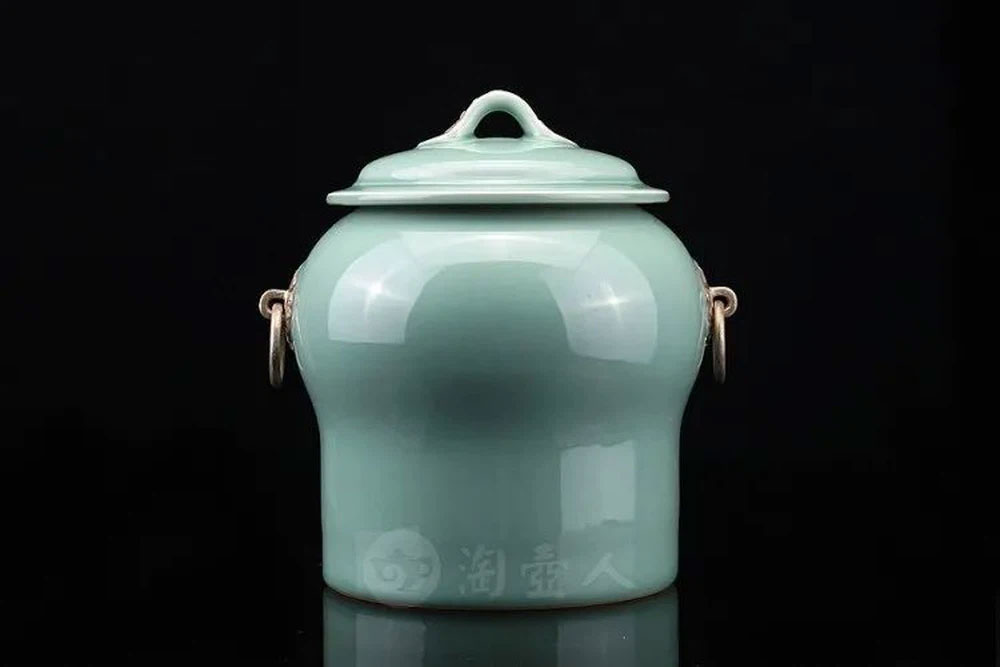
The weight of a porcelain piece can help collectors tell genuine antiques from fakes. (Photo: QQ).
For pieces of the same shape, the thicker the glaze, the heavier the piece. That is why, when choosing Longquan porcelain, many people habitually lift or weigh it to gauge the thickness of the glaze.
Criterion two: The glaze surface
One of the simplest ways to choose porcelain is to look at its appearance. If the glaze is too thin, the color of the clay body underneath tends to show through; only when the glaze is full and even does the surface display the complete, crystal-clear and attractive color of the glaze.
Of course, some works use special techniques, such as the exposed-body technique (applying a very thin glaze).
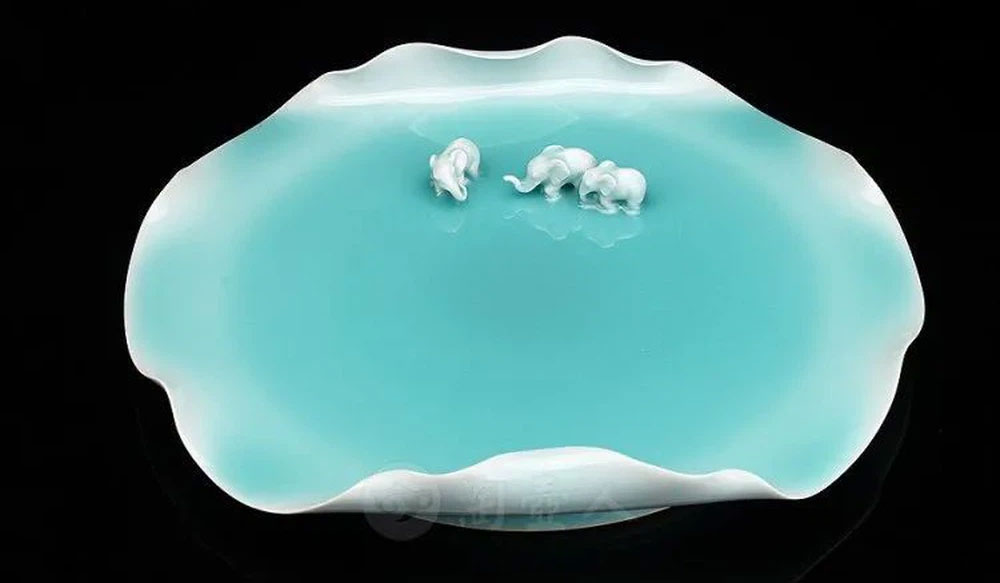
A Longquan porcelain dish with a "clear as water" effect. (Photo: QQ).
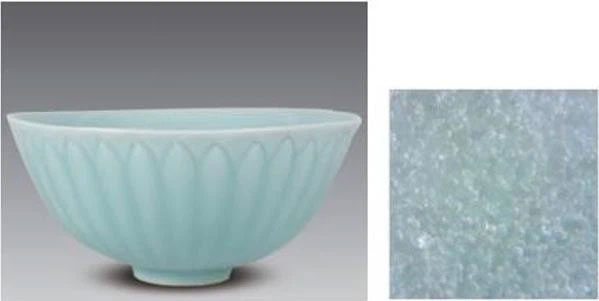
A magnified view of the porcelain glaze. (Photo: Internet).
The glaze used to coat porcelain usually contains a certain amount of water, and after firing, tiny particles in the glaze look like bubbles suspended inside it. If the glaze is thick enough, these particles create a milky-white effect.
Final criterion: The patterns
A typical feature of Longquan porcelain is that, alongside hand-painted decoration, there is a very natural background pattern created by the glaze itself, sometimes resembling earthworms wriggling through mud. This comes from overlapping layers of glaze flowing during firing, which shows that the glaze is very thick and gives the piece a "sense of movement" when you look at it.
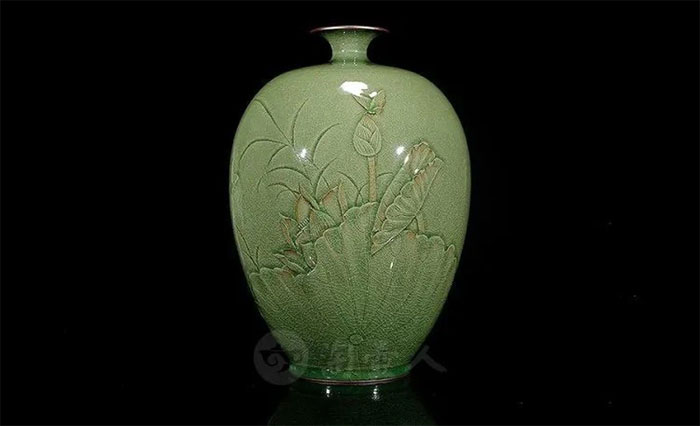
Longquan porcelain patterns are soft and natural. (Photo: QQ).
Although a thick glaze is an important feature of Longquan celadon, that does not mean the thicker the glaze, the better. Judging a celadon piece depends not only on the glaze but also on its shape, craftsmanship and many other features.
Moreover, if the glaze is too thick, it is prone to crazing (tiny hairline cracks), which spoils its appearance. In short, a beautiful porcelain piece is one in which all of these elements come together in harmony.
Why is bánh chưng eaten with pickled onions? A fun explanation
The harmonious pairing of tangy pickles and rich, fatty flavors is what makes bánh chưng, Vietnam's Tết sticky rice cake, so appealing.
13 bizarre creatures from Vietnam that amazed the internet
From leaf insects and mouse deer to mossy frogs and mudskippers, Vietnam is home to a surprising array of bizarre creatures.
The world's strangest roads
From a bridge that seems to end in midair to a road that plays music, these bizarre roads around the world draw travelers.

20 Survival Skills for When You're Lost in the Forest
Before exploring forests and mountains, learn these 4 preparation steps and survival skills in case you ever get lost deep in the woods.
Inside the Hanoi center conserving Vietnam's rarest lotus varieties
A center in Hanoi grows, studies and conserves nearly 40 rare lotus varieties from across Vietnam and abroad.
What is the longest river in Vietnam?
Vietnam has 392 rivers. Which is the longest originating in the country, and which is the longest flowing through its territory?