Why is bánh chưng eaten with pickled onions? A fun explanation
Did you know? It is the subtle, harmonious pairing of a light, tangy sourness with rich fattiness that makes bánh chưng even more appealing.
Every Lunar New Year (Tết), almost every Vietnamese person recalls the famous couplet "Fatty pork, pickled onions, red parallel scrolls / Nêu pole, firecracker strings, green bánh chưng".
Today, "the nêu pole" and "red parallel scrolls" are no longer as common, and "firecrackers" were banned long ago, but "fatty pork, pickled onions and green bánh chưng" will surely endure and remain indispensable on the ancestral offering tray of every Vietnamese family.
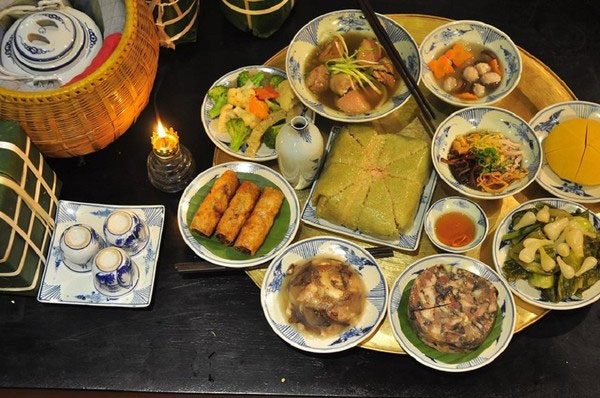
A Vietnamese Tết feast.
But have you ever wondered why people in northern Vietnam usually eat bánh chưng (square sticky rice cake) with dưa hành (pickled onions), why bánh tét (cylindrical sticky rice cake) is served with pickled củ kiệu, or Chinese onions (in southern Vietnam), and with dưa món, mixed pickled vegetables (in central Vietnam)? The article below reveals the answer.
Mention bánh chưng and bánh tét and we immediately think of their delicious flavor. Glutinous rice, pork, mung beans, salt and pepper... are wrapped in green dong leaves, boiled until tender and tightly pressed, creating a unique taste.
However, according to medical experts, bánh chưng and bánh tét are energy-dense foods, containing carbohydrates, protein, fat, vitamins and minerals.
One wedge (1/8 of a cake) has roughly the same nutritional value as a full bowl of rice with side dishes. Despite being energy-rich, these cakes are low in fiber.
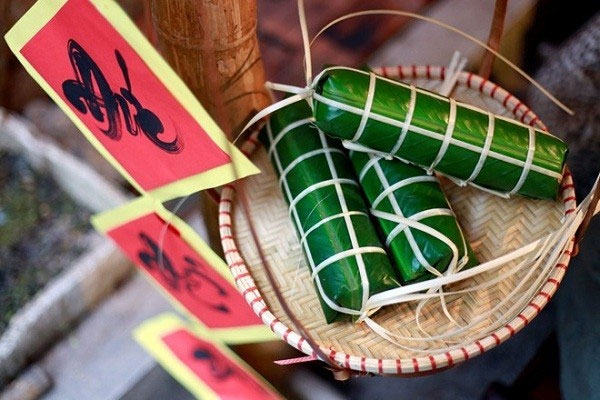
Bánh chưng and bánh tét are energy-dense foods.
Vietnamese cuisine always values harmony and balance of flavors, so the rich, fatty taste of bánh chưng and fatty pork is always accompanied by light, refreshingly sour pickled onions, Chinese onions or mixed pickles.
What's more, these pickles add fiber to the diet. In addition, the mild sourness, gentle heat and aroma of pickled onions and Chinese onions enhance the flavor of other dishes and are traditionally believed to aid digestion when you eat foods high in protein and fat, such as bánh chưng and bánh tét.
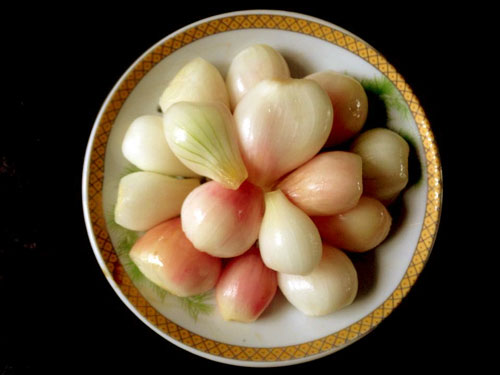
Pickled onions and Chinese onions are believed to aid digestion when eating foods high in protein and fat.
Should you eat a lot of bánh chưng and pickled onions?
Although it is a perfect combination and a dish loved by every household, many people wonder whether they should eat a lot of it.
Nutritionists say you should not eat too much bánh chưng or bánh tét with pickled onions or Chinese onions. The fat and salt in these two foods can be bad for your health, increasing stomach acid secretion and causing bloating, heartburn and indigestion...
Excessive intake of calories, protein, fat or salt can harm cardiovascular health... So during Tết, you should eat plenty of fiber-rich foods and limit fatty and sugary foods to stay healthy and enjoy the holiday.
Bánh chưng with pickled onions at Tết is a simple pairing handed down since ancient times. It shows that the beauty of Vietnamese culinary culture lies not only in harmonious colors but also in a well-balanced combination that suits a healthy diet.
13 bizarre creatures from Vietnam that amazed the internet
From leaf insects and mouse deer to mossy frogs and mudskippers, Vietnam is home to a surprising array of bizarre creatures.
The world's strangest roads
From a bridge that seems to end in midair to a road that plays music, these bizarre roads around the world draw travelers.
20 Survival Skills for When You're Lost in the Forest
Before exploring forests and mountains, learn these 4 preparation steps and survival skills in case you ever get lost deep in the woods.
Inside the Hanoi center conserving Vietnam's rarest lotus varieties
A center in Hanoi grows, studies and conserves nearly 40 rare lotus varieties from across Vietnam and abroad.
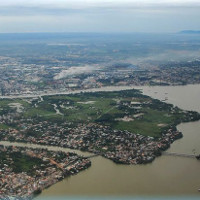
What is the longest river in Vietnam?
Vietnam has 392 rivers. Which is the longest originating in the country, and which is the longest flowing through its territory?

8 fascinating facts about Sơn Đoòng, the world's largest cave
Sơn Đoòng, in Vietnam's Phong Nha-Kẻ Bàng National Park, is widely regarded as the largest natural cave ever discovered. Here are 8 facts about it.