The mystery of those annoying holes in your T-shirts: Why do they appear after just a few wears?
Whether a T-shirt costs a few tens of thousands of VND at a market or several million VND in a shop, it eventually ends up with these maddening little holes. Once they appear, that shirt's days of being worn in public are over.
Who doesn't have a few "must-have item" T-shirts in their wardrobe? Yet longtime T-shirt fans have almost certainly witnessed one deeply annoying phenomenon over and over again.
What phenomenon? In short, it's the one in the picture below.
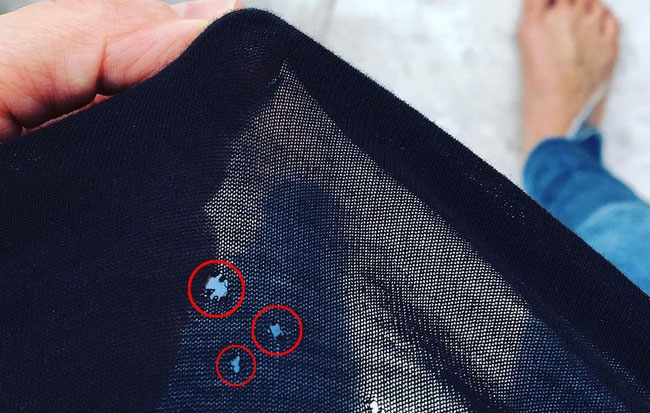
Once a hole like this appears, your shirt won't be seen out in public again.
That's right: those tiny holes that seem to come out of nowhere, and that everyone has run into.
The holes are minuscule, but their presence means the shirt will never again be fit to wear outside. And they appear regardless of whether your shirt is a cheap market find or an expensive piece from a big-name brand.
So why do they appear? Cat owners can easily blame their pets' habit of sharpening their claws. But people without cats still get these holes in their shirts.
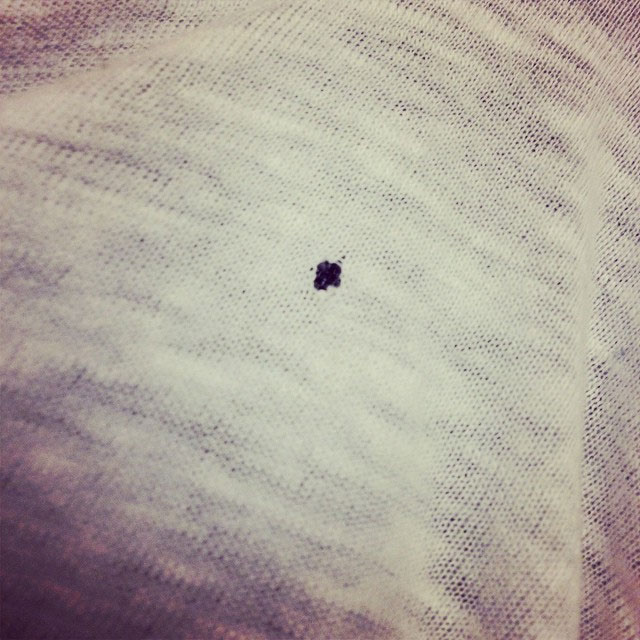
Whether your shirt is a cheap market find or an expensive piece from a big brand, these holes can still show up.
So what's the culprit? Thanks to science, we finally know the reason, even if it sounds a little boring. It isn't cockroaches or mice nibbling, and it isn't overzealous washing. The real cause is far more frustrating.
The answer is friction!
Most of these holes appear on the lower front of the shirt, right? That may be because the shirt is constantly rubbing against your trouser button or belt buckle. It is also the part of the body we tend to lean against a counter or table when standing, for example while getting a glass of water or making tea.
Each of these rubs is very gentle and leaves no visible trace. But over time, the accumulated friction loosens the fibers of the fabric, forming the holes that drive everyone mad.
This has been confirmed by a number of industry experts. Bayard Winthrop, CEO of the clothing company American Giant, recently confirmed that the lower part of the shirt is the area most prone to damage.
"The fibers in this area constantly rub against hard surfaces such as belts, jeans and the edges of tables... That accumulated friction wears the fibers down."
According to Winthrop, the area around the shoulders is also very prone to such holes. Again the cause is friction, since that is where you often carry a bag.
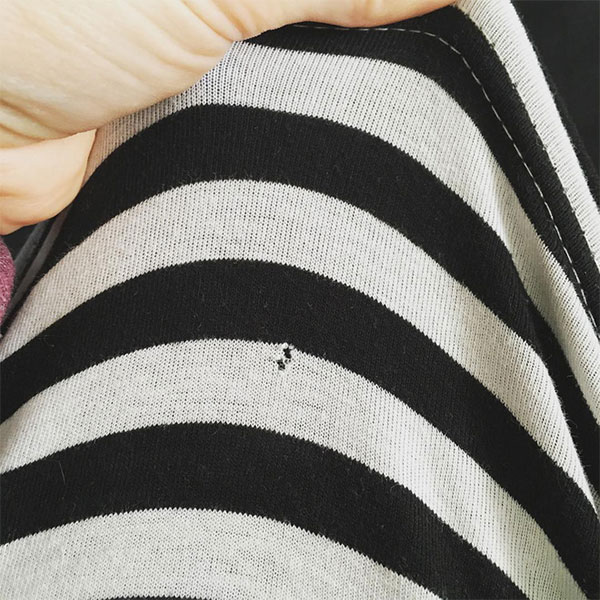
The area around the shoulders is also very prone to such holes.
But the most important reason is...
Winthrop revealed that another key reason shirts develop holes lies in the quality of the fibers. It's true that even the most expensive shirt can't escape these holes entirely, but they will take longer to appear.
"For the most part it comes down to the quality of the fiber itself. Many brands want to cut costs as much as possible, which results in less durable fibers," Winthrop said.
"Many people like to buy cheap T-shirts, thinking that if they wear out they can just throw them away. But if you have to keep buying new ones, you're clearly not saving much, are you?"
According to Winthrop, the key isn't really the price; what you need to look at is the fabric the shirt is made of.
"Long-staple cotton fabrics are better. Some high-quality cottons even have their own names, such as Pima and Egyptian."
In short, you can choose clothes that suit your budget, but you also need to pay attention to a shirt's quality. It would be a shame if simply wearing a belt were enough to put holes in your shirt.

The Great Pyramid of Kheops can concentrate radio waves, physicists calculate
Calculations by German and Russian physicists suggest the Great Pyramid of Kheops can concentrate electromagnetic energy in its inner chambers.

8 fascinating facts about Sơn Đoòng, the world's largest cave
Sơn Đoòng, in Vietnam's Phong Nha-Kẻ Bàng National Park, is widely regarded as the largest natural cave ever discovered. Here are 8 facts about it.