

How to survive when you're lost in the wild
Perhaps you got so absorbed in fieldwork, or in following an animal's tracks, that you ended up lost deep in the forest. Or you fell behind your group, lost sight of them, and no one noticed. Maybe a flood swept you away while camping or exploring, leaving you stranded somewhere remote with none of your gear. Or perhaps, fleeing from a pursuing wild animal, you ended up somewhere completely unfamiliar.
There are two common scenarios when you get lost:
Lost with no one searching for you
If, for whatever reason, you are lost but no one knows to organize a search, and you haven't brought the essentials (or what you have is not enough), your top priority must be to get out of the danger zone as quickly as possible. You need to find the shortest route to the nearest settlement or safe area.
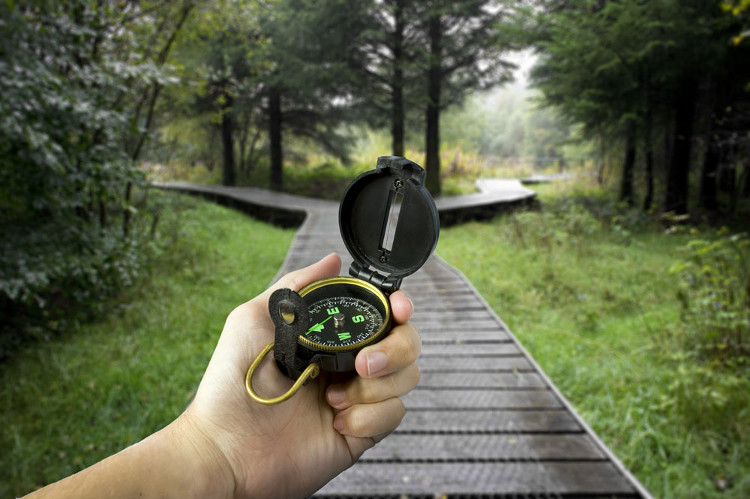
When lost, first get your bearings to find your way.
In a panic, you lose the composure to think things through, which can easily lead you to wander in circles through the forest. Sometimes, after a while, you end up right back where you started, something folk wisdom calls being "led by ghosts". (Uneven strides make us tend to walk in circles in the forest.)
*How to get your bearings and find direction
There are several ways to do this:
First, pick the highest point in the area, such as a tall tree, a hilltop or a rock outcrop, and climb it to look around.
When climbing a tree, stay close to the trunk for safety, place your feet in the crooks where branches meet the trunk, and grip sturdy branches. Your body should always be supported at three points (one foot and two hands, or one hand and two feet).
During the day, you may spot some signs of human settlement, such as towers, tall buildings, fields, houses or smoke. At night, you may see firelight or electric lights. Towns and cities, even far away, cast a halo-like glow into the night sky.
If a settlement is nearby and the forest is quiet, you may be able to hear faint loud noises in the distance, such as car horns or train whistles.
But what if we can't see or hear anything?
Try to find a stream or river and follow it downstream. It won't be easy, because rivers and streams never run straight, so the route will always be much longer.

Try to find a stream or river. (Photo: Patti Perkinson).
If you come across a dry stream, you can follow its bed: it is easier to walk along and may lead to a larger stream or river (with a good chance of finding water in springs or small pools along the way).
To find a river or stream, you can climb to a high point to look around: if you see a long line of green trees (especially in the dry season), there is likely a stream or river there. Or you can head downhill along the slope of a mountain or hill. At the bottom of a slope there is often a gully or small stream. If you follow the flow, you will reach larger streams and rivers.
We follow streams because every stream eventually flows into a river, and riverbanks are often home to settlements or fishing villages, or you may meet boats belonging to fishermen or forest workers, giving you a good chance of being rescued.
If you come across a trail while on the move, your luck improves considerably. However, you also need to consider whether the trail is old or new, made by people or by wild animals, and whether it leads deeper into the forest or out toward a settlement.
You can judge this by looking at where the trail forks: trails heading deeper into the forest usually branch in an upright V shape; conversely, trails leading toward a settlement branch in an inverted V shape. If you can't tell, keep moving until you find a stream crossing the trail, where you can stay and wait for someone to pass by, since there is drinking water there and possibly food along the stream. But if you feel you still have the strength, after resting and filling up on water to carry with you, keep going, and trust that people are not far away.
Lost with people searching for you
Suppose you told someone before heading into the wilderness, but you didn't return by the agreed date; or you left your group, wandered off and got lost; or you were sent on a mission somewhere unfamiliar and went missing. In these and similar cases, rescue teams will be organized to search for you. But what about you? What should you do?
While waiting for rescue, follow this advice:
- Stay where you are, if you can't find a way out and are sure people will notice you are missing and organize a search. This is essential, because it limits the drain on your strength and energy while you are short of food and may be injured.
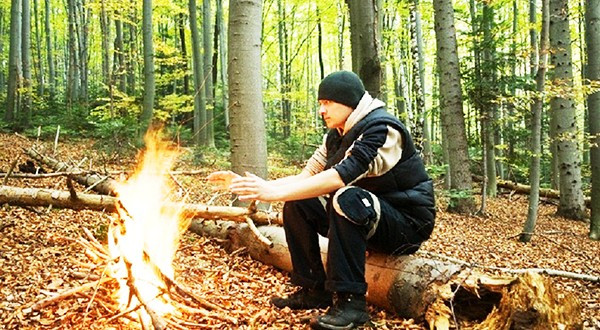
When lost, stay where you are. (Photo: number1.com)
- Get to know your surroundings so you can find water, food, shelter, firewood and so on.
- Build a shelter that is comfortable enough to help you feel secure and relaxed, and less stressed and afraid.
- Make easily visible signals so that searchers (or passing aircraft) can easily spot where you are, such as lighting a fire (in an open area) or hanging colored cloth, clothing or hats high up or somewhere easy to see.
- Make loud noises, such as blowing a whistle, or banging on hollow tree trunks.
- Keep a fire burning at all times if your firewood or fuel allows, to serve as a signal and keep wild animals away (but take care to prevent forest fires).
- Be patient and careful. Don't rush to force your way out, as you may stray even farther away and make things harder for the people searching for you.
- Stay calm, because your body can survive about 3 days without water and about 3 weeks without food. What you need to do is stay put; people will find you.
So what can you do to minimize the chance of getting lost?
Before heading into the forest or wilderness

Before entering a forest, you need to know about forests. (Photo: 500px.com).
- Tell your family (or the relevant authorities) where you are going, what you will be doing, your planned route, and when you expect to return.
- Make a habit of carrying essentials such as a (multi-purpose) folding knife, a lighter and a compass, especially if you often go into the forest.
- Learn and practice making the most of all your equipment, master survival and escape skills, know how to use a map and compass, and learn about nature.
- Know how to handle emergency first aid and treat illnesses.
In the forest
1. With a map
- Every 20–30 minutes, check your position on the map and compare it with the actual landscape around you.
- Monitor and compare the wind direction with your direction of travel; if the wind seems to have shifted from where it was at the start, recheck your heading.
- Keep track of your travel time and speed so you can estimate the distance covered.
- Mark on the map any distinctive, easily recognizable features (not printed on the map), such as huge old trees, odd-shaped rock outcrops, termite mounds, caves, forest workers' huts or springs.
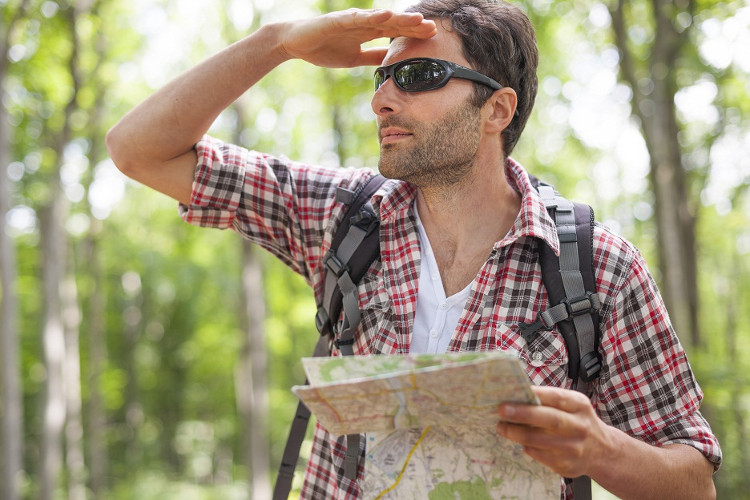
You should carry a map when going into the forest. (Photo: depositphoto).
2. Without a map
- Leave easily visible marks along your route as signals, such as cutting a notch into a tree trunk, breaking branches, tying clumps of tall grass together, arranging stones or branches according to an agreed code, or tying scraps of cloth to small trees. These marks must be easy to distinguish from those made by animals or by nature.
- Sketch a rough map, noting distinctive features of the terrain, key landmarks and unusual scenery, and marking every change of direction.
- Monitor and remember the wind direction, the direction of the sun, the rising and setting of the moon, and observe the constellations.
Conclusion
Always remember: our goal is survival, so lift your spirits with "beautiful dreams" and "big plans" for the future. These are what will give you the strength to overcome your current situation.
Remember: when you are alone deep in the forest, if you can't let your mind soar and can't improvise, the forest will drown you in fear.
