13 bizarre creatures from Vietnam that amazed the internet
When we watch wildlife documentaries on TV, we often marvel at the strange animals of Africa or South America, without realizing that Vietnam is also home to countless bizarre creatures.
13 bizarre creatures found in Vietnam
- 1. The leaf insect, a master of disguise
- 2. The black-breasted leaf turtle
- 3. The lanternfly with an "elephant trunk"
- 4. Mouse deer, hoofed mammals the size of a rodent
- 5. The Vietnamese mossy frog, a moss-covered rock
- 6. A bizarre moth
- 7. The Tonkin snub-nosed monkey and its cheerful... slightly grumpy face
- 8. The big-headed turtle, an unusually large head
- 9. A green-winged mantis with smiley faces
- 10. A short-legged lizard whose legs are mostly for show
- 11. The Indochinese flying lizard
- 12. Did the Nicobar pigeon borrow a peacock's coat?
- 13. The mudskipper, a fish that runs and hops
1. The leaf insect, a master of disguise
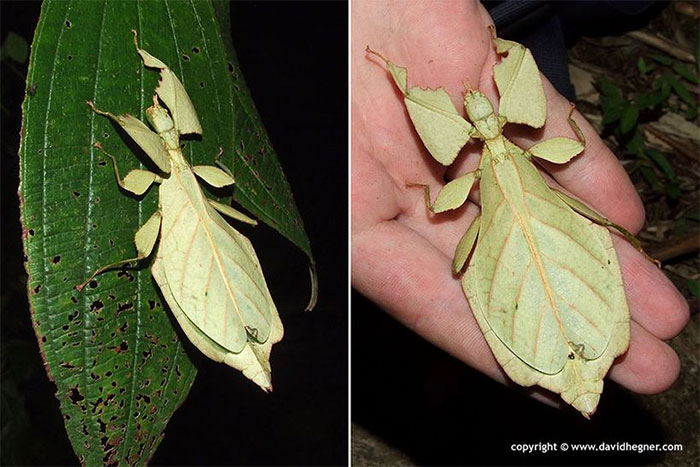
A leaf insect photographed by David Hegner in Vietnam in 2012.
Measuring about 5 to 10 cm, leaf insects are a family of insects that are near-perfect replicas of the leaves they live on, right down to the leaf veins. Their eggs even resemble the plant's seeds. Leaf insects are found from South Asia through Southeast Asia to Australia.
2. The black-breasted leaf turtle
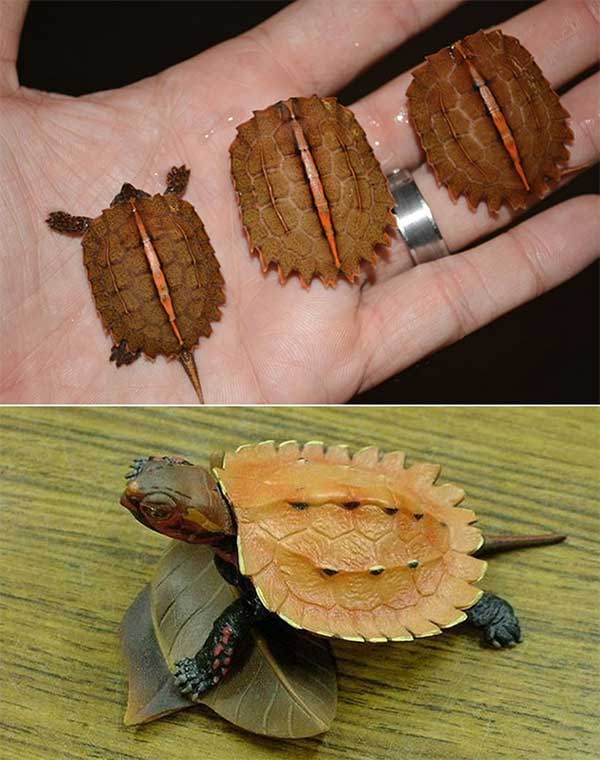
Vietnam's black-breasted leaf turtle has caught people's attention online because it is one of the smallest turtles in the world. An adult male typically measures just 7 to 11 cm and weighs 90 to 125 grams, while females are slightly heavier, at 150 to 190 grams. The black-breasted leaf turtle is also found in Laos and China as well as Vietnam, yet its other English name is the Vietnamese leaf turtle.
3. The lanternfly with an "elephant trunk"
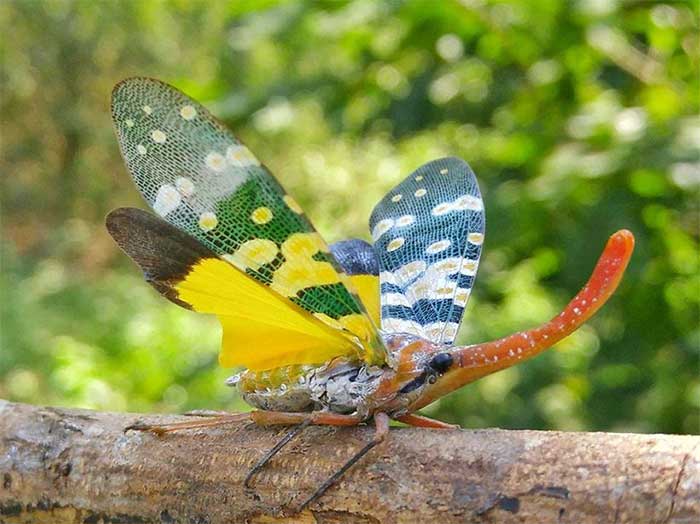
A lanternfly photographed in Đồng Nai province in southern Vietnam
The golden-winged lanternfly Pyrops candelaria, known in Vietnam as the "elephant-trunk cicada", is considered one of nature's masterpieces.
These insects usually appear at dusk with the first rains of the season in evergreen forests. They can leap away extremely quickly, which makes them very hard to catch, and it is rare to photograph the moment one spreads its shimmering, colorful wings and takes off. The golden-winged lanternfly is common around Đồng Nai and the former Bình Phước province (both now part of Đồng Nai).
4. Mouse deer, hoofed mammals the size of a rodent
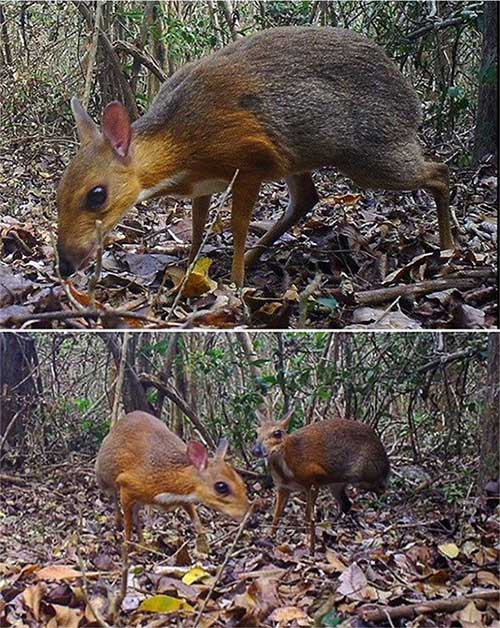
The silver-backed chevrotain, seen again after 30 years
When we think of hoofed animals, we usually picture large creatures such as buffalo, cattle and deer, or at least something the size of a goat. Yet few people know that the world's smallest hoofed mammal lives in Vietnam: the chevrotain, whose English name speaks to its modest size: mouse deer. The best-known species in Vietnam are the silver-backed chevrotain and the lesser mouse deer.
The lesser mouse deer is the smallest hoofed mammal in the world, no bigger than a house cat, with an average body length of just over 40 cm and a weight of 0.7 to 2 kg. Its small face looks rather like a mouse's, and its four legs are as thin as twigs.
The silver-backed chevrotain had been feared extinct until November 2019, when a team of scientists reported that they had captured photos of it with camera traps in a forest in Vietnam, the first sighting in nearly 30 years.
5. The Vietnamese mossy frog, a moss-covered rock
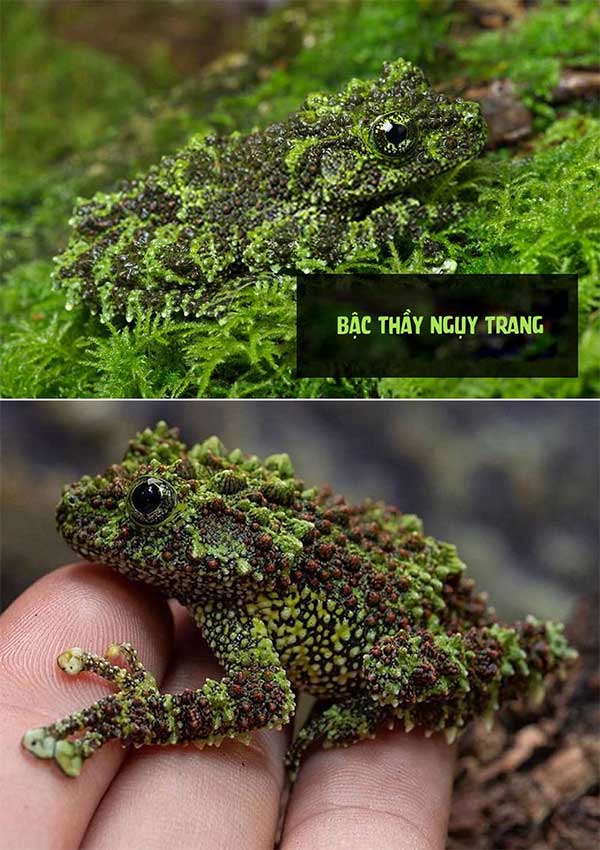
This frog lives in humid tropical lowland forests and freshwater marshes in northern Vietnam and southern China.
Its Vietnamese name, "bumpy tree frog", comes from its rough, mottled, moss-like skin (its English name, the Vietnamese mossy frog, makes the same point). This bumpy green skin makes it a master of camouflage, helping it both hide from predators and ambush prey.
6. A bizarre moth
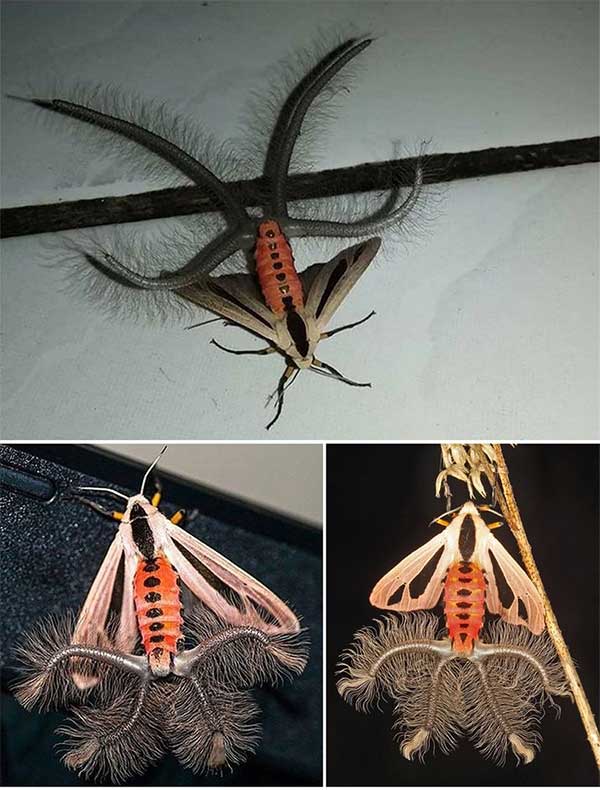
A bizarre, Pokémon-like creature found in Gia Lai province in Vietnam's Central Highlands once stunned the internet. It was eventually identified as the moth Creatonotos gangis, a member of the tiger moth subfamily Arctiinae.
7. The Tonkin snub-nosed monkey and its cheerful... slightly grumpy face
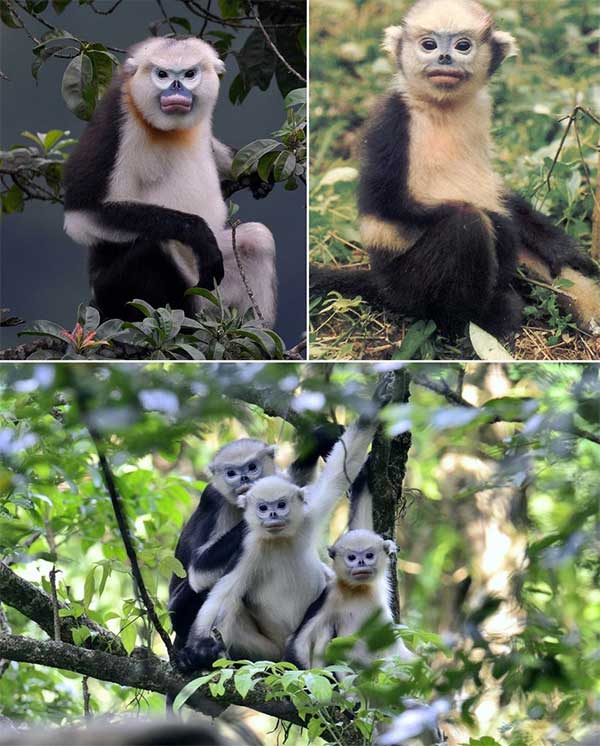
The Tonkin snub-nosed monkey, also known locally as "cà đác", is a primate with a rather comical face, featuring a pink nose and lips and a distinctive patch of bluish skin around the eyes. It is usually found at elevations of 200 to 1,200 meters in forests in the former Hà Giang province (now part of Tuyên Quang), Tuyên Quang, the former Yên Bái province (now part of Lào Cai), Cao Bằng and Quảng Ninh in northern Vietnam.
8. The big-headed turtle, an unusually large head
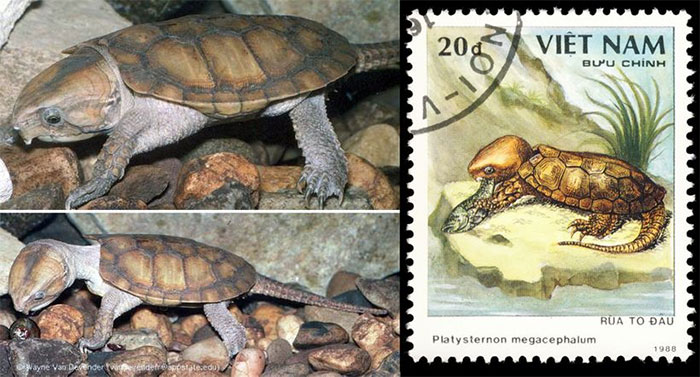
The big-headed turtle appeared on a Vietnamese postage stamp in 1988
The big-headed turtle belongs to the family Platysternidae. It lives in rocky forest streams with deep, clear, slow-moving water. During the day, it hides under boulders or basks on stream banks, and it forages at dusk or at night. Its diet consists mainly of small fish, mollusks, crabs, earthworms and other invertebrates.
9. A green-winged mantis with smiley faces
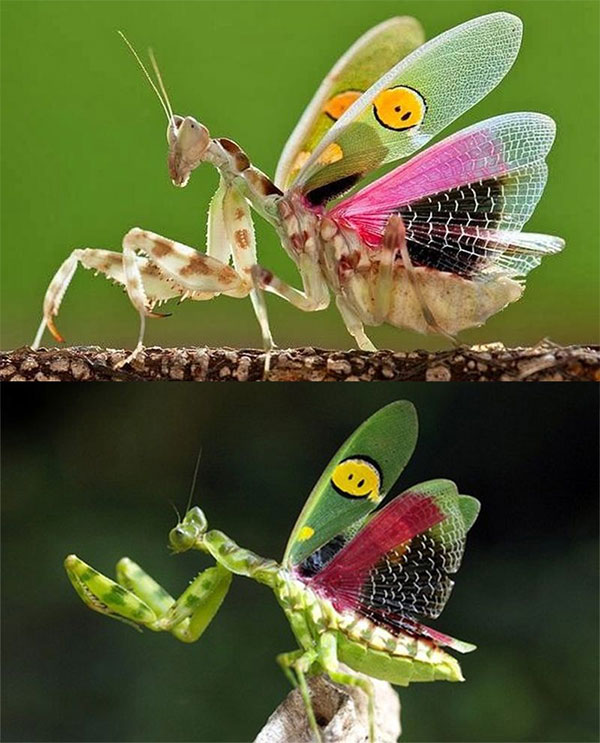
This colorful insect looks like a work of art by nature, and on top of that, its wings are "painted" with adorable smiley faces.
The green-winged mantis is quite rare; in Vietnam it has only been found in the forests of Tam Đảo National Park in northern Vietnam, Cúc Phương National Park in Ninh Bình province and Bạch Mã National Park near Huế in central Vietnam.
10. A short-legged lizard whose legs are mostly for show
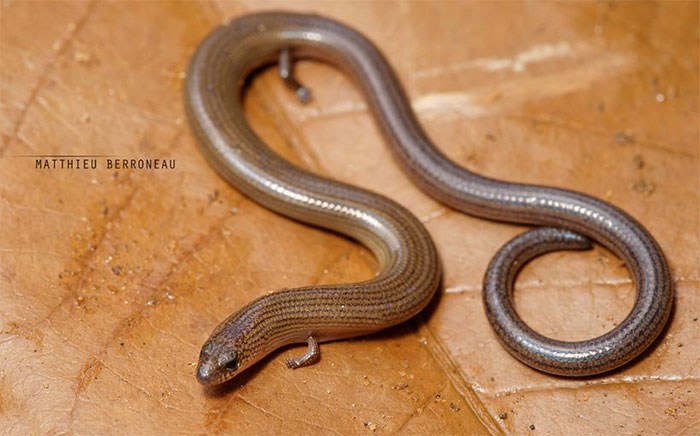
The short-legged lizard is a skink (family Scincidae) found in Vietnam and Southeast Asia. It is quite small, only 15 cm long. Although its limbs are reduced, each still has all five toes. Its legs are mostly for show, as they are barely strong enough to support its body.
11. The Indochinese flying lizard
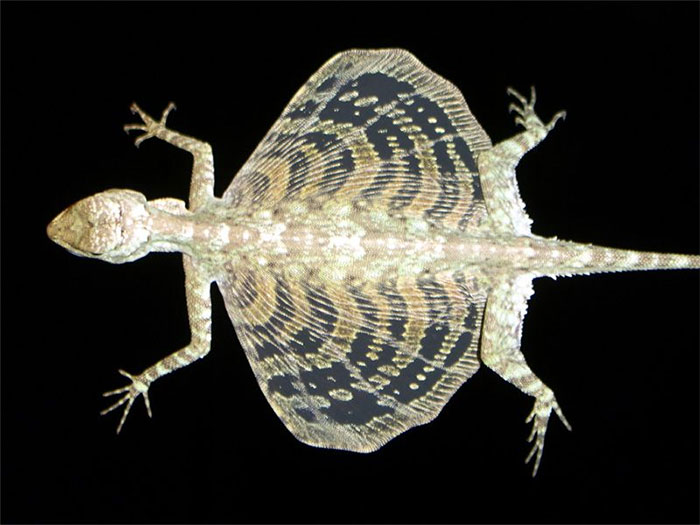
The Indochinese flying lizard belongs to the family Agamidae and lives in Cambodia and southern Vietnam. With a body length of about 10 cm, it lives in trees and rarely comes down to the ground. Very little is known about its diet and behavior.
12. Did the Nicobar pigeon borrow a peacock's coat?
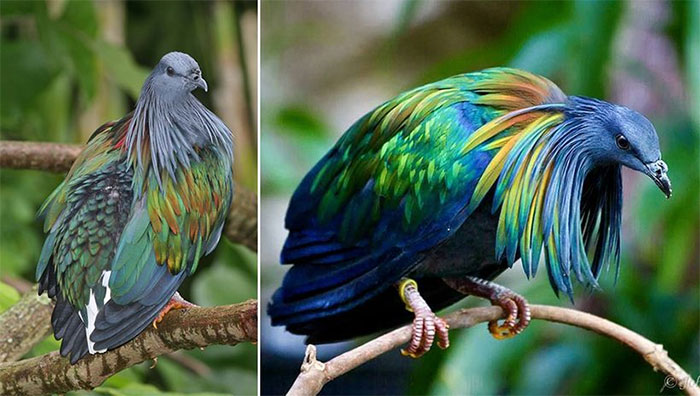
This pigeon, as colorful as a peacock, is found on small islands and coastal areas from the Nicobar Islands (India) to the Malay Archipelago and some Pacific islands.
In Vietnam, the Nicobar pigeon is found only on Côn Đảo, an island group off the south coast now administered by Ho Chi Minh City.
13. The mudskipper, a fish that runs and hops
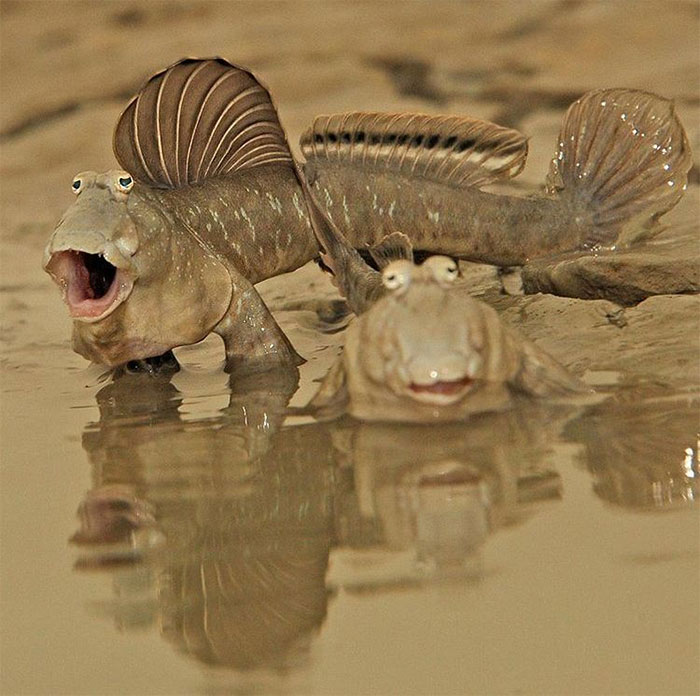
Mudskippers are fish in the goby family (Gobiidae) that live in estuaries, lower river reaches and coastal waters in the tropics. They can move across mudflats quite quickly, almost running and hopping. Mudskippers have no lungs, but by absorbing oxygen through their skin and the lining of their mouth and throat, they can breathe on land; in the water, they use their gills.
These fish are common in estuaries throughout the Mekong Delta.

The world's strangest roads
From a bridge that seems to end in midair to a road that plays music, these bizarre roads around the world draw travelers.

20 Survival Skills for When You're Lost in the Forest
Before exploring forests and mountains, learn these 4 preparation steps and survival skills in case you ever get lost deep in the woods.

Inside the Hanoi center conserving Vietnam's rarest lotus varieties
A center in Hanoi grows, studies and conserves nearly 40 rare lotus varieties from across Vietnam and abroad.
What is the longest river in Vietnam?
Vietnam has 392 rivers. Which is the longest originating in the country, and which is the longest flowing through its territory?

8 fascinating facts about Sơn Đoòng, the world's largest cave
Sơn Đoòng, in Vietnam's Phong Nha-Kẻ Bàng National Park, is widely regarded as the largest natural cave ever discovered. Here are 8 facts about it.