Vietnamese scientists resolve a microalgae mix-up that lasted more than a century
The study helps affirm, on the world stage, the strength of Vietnamese research in microalgal biology and ecology, and in particular that of the Institute of Oceanography (Viện Hải dương học) in Nha Trang, part of the Vietnam Academy of Science and Technology (Viện Hàn lâm Khoa học và Công nghệ Việt Nam, VAST).
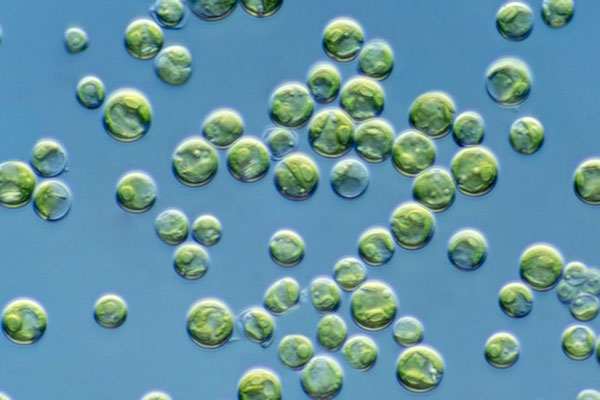
A team from the institute's Plankton Department recently published a paper in the Journal of Phycology 57(3): 1059-1083 (ranked Q1 in the SCI journal list of Vietnam's National Foundation for Science and Technology Development) reporting findings of major significance for the classification of microalgae worldwide.
The work settles a dispute that has divided taxonomists for more than a century. The paper's data on Vietnam's Ostreopsis dinoflagellates and its re-description of O. siamensis clearly establish the taxonomic position of Ostreopsis siamensis, a species that phycologists had long confused to varying degrees.
The dinoflagellate Ostreopsis siamensis was first discovered by Danish scientist Johannes Schmidt off southern Koh Chang, in the Gulf of Thailand, in 1901. Eighty years later, Fukuyo (1981) gave a detailed description of the species from specimens found in Japan's Ryukyu Islands. In the years since, scientists have recognized around 11 species in the genus Ostreopsis.
These species look almost identical and have exactly the same number of thecal plates, so identification has to rely on both morphological and genetic traits. Descriptions were often based on a single phenotype obtained from the wild or from cultures in which cells had changed abnormally, and they did not match Schmidt's (1901) description.
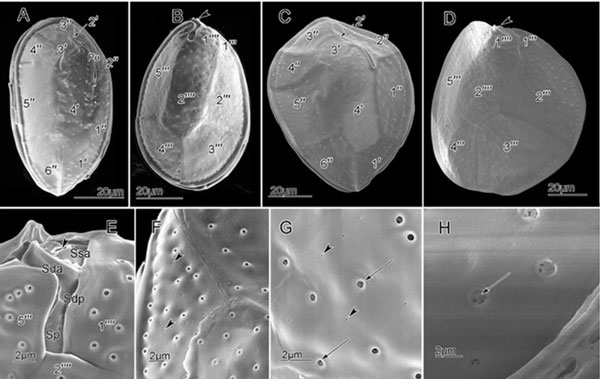
Ostreopsis siamensis from Vietnamese waters, designated as the epitype and deposited at the Oceanographic Museum, the Herbarium of the Institute of Tropical Biology (Viện Sinh học Nhiệt đới) in Ho Chi Minh City, and the Natural History Museum of Denmark (Photo: Institute of Oceanography).
Questions arose: "Has O. siamensis changed its morphology over more than 100 years of environmental change and global warming? Is the species real, or does it no longer exist in the sea?" Scientists could not find any type specimens in museums from that era, and this fueled much of the taxonomic debate.
Based on morphological and genetic evidence from specimens collected at Côn Đảo, an island group now administered by Ho Chi Minh City; along the Mỹ Hòa coast (Phan Rang, formerly Ninh Thuận province, now Khánh Hòa); in Nha Trang Bay; and at Ghềnh Ráng (Quy Nhơn, formerly Bình Định province, now Gia Lai), the paper showed that the Vietnamese specimens fully match Schmidt's (1901) original description and share the same genotype.
Under taxonomic principles, to be accurate and highly reliable, specimens must be found in the area where the species was first discovered. The paper determined that specimens from the waters off Phú Quốc, an island in the Gulf of Thailand (formerly Kiên Giang province, now An Giang), share the same morphological and genetic traits as those from Côn Đảo, Mỹ Hòa, Nha Trang and Quy Nhơn. Although cell shape varied slightly in the wild and some morphological changes appeared in culture, phylogenetic analysis showed that all the Vietnamese specimens in the study are O. siamensis.
Together with published work on harmful microalgae, red tide forecasting, marine biology and oceanography, and climate change, this paper helps affirm, on the world stage, the strength of Vietnamese research in microalgal biology and ecology, and in particular that of the Institute of Oceanography and VAST.
The findings on O. siamensis based on specimens collected in Vietnam have been recorded on AlgaeBase, the global online database of algae.

3 breathtaking, treacherous mountain roads in Hà Giang that rival Mã Pí Lèng
The winding roads of Hà Giang in Vietnam's far north, graceful as silk ribbons yet full of danger, hold a strange allure for travelers.
The beauty of Longquan celadon, one of the most traded treasures on the Silk Road
You don't need to be an expert to judge the value of a piece of Longquan porcelain: its glaze tells you much of what you need to know.
Why is bánh chưng eaten with pickled onions? A fun explanation
The harmonious pairing of tangy pickles and rich, fatty flavors is what makes bánh chưng, Vietnam's Tết sticky rice cake, so appealing.
13 bizarre creatures from Vietnam that amazed the internet
From leaf insects and mouse deer to mossy frogs and mudskippers, Vietnam is home to a surprising array of bizarre creatures.

The world's strangest roads
From a bridge that seems to end in midair to a road that plays music, these bizarre roads around the world draw travelers.

20 Survival Skills for When You're Lost in the Forest
Before exploring forests and mountains, learn these 4 preparation steps and survival skills in case you ever get lost deep in the woods.