Time passes more slowly when you ride a crowded train
The more crowded a train or bus is, the slower time seems to pass for each passenger.
If you end up on a packed bus or train car, all you can do is hope you reach your stop as soon as possible. Your experience of time, however, will do exactly the opposite.
The time people perceive depends on their subjective feelings and on how complex a situation is. That is why people often say that happy times fly by while miserable times drag on.
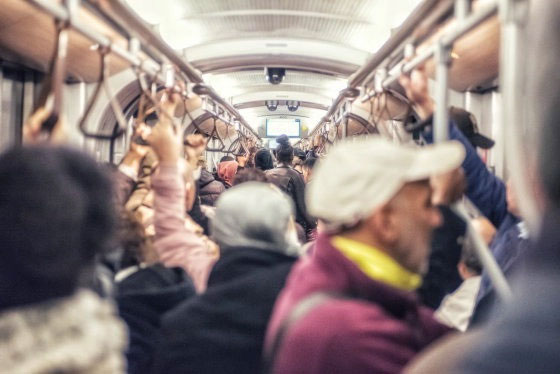
How people experience time depends on their subjective feelings and on how complex a situation is.
Previous studies have examined changes in perceived time using computer-based tasks and stimuli, but it remained unclear whether those findings hold up in real-world situations.
To find out, a team of researchers at Cornell University in the U.S. used a realistic virtual reality (VR) application to recreate the interior of a train. Their goal was to test how perceived time changes with the level of crowding.
You can watch a video of the application developed by the research team below.
A VR experiment simulating a crowded subway ride
Forty-one participants aged 19 to 51 wore VR headsets and took virtual rides inside a simulated subway car at different levels of crowding and for different durations. Each ride began with boarding a car resembling a New York City subway train and hearing the announcement "Stand clear of the closing doors". After the doors closed, the train departed, accelerated and arrived at the next station, where a chime signaled the end of the trip.
Crowding in the car ranged from "one person per square meter (35 people per car)" to "5 people per square meter (175 people per car)." Participants could move and walk around to look at their surroundings. According to the researchers, the passenger avatars were designed to mimic natural human behavior, such as shifting their stance, reading books and looking at their phones.
The duration of each virtual ride was randomly set at 60, 70 or 80 seconds, and each participant took a total of five virtual rides at different crowding levels. After each ride, participants rated how pleasant or unpleasant the experience was on a scale of 1 to 7 and were asked to estimate as accurately as possible how long the ride had lasted.
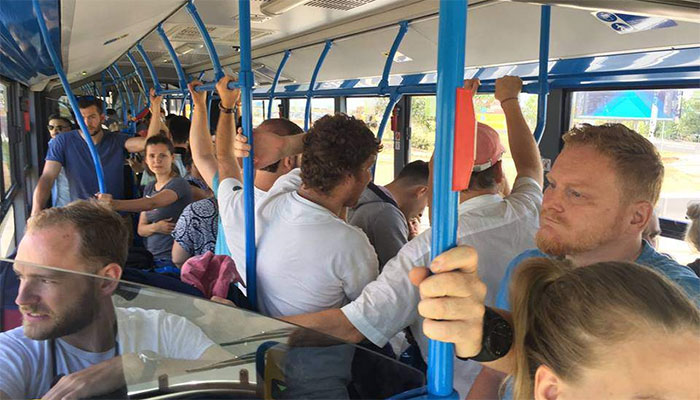
Crowded trains and buses make time feel longer.
The experiment showed that perceived travel time increased by an average of 1.8 seconds for every additional person per square meter. On the most crowded train, estimated travel time was about 10% longer than on the emptiest one. The change in perceived time was linked to how comfortable or uncomfortable the ride felt and the researchers suggest this may be because participants' personal space was invaded on the overcrowded train.
"It creates a feeling that makes the trip feel longer," said Saeedeh Sadeghi, a doctoral student and the study's lead author.
"This study shows how our everyday experiences and subjective feelings can profoundly distort our perception of time," said co-author Adam Anderson, a professor of psychology at Cornell University. "Time is not just a clock on display. It changes depending on how we feel about it as a resource and how we value it."
By some estimates, the average American who commutes by public transportation spends more than 60 minutes doing so. Based on this study's findings, crowded public transit adds 24 hours a year to these workers' perceived commuting time. That is also thought to be one reason many people choose to drive their own cars instead of taking public transport. The researchers say their findings could help engineers improve the design of public transit to give riders a better experience.

Fascinating fact: The University of Oxford is older than the Aztec civilization
Did you know that the University of Oxford is more than 200 years older than the mysterious ancient Aztec civilization?

What is the "full moon effect"? Does the full moon really drive sharks to attack?
Corals spawn, plankton dive deeper and lions hunt less under a full moon. Data spanning 50 years suggest sharks may also attack more often.

Vietnamese scientists resolve a microalgae mix-up that lasted more than a century
Vietnamese researchers have re-described the dinoflagellate Ostreopsis siamensis, ending more than 100 years of taxonomic confusion.
3 breathtaking, treacherous mountain roads in Hà Giang that rival Mã Pí Lèng
The winding roads of Hà Giang in Vietnam's far north, graceful as silk ribbons yet full of danger, hold a strange allure for travelers.
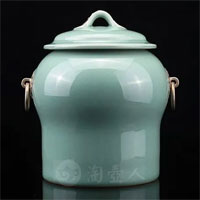
The beauty of Longquan celadon, one of the most traded treasures on the Silk Road
You don't need to be an expert to judge the value of a piece of Longquan porcelain: its glaze tells you much of what you need to know.

Does smiling make you more trustworthy?
Genuine smiles that engage the eye and cheek muscles are seen as more trustworthy than polite social smiles. Here is why.