Hạ Long Bay: A wonder of earth raised against the high sky
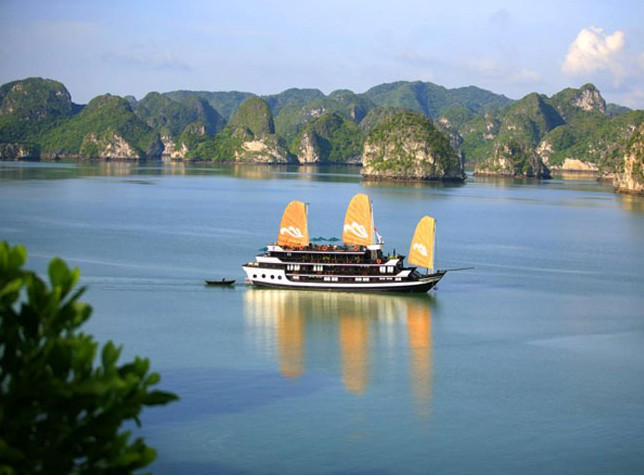
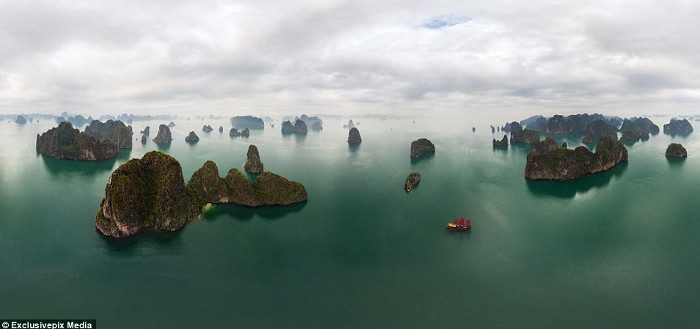
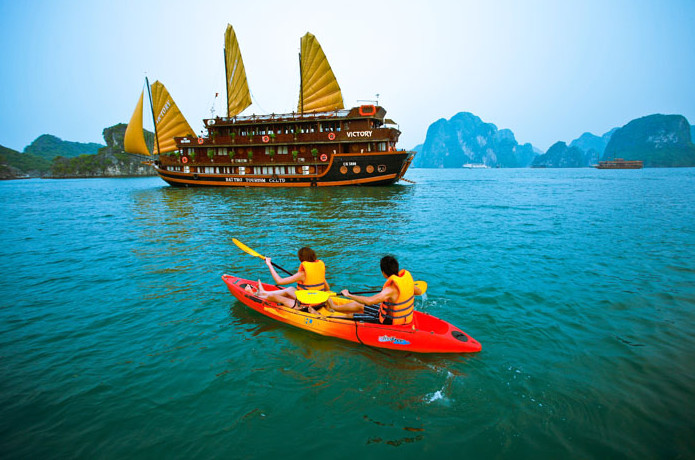
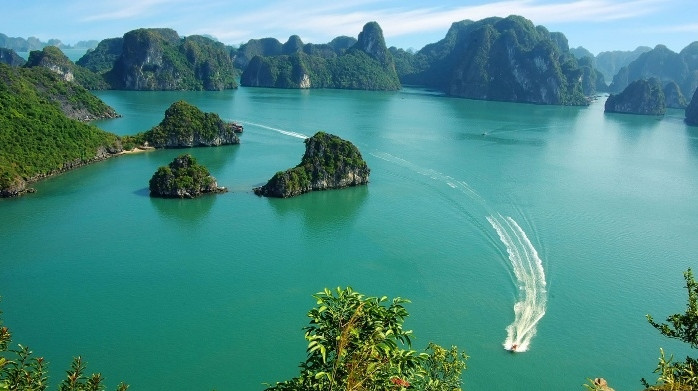
Hạ Long Bay lies in northeastern Vietnam, in the western part of the Gulf of Tonkin (Vịnh Bắc Bộ), and takes in the waters of the former Hạ Long city, the former Cẩm Phả city and part of the former island district of Vân Đồn in Quảng Ninh province. Bordered by Cát Bà Island to the southwest and by the mainland to the west, along a 120km coastline, the bay covers a total area of 1553km2 and contains 1969 islands large and small, 989 of them named and 980 still unnamed. The area recognized as World Heritage covers 434km2 and includes 775 islands, forming a triangle whose three corners are Đầu Gỗ Island (west), Ba Hầm Lake (south) and Cống Tây Island (east).
Hạ Long Bay: A World Natural Heritage site
Hạ Long Bay is a unique heritage site: it preserves important traces of Earth's formation and geological history, was a cradle of settlement for ancient Vietnamese people, and is a monumental work of natural sculpture, with thousands of rock islands in countless shapes and many spectacular caves that together form a world both vibrant and mysterious. The bay is also a hotspot of biodiversity, with characteristic ecosystems and thousands of richly varied plant and animal species. It is closely tied, too, to the proud cultural and historical heritage of the Vietnamese nation.
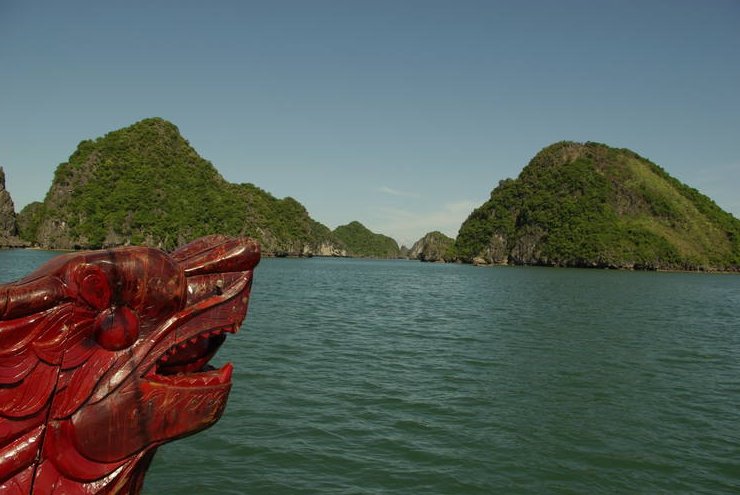
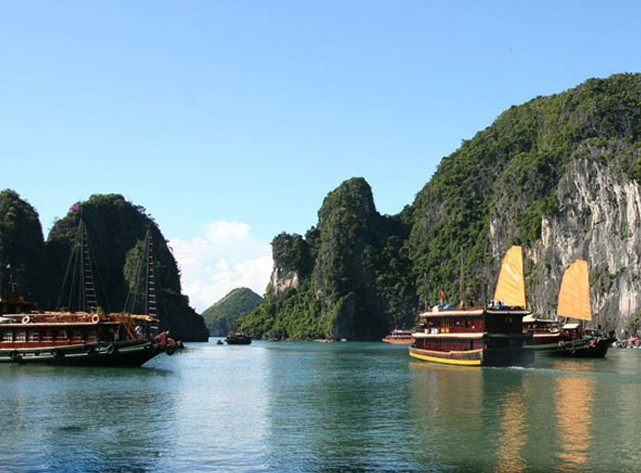
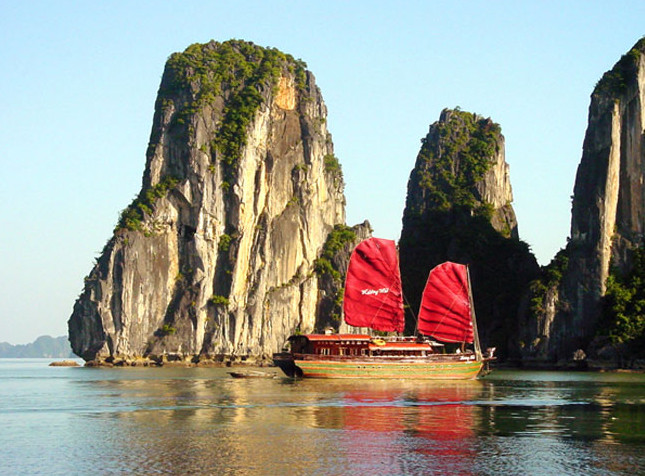
Aesthetic value: Hạ Long Bay stands out for its magnificent system of rock islands and caves. Its islands are of two types, limestone islands and schist islands, concentrated in two main areas: the southeast, in Bái Tử Long Bay, and the southwest, in Hạ Long Bay proper. This is one of the most ancient landscapes, with a geological age of 250 to 280 million years, the result of repeated uplift and subsidence that turned continent into sea basin and back again. Near-total karst erosion and weathering have produced a Hạ Long found nowhere else in the world.
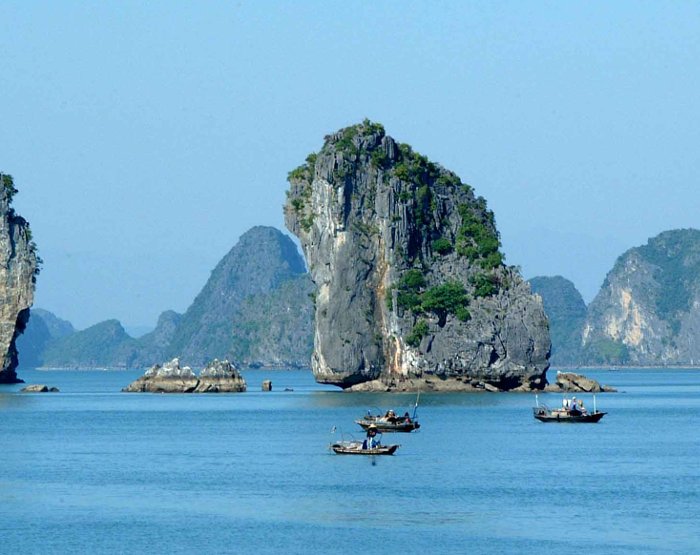
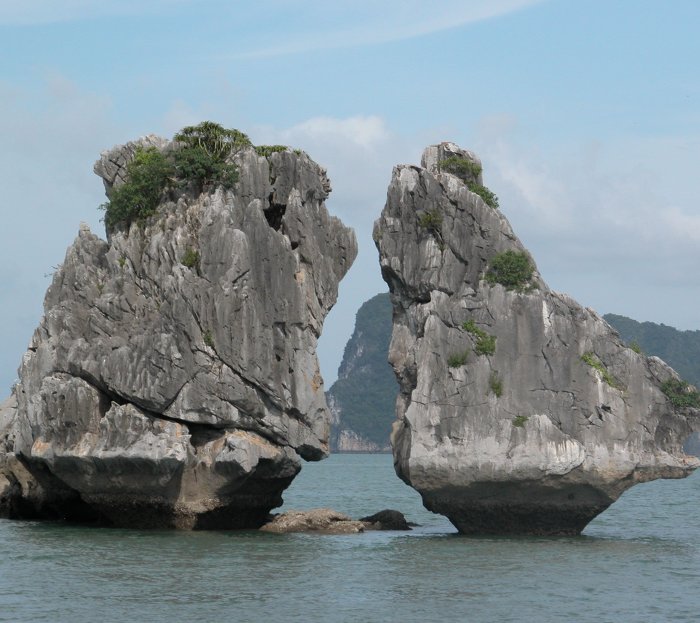
Hundreds of rock islands each have their own vivid shape: Head Islet (Đầu Người), Dragon Islet (Rồng), Lã Vọng Islet, Sail Islet (Cánh Buồm), Fighting Cocks Islet (Trống Mái), Incense Burner Islet (Lư Hương)... Hidden inside these islands are beautiful caves tied to many legends, such as Thiên Cung Grotto, Đầu Gỗ Cave, Sửng Sốt Cave, Trinh Nữ Cave and Tam Cung Grotto... They are truly nature's palaces on Earth. Long ago, the great national poet Nguyễn Trãi called Hạ Long "a wonder of earth raised against the high sky".
Geological value: Hạ Long Bay is assessed on two factors: tectonic history and geology and geomorphology. Over the past 1000 years, the bay has been defined by the sea advancing and widening it, strong erosion of the flat mangrove shores, clearer and saltier water, and the growth of coral. Active erosion by seawater has carved deep notches that add to the striking beauty of the karst strata. Hạ Long Bay is the result of a long geological evolution. Visitors come not only to a world wonder but also to a precious open-air geological museum preserved for up to 300 million years. The caves are vivid evidence of how changing sea levels eroded the rock through successive geological periods. The bay's geological setting also underpins its other values, including biodiversity, archaeology and other human heritage.
Hạ Long Bay is home to high biodiversity, with tropical marine ecosystems including mangrove forests, coral reefs, seagrass beds, tropical forests and, notably, the distinctive "tùng" and "áng" ecosystems of enclosed karst lagoons.
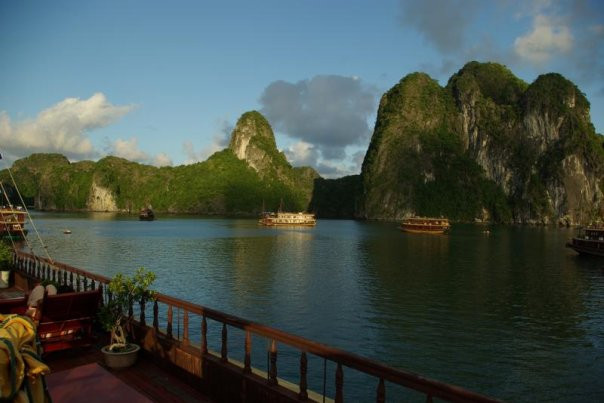
Preliminary surveys so far put the flora of the Hạ Long Bay area at about 347 species of vascular plants belonging to 232 genera and 95 families. Of the 347 known plant species, 16 are listed as endangered or vulnerable in Vietnam's Red Data Book. Among the rare plants, 95 species are traditionally used as medicinal plants, 37 are ornamental, 13 are fruit trees and 10 groups have various other uses.
The islands of Hạ Long Bay host a diverse array of mollusks, especially species living in rock crevices, and as many as 60 endemic animal species. Seafood harvested and farmed in Hạ Long includes abalone, sea cucumbers, peanut worms, shrimp, fish, squid (including pencil squid, cuttlefish and bigfin reef squid), octopus, blood cockles, and pearl-producing mussels and oysters…
Hạ Long Bay is also a land bearing glorious chapters of Vietnamese history, with famous sites such as Vân Đồn, home to a bustling ancient trading port in the 12th century, and the historic Bài Thơ Mountain. Hạ Long was also one of the cradles of human settlement, with the flourishing Late Neolithic Hạ Long Culture found at famous archaeological sites such as Đồng Mang, Xích Thổ, Soi Nhụ and Thoi Giếng...
On December 17, 1994, at the 18th session of UNESCO's World Heritage Committee held in Thailand, Hạ Long Bay was officially inscribed as a World Natural Heritage site for its outstanding aesthetic value, under the criteria of the Convention Concerning the Protection of the World Cultural and Natural Heritage. On December 2, 2000, at its 24th session in Cairns, Queensland, Australia, the World Heritage Committee recognized Hạ Long Bay as World Heritage for a second time, under the criterion for geological and geomorphological value. In 2023, the World Heritage Committee extended the site to include the Cát Bà Archipelago, inscribing it as "Hạ Long Bay – Cát Bà Archipelago".