The mystery of birds' "quantum sense"
Scientists at the University of Tokyo in Japan have directly observed a mysterious reaction thought to underlie the ability of birds and many other creatures to sense the direction of Earth's poles.
More importantly, this is evidence of quantum physics directly influencing a biochemical reaction in a cell, something that has long been hypothesized but never seen in action before.
Using a custom-built microscope sensitive to faint flashes of light, the team watched a culture of human cells containing a special light-sensitive material respond dynamically to changes in a magnetic field.
The change the researchers observed in the lab matches what would be expected if a quirky quantum effect were responsible for the luminous reaction.
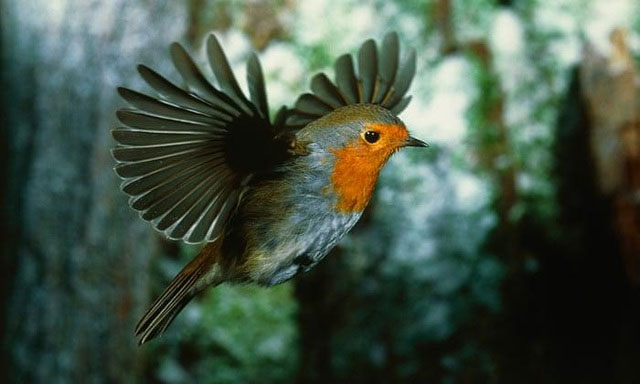
In migratory birds, cryptochromes are linked to a mysterious ability to sense magnetic fields.
"We've not modified or added anything to these cells. We think we have extremely strong evidence that we've observed a purely quantum mechanical process affecting chemical activity at the cellular level," said biophysicist Jonathan Woodward.
So how are cells, particularly human cells, able to respond to magnetic fields? While several hypotheses have been put forward, many researchers think the ability is due to a unique quantum reaction involving light receptors known as cryptochromes.
Cryptochromes are found in the cells of many species and are involved in regulating circadian rhythms. In migratory birds, dogs and other species, they are linked to a mysterious ability to sense magnetic fields.
In fact, while most of us can't see magnetic fields, our cells certainly contain cryptochromes. And there is evidence that, even if not consciously, humans are still capable of detecting Earth's magnetism.
To see the reaction inside cryptochromes in action, the researchers bathed a culture of human cells containing cryptochromes in blue light, which caused them to fluoresce weakly. As they glowed, the team repeatedly swept magnetic fields of various frequencies over the cells. They found that each time the magnetic field passed over the cells, their fluorescence dipped by about 3.5% — enough to indicate a direct reaction.
How can a magnetic field affect a light receptor? It all comes down to spin — an innate property of electrons.
We already know that spin is significantly affected by magnetic fields. Arrange electrons in the right way around an atom and gather enough of them together in one place, and the resulting mass of matter can be made to move using nothing more than a weak magnetic field like the one surrounding our planet.
One intriguing implication of the research concerns how magnetic fields, even weak ones, might indirectly influence other biological processes. While evidence of magnetism affecting human health is weak, experiments like this one could prove to be another avenue of investigation.
The researchers stress that the study shows the relationship between the spins of two individual electrons can have a major influence on biology.
Of course, birds aren't the only animals with this ability. Fish, worms, insects and even some mammals have similar abilities. We humans may even be cognitively affected by Earth's faint magnetic field.
Super-cute new crocodile newts discovered in Vietnam
Scientists have described two new species and one new subspecies of crocodile newt from northern Vietnam, already threatened by trade and habitat loss.
Half-deer, half-mouse creature resurfaces in Vietnam after nearly 30 years
The silver-backed chevrotain, a tiny mouse-deer feared lost for nearly three decades, has been photographed by camera traps in southern Vietnam.
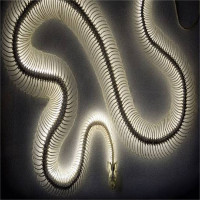
New bizarre "ghost snake" species discovered in Madagascar
Experts believe the pale grey snake, named Madagascarophis lolo, is a new species of cat-eyed snake.
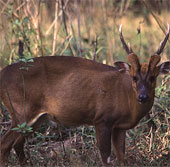
Rare giant muntjac spotted in Vietnam's Saola Nature Reserve
Staff at the Saola Nature Reserve in central Vietnam have captured images of the rare giant muntjac (Muntiacus vuquangensis) living in the wild.
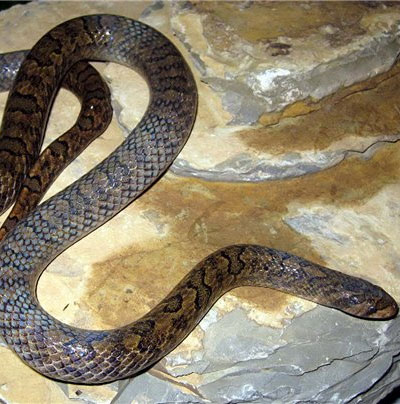
New kukri snake species discovered in Vietnam
Scientists from France, Vietnam, China and Germany have described a new kukri snake, Oligodon nagao, from specimens collected in China, Vietnam and Laos.
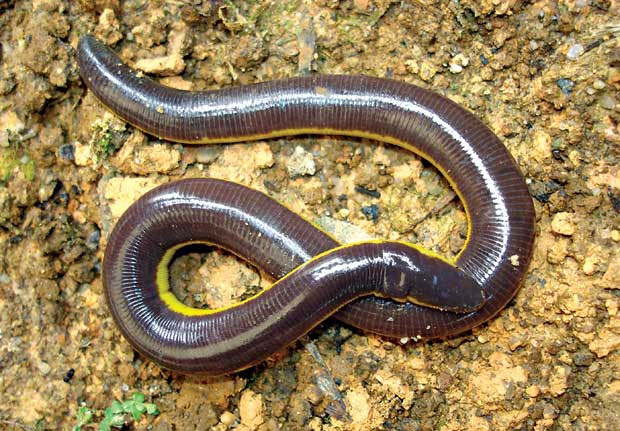
New species of caecilian discovered in Vietnam
Japanese and Russian scientists have described a new caecilian from Vietnam's Central Highlands, only the second caecilian species recorded in the country.