Super-cute new crocodile newts discovered in Vietnam
Scientists have revealed two new species and one new subspecies of crocodile newt recently discovered in northern Vietnam.
Unfortunately – but perhaps unsurprisingly – these oddly adorable creatures already face a triple threat from traditional medicine, habitat loss and the pet trade.
Reporting in the journal ZooKeys, a team of German and Vietnamese scientists studied a number of specimens collected during field surveys near the Đà River, also known as the Black River, in northern Vietnam. Based on genetic and morphological comparisons, they identified two species (Tylototriton pasmansi and Tylototriton sparreboomi) and one subspecies (Tylototriton pasmansi obsti) previously unknown to science, bringing the total number of crocodile newt species recognized in Vietnam to seven.
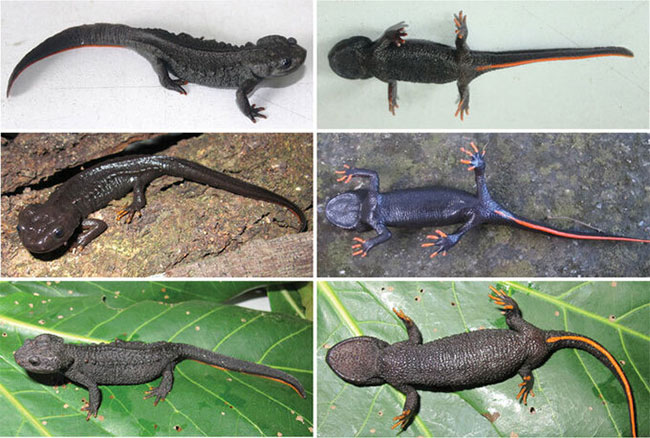
The two new species and new subspecies of crocodile newt (top to bottom), discovered in several provinces of northern Vietnam. (Photo: ZooKeys).
Measuring just 12 to 15 cm from snout to tail, the three new members are characterized by dark, bumpy skin and large, round eyes. The researchers believe these crocodile newts had been seen before but were usually mistaken for the rough-skinned crocodile newt (Tylototriton asperrimus). As it turns out, that species actually lives only in one area of southern China.
All members of the genus Tylototriton, also known as knobby newts, have attracted the attention of exotic pet traders and practitioners of traditional Chinese medicine. On top of that, the genus is threatened by habitat loss driven by urbanization, infrastructure development and agricultural intensification. As a result, the rough-skinned crocodile newt is listed as Near Threatened on the IUCN Red List. In Vietnam, illegally hunting, trading or consuming protected wildlife is against the law and can lead to criminal prosecution.
However, the new findings suggest these animals may be even scarcer than previously thought. Although the discovery of new species may look like a big win for biodiversity, in reality it means that what was considered the rough-skinned crocodile newt is now split into several smaller groups, each with a narrower range.
As the researchers wrote in their paper: “the taxonomic splitting of a widespread species into several species with smaller ranges… has important implications for the conservation status of the original species.”
The team therefore recommends reassessing the Near Threatened status of the rough-skinned crocodile newt T. asperrimus sensu stricto to reflect the taxonomic changes and the growing threats from international trade and habitat loss over the past decade.
Half-deer, half-mouse creature resurfaces in Vietnam after nearly 30 years
The silver-backed chevrotain, a tiny mouse-deer feared lost for nearly three decades, has been photographed by camera traps in southern Vietnam.
New bizarre "ghost snake" species discovered in Madagascar
Experts believe the pale grey snake, named Madagascarophis lolo, is a new species of cat-eyed snake.
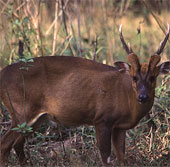
Rare giant muntjac spotted in Vietnam's Saola Nature Reserve
Staff at the Saola Nature Reserve in central Vietnam have captured images of the rare giant muntjac (Muntiacus vuquangensis) living in the wild.
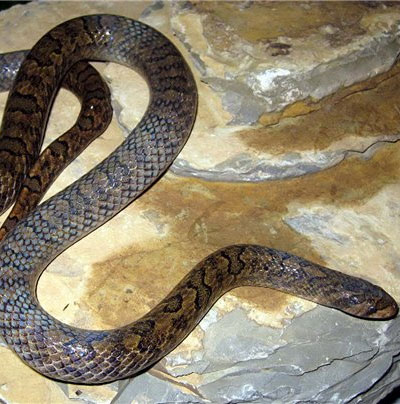
New kukri snake species discovered in Vietnam
Scientists from France, Vietnam, China and Germany have described a new kukri snake, Oligodon nagao, from specimens collected in China, Vietnam and Laos.
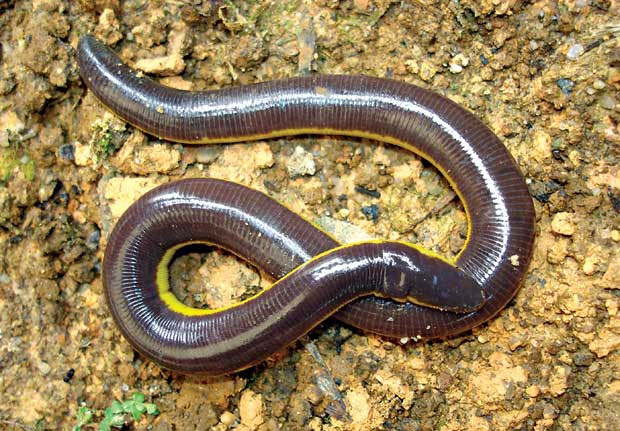
New species of caecilian discovered in Vietnam
Japanese and Russian scientists have described a new caecilian from Vietnam's Central Highlands, only the second caecilian species recorded in the country.
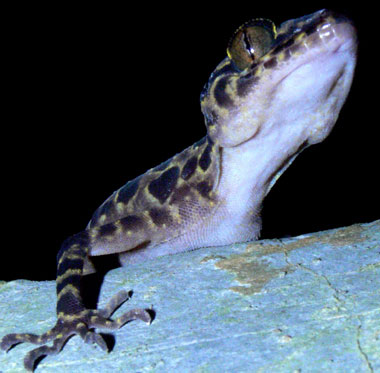
New bent-toed gecko species discovered in Vietnam
Two zoologists have found a bent-toed gecko new to science in Cúc Phương National Park in Ninh Bình province, northern Vietnam.