Unraveling the Long Vân fountain beside Hanoi's Sword Lake: a story of history
Behind the legendary fountain in the heart of Hanoi, right beside Hoàn Kiếm Lake, lies a whole chapter of history.
Đông Kinh Nghĩa Thục Square sits on the northwestern shore of Hồ Gươm (Hoàn Kiếm Lake, also known as Sword Lake) in central Hanoi, Vietnam's capital, and is one of the city's best-known spots for both domestic and international visitors. It is where five streets meet — Lê Thái Tổ, Hàng Đào, Hàng Gai, Đinh Tiên Hoàng and Cầu Gỗ — and is regarded as the gateway to Hanoi's Old Quarter.
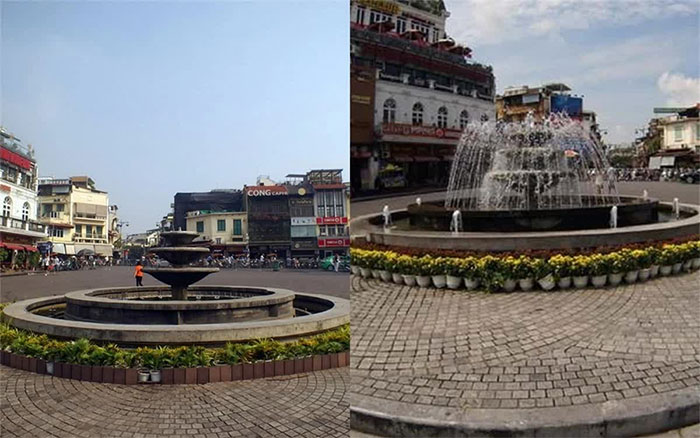
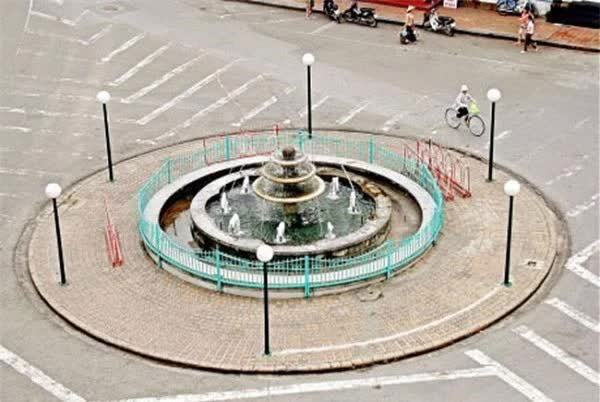
The Long Vân fountain, right next to Hoàn Kiếm Lake.
Strolling around Hoàn Kiếm Lake, many people can't help noticing a fountain, yet few know the stories hidden behind it.
In the early 20th century, this spot was a junction where tram lines heading in three different directions across Hanoi met. The French planned the square and, after recognizing the traffic problems there, built a fountain in 1954 that served as a roundabout to regulate vehicles.
Originally the structure was simple: a circular basin with a stone fountain in the middle, shaped like a dish set on a cylindrical pedestal. Later, two smaller dish-shaped tiers were added on top, giving the fountain the three tiers it has today.
Long Vân is the name old-time Hanoians gave the fountain, after the famous Long Vân ice cream parlor that stood right next to it. Today, the parlor survives only in the memories of some of the city's older residents.
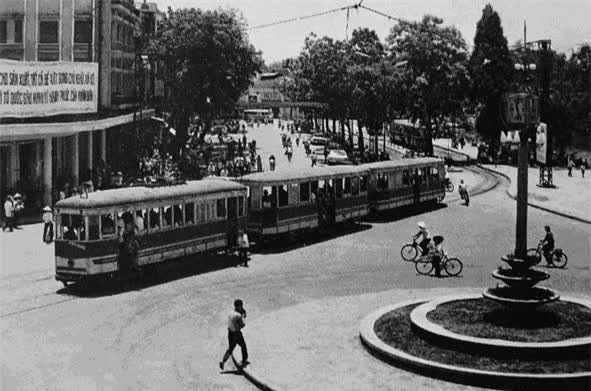
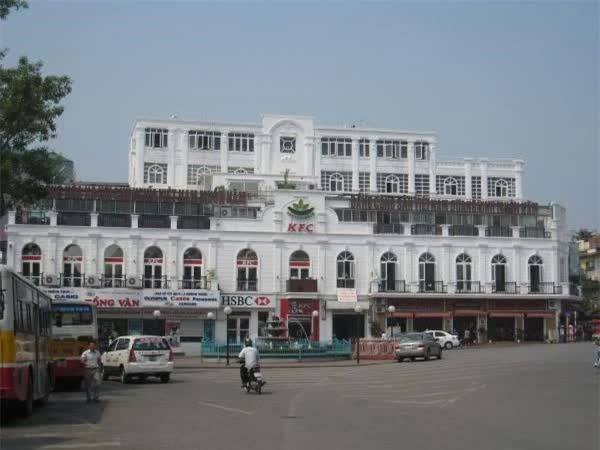
Long Vân is the name old-time Hanoians gave this fountain.
In the 1960s and 1970s, the Long Vân fountain was filled with soil and planted with trees, and its base was rebuilt in concrete with a clock tower placed on top. It was not until the late 1980s that the fountain regained its original function, spraying water for city residents to enjoy.
City authorities formally renovated the fountain in the 1990s, adding a permanent fence around it. In 2014, Hanoi renovated it once again, removing the fence to mark the 60th anniversary of the capital's liberation.
Some say this legendary fountain serves as a kind of "Km 0 marker" for Hanoi, meaning it is the structure located at the "most central" point of the city.