The origins of pho
In 2024, Vietnam's Ministry of Culture, Sports and Tourism (Bộ Văn hóa, Thể thao và Du lịch) announced its official list of national intangible cultural heritage in the category of folk knowledge, with a notable inclusion: Hà Nội pho and Nam Định pho. The news immediately drew strong interest online, especially among food lovers. Faced with dishes that seem so familiar, many people found themselves wondering: where did Hanoi pho and Nam Định pho actually come from?
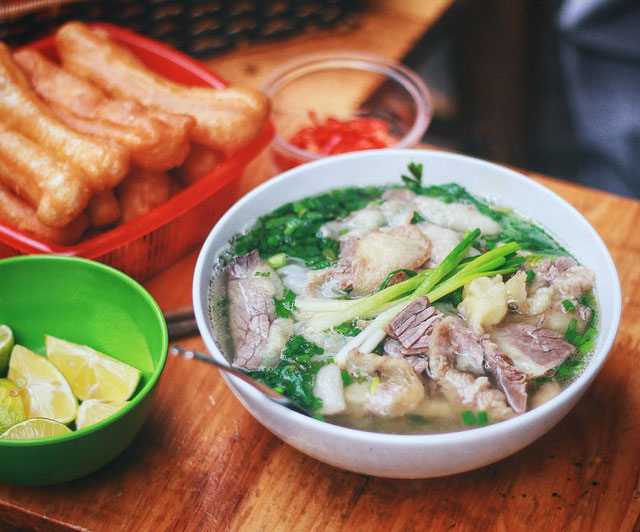
Pho is a familiar dish for people in Vietnam. (Photo: @peashalala).
The origins of pho
Many researchers fond of the dish have offered explanations for the origin of pho, and the hypotheses vary widely. One theory holds that the name “phở” was borrowed from the word “feu” (French for fire) in the name of the dish pot-au-feu (beef soup) that was introduced to Vietnam during the French colonial period. However, this beef soup is stewed with vegetables such as carrots, leeks and turnips and eaten with bread. Clearly, from its ingredients to the way it is eaten, the dish has little in common with Vietnamese pho, in either form or substance.
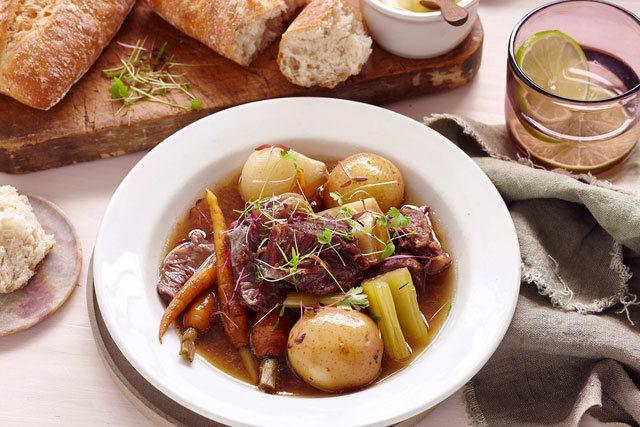
The French dish pot-au-feu (beef soup). (Photo: Taste).
Another theory holds that pho was invented by villagers in the former Nam Định province (now part of Ninh Bình province), south of Hanoi, in 1898, when the French colonial administration began building the Nam Định textile mill. French technicians and thousands of workers flocked to the area to work at what was then the largest textile mill in Indochina. Some locals with a knack for cooking found ways to combine and refine the "xáo" soup, cooking it with plain rice noodles, scallions and fresh herbs and adjusting the seasoning to suit their customers' tastes.
When construction workers moved from Nam Định to Hanoi to work on the Long Biên Bridge project, pho quickly spread beyond the village. Carrying pho stalls on shoulder poles, poor villagers followed the construction workers, soon earning a decent income from selling pho and quickly turning the dish into a favorite of the capital's residents.
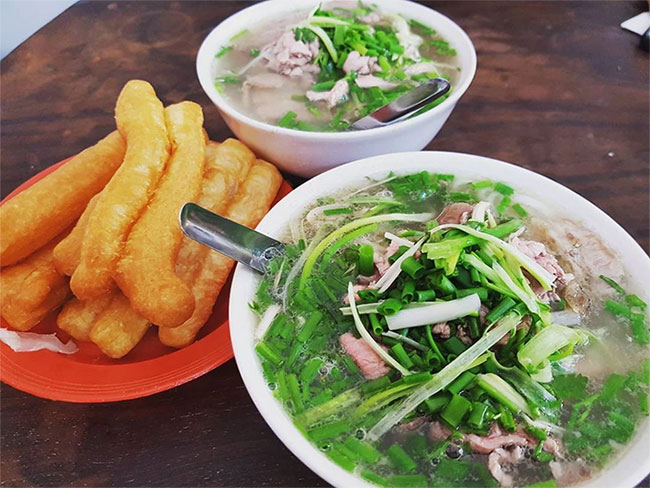
In Hanoi, pho depends mainly on the quality of the broth.
But these explanations all appear to remain mere hypotheses. Pho is believed to have originated in Vietnam more than 100 years ago, invented by talented farmers who combined simple yet refined ingredients, shaped by Vietnamese people's own creative ways. Writer and researcher Nguyễn Ngọc Tiến has also noted that pho went from a meal for laborers at the riverside wharves to an elaborate delicacy, because the people of Thăng Long–Hanoi, driven by the demands of the middle class and having both creativity and time, at that point “transformed” many dishes from the countryside into Hanoi dishes, with a certain “refinement”, and sophistication… From there, pho developed in very different directions.
In the "Nam Định version of pho", slices of beef are stir-fried with garlic and a few pieces of tomato, then laid on top of blanched pho noodles before the cook pours a ladle of fragrant broth into the bowl. Hanoians, by contrast, take a minimalist approach to the dish. In Hanoi, pho relies mainly on the quality of the broth, to the point that even herbs are seen as something that could detract from its flavor.
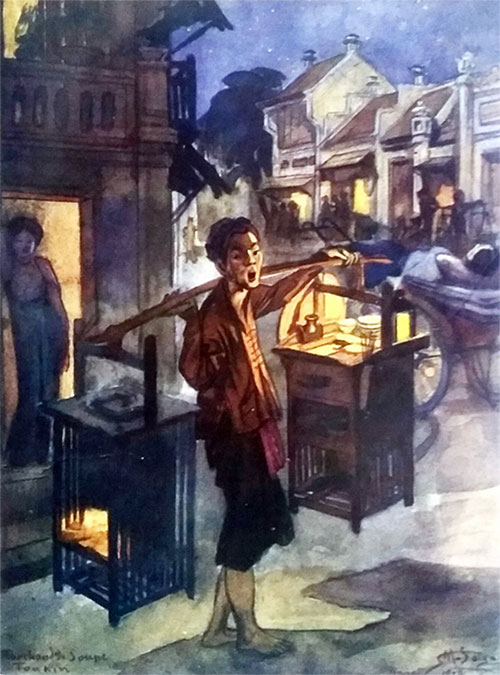
An illustration of a street pho vendor carrying a shoulder-pole stall.
Writing about pho, the writer Thạch Lam described it in his book “Hà Nội băm sáu phố phường” (Hanoi's Thirty-Six Streets): “Pho is a special treat of Hanoi; Hanoi is not the only place that has it, but it is only in Hanoi that it is truly delicious”. In his view, “Good pho must be ‘classic’ pho, cooked with beef, ‘the broth clear and sweet, the noodles soft but not mushy, the fatty brisket crunchy rather than chewy, with lime, chili and onion all present’, ‘fresh herbs, northern pepper, a few drops of sharp cốm lime, plus a touch of cà cuống (giant water bug essence), as faint as a suspicion’”.
By the 1940s, pho was already very popular in Hanoi, a treat eaten throughout the day by people of all classes and generations, especially civil servants and laborers. People could eat pho all day long, for breakfast, lunch and dinner. Pho has accompanied the ups and downs of life in Hanoi for more than a century. Over time, and through the twists and turns of history, pho spread to many regions: from villages to cities, at home and following Vietnamese people across the five continents; through times of hardship and scarcity and of social upheaval, as well as times of peace and plenty. Pho has remained part of everyday life, enjoyed by people of all ages, young and old, men and women, and is even a favorite dish of many diners.
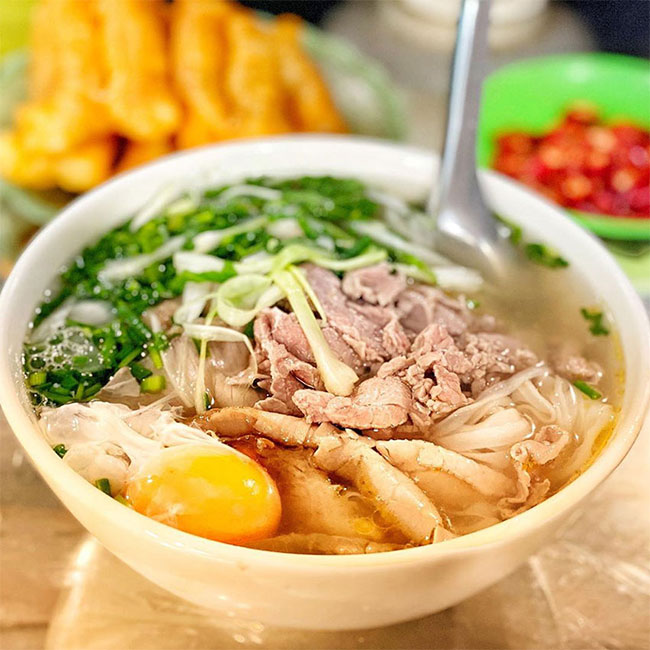
People can eat pho all day long, for breakfast, lunch and dinner.
Pho's century-long journey
The elders of the pho trade have summed up pho's century-long journey as follows: in the early period, 1908–1930, pho emerged and took shape; from 1930 to 1954, pho developed and reached its heyday; 1954 to 2000 was a turbulent period that gave pho a diverse, multifaceted character. Entering the 21st century, pho can be considered to have officially entered a period of integration, globalization and industrialization.
Pho has also traveled beyond Vietnam's borders to many countries around the world.
In September 2007, pho was officially included in the Shorter Oxford English Dictionary, published on Sept. 20 in the U.K. and the U.S. Pho officially became an entry in one of the world's most prestigious English dictionaries, which also helped put Vietnamese cuisine on the world culinary map.
In 2011, together with fresh spring rolls (gỏi cuốn), Vietnamese pho was named by CNN (U.S.) among the world's 50 most delicious foods.
Since 2017, Dec. 12 has been celebrated in Vietnam as Pho Day, which has become an annual tradition promoting tourism and community culture. In 2019, pho made CNN's list of the 10 best dishes in the world.
On Aug. 23, 2022, Vietnam's banh mi, pho and coffee made CNN's list of the 50 best street foods in Asia...
Now both Hanoi pho and Nam Định pho have been honored as dishes of national intangible cultural heritage in 2024.

Foreign tourists enjoying pho. (Photo: Nam Nguyễn, Khiếu Minh).
From its emergence and into the future, pho will surely keep an important place on the Vietnamese menu. If someone wonders why Vietnamese people love pho so much, one possible reason is that Vietnam has a hot and humid climate, so dishes with plenty of broth or soup, like pho, help satisfy that need. Moreover, pho suits Vietnamese tastes well because it is skillfully cooked from rice, bones, meat, vegetables and spices. Hanoi has many busy pho restaurants with secret family recipes, and each has its own loyal customers whose tastes it suits.
In the former Nam Định province, there are villages that specialize in making pho, such as Vân Cù and Giao Cù, where many people have kept the trade alive from generation to generation, taking pho everywhere, both within Vietnam and abroad. Calling pho the "quintessence of the nation" is no exaggeration: pho remains both an everyday dish and a specialty deeply imbued with the traditional cultural identity of the Vietnamese people.
Unraveling the Long Vân fountain beside Hanoi's Sword Lake: a story of history
Behind the legendary Long Vân fountain beside Hoàn Kiếm Lake in central Hanoi lies a whole chapter of the capital's history.