

Vietnam trials growing temperate essential-oil plants
Peppermint, lavender, rosemary and other varieties are being trial-grown so they can be acclimatized and processed into essential oils.
Vietnam's State-level Council for Science and Technology has just approved a 7-hectare model for growing plants and producing essential oils in Lâm Đồng, a province in Vietnam's Central Highlands. The project, part of the Tây Nguyên (Central Highlands) Program 2016–2020, was carried out by Dr. Lưu Đàm Ngọc Anh of the Vietnam National Museum of Nature (Bảo tàng Thiên nhiên Việt Nam), under the Vietnam Academy of Science and Technology.
Vietnam imports large quantities of these plants every year. The trial model therefore aims to acclimatize high-value commercial essential-oil varieties to supply the fragrance, food, cosmetics and chemical, pharmaceutical and beauty-care industries.
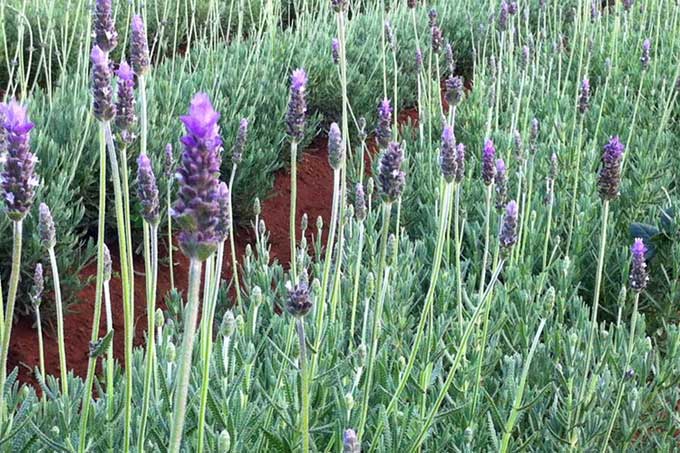
A lavender growing model at Vạn Thành flower village in Đà Lạt, Lâm Đồng province. (Photo: Dalat Lavender Garden).
Twenty-five essential-oil varieties belonging to species such as peppermint (Mentha piperita), chamomile (Matricaria chamomilla), lavender (Lavandula angustifolia), rosemary (Salvia rosmarinus, formerly Rosmarinus officinalis) and sage (Salvia officinalis) have been imported for trial cultivation.
The research team has so far selected one peppermint variety (originating from a botanical garden in Moscow, Russian Academy of Sciences), two chamomile varieties (the Russian "Moscow Suburbs" and Camly varieties) and one lavender variety (originating from the Central Botanical Garden of the National Academy of Sciences of Belarus). These varieties grow well in the Central Highlands and deliver satisfactory essential-oil content and yields. In addition, two lemongrass varieties with high levels of essential oil, citral and citronellal were also selected for trial planting in the models.
The imported varieties are currently kept in the germplasm collection garden of the Tay Nguyen Institute for Scientific Research (Viện Nghiên cứu khoa học Tây Nguyên). The project has also handed over planting stock, cultivation techniques and essential-oil processing technology to local growers so the model can be scaled up.
