

Vietnam's "super bridge" sets a Southeast Asian record: nearly 5,000 billion VND and a place in the world's top 10
Construction began on September 25, 2004, and on April 24, 2010, the Cần Thơ Bridge — linking Cần Thơ city with Vĩnh Long province in Vietnam's Mekong Delta — was inaugurated and opened to traffic, becoming the cable-stayed bridge with the longest main span in Southeast Asia (a main span of 550 m); it also ranked among the world's top 10 cable-stayed bridges by span length.
As of 2024, 14 years after its inauguration, the bridge across the gentle Hậu River was reported to still hold both records.
The bridge is the result of nearly 2,000 days and nights of tireless work by Japanese and Vietnamese engineers and bridge builders.
With a total investment of nearly 5,000 billion VND, funded by Official Development Assistance (ODA) from the Japanese government and counterpart funding from the Vietnamese government, the Cần Thơ Bridge has become a landmark of infrastructure development and a major driver of growth for Cần Thơ in particular and the Mekong Delta as a whole.
Seen through a fresh lens, what would "imagined" images of the Cần Thơ Bridge (as it stands today) created by Copilot, Microsoft's AI application, look like?
Take a look:

A symbol of the Mekong Delta, the Cần Thơ Bridge connects the two banks of the Hậu River, replacing the Cần Thơ ferry crossing that had operated for more than 100 years. Since entering service, the bridge has shortened travel times and increased the volume of goods and passengers moving between Ho Chi Minh City and Cần Thơ.

The entire route (including the main bridge and its approach roads) has a total length of 15.85 km and a height of 175.3 meters. The main bridge is a 1,010-meter cable-stayed structure with a design speed of 80 km/h, including a 550-meter central cable-stayed span — the longest in Southeast Asia.

The bridge is designed with inverted Y-shaped pylons holding 216 cables. The deck cross-section is 23.1 m wide (comprising four traffic lanes, each 3.5 m wide, and two pedestrian walkways, each 2.75 m wide). The navigational clearance is 39 m, allowing vessels of up to 10,000 DWT to pass through easily.
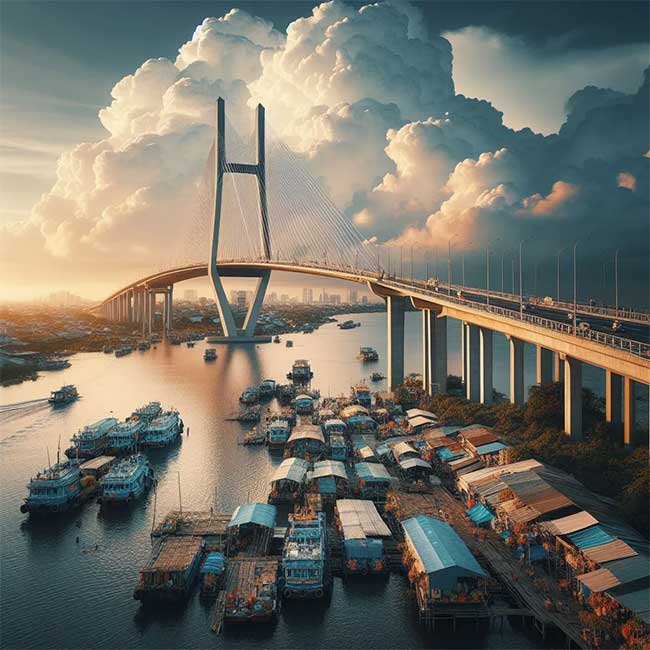
The bustling scene of Cái Răng Floating Market — the largest and most impressive floating market in Vietnam — beneath the Cần Thơ Bridge. Voted by the renowned British travel guide Rough Guides as one of the "10 most impressive markets in the world" in 2016, Cái Răng Floating Market's greatest appeal is how it has preserved the distinctive culture of the river region. In 2016, Vietnam's Ministry of Culture, Sports and Tourism recognized Cái Răng Floating Market as a National Intangible Cultural Heritage.

As a symbol of the Mekong Delta, the Cần Thơ Bridge is an attractive destination for travelers. Its unique charm is best revealed if visitors choose the right time to go. One of the best times to admire the bridge is after nightfall, when colorful lights make it look as if it stretches endlessly across the Hậu River. Thanks to its dazzling night-time lighting, the Cần Thơ Bridge is also listed among the most beautiful bridges in Vietnam.
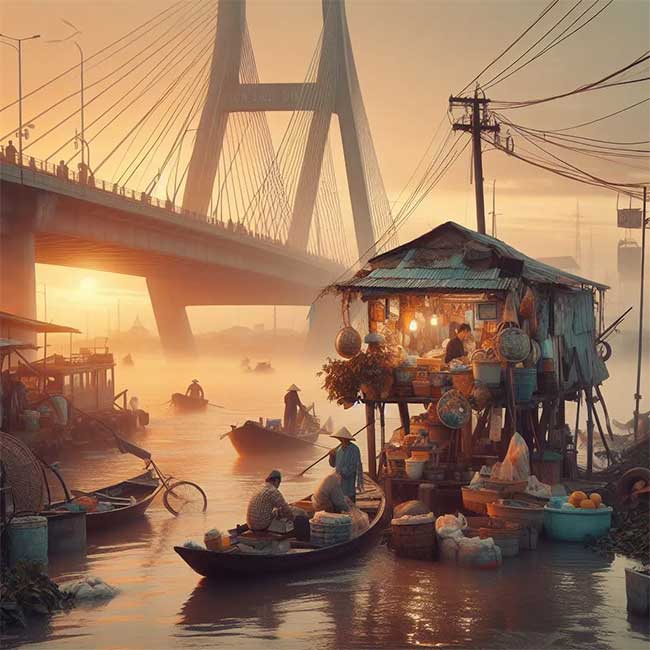
Besides viewing the bridge at night, visitors can also come to Cần Thơ in the dry season, which runs from December to April each year. The biggest advantage of visiting at this time is the chance to soak in a magical sunrise or sunset while looking at the bridge from Cái Răng Floating Market...
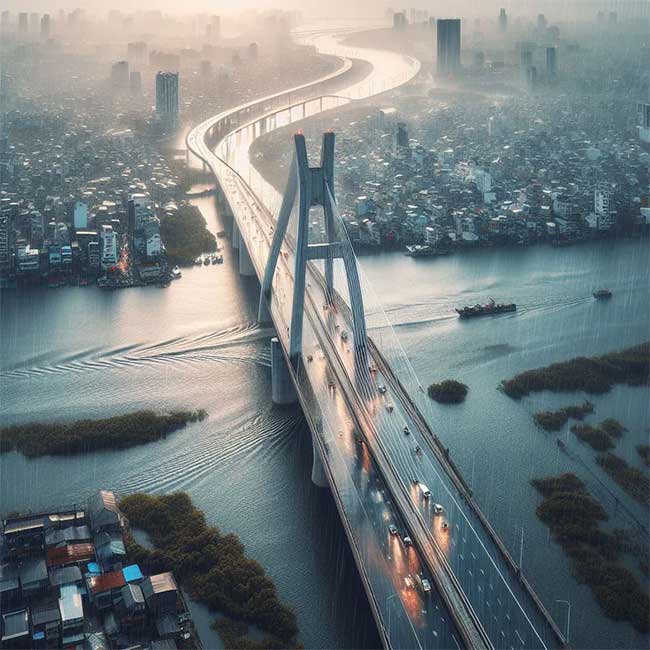
If you would rather see the bridge in a calmer, less bustling mood, come during the rainy season, which usually begins in May and ends in November each year. Sipping a hot cup of cocoa from Cần Thơ's famous Mười Cương cocoa shop by the window of a high-rise building while gazing at the "ribbon of steel" shrouded in rain is just as poetic.

Another option that is truly "worth every penny" is to visit Cần Thơ — the land of "white rice and clear water" — during the peak fruit season. Every May marks the start of the ripening season here. Longan, rambutan, durian, mangosteen... are fruits that offer visitors a truly wonderful taste.
