Stunning discovery reveals the evolutionary path that turned plants into carnivores
In the late 19th century, fictional tales of "killer" plants began to set tongues wagging in many places. These stories described a plant with vines growing up to a meter long, like the tentacles of a giant octopus, and a broad bud split into small lobes like the jagged jaws of a predator, which it used to swallow careless travelers in faraway lands.
Never before in history had people believed, and feared, the idea that: "Plants, too, can lie in wait for living creatures and kill them". So what might be lurking for us deep in primeval forests, or in places no human has ever set foot?
Scientists, too, have reached a pivotal moment, as they begin to uncover the first evidence for one of the biggest puzzles that botany has never solved: "How did plants come to evolve into carnivorous predators?".
Carnivorous plants: What are they?
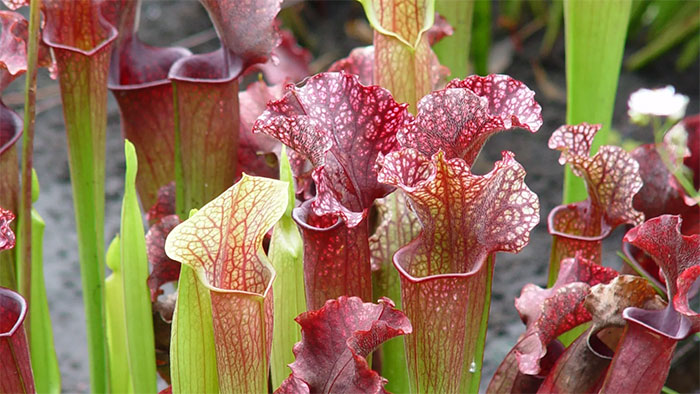
When we think of carnivorous plants, we might immediately picture a trap made of tendrils and a "pitcher"-shaped structure that helps the plant snare unlucky victims that wander inside.
In reality, though, about 800 species of carnivorous plants are known. Some, such as pitcher plants and many sundews, capture prey passively, meaning they wait for their prey — usually flies, bees or other small insects — to arrive and fall into the trap.
Other plants, however, are more "active", such as Drosera species (sundews) in the family Droseraceae, which can push prey toward the center of the "trap", where it gets stuck fast and is digested to death, while some species have tendrils that move so quickly they can "tie up" their victims.
Most sophisticated of all is the Venus flytrap (Dionaea muscipula), with extremely sensitive trigger hairs and a trap that can gauge the size of its prey and respond accordingly.
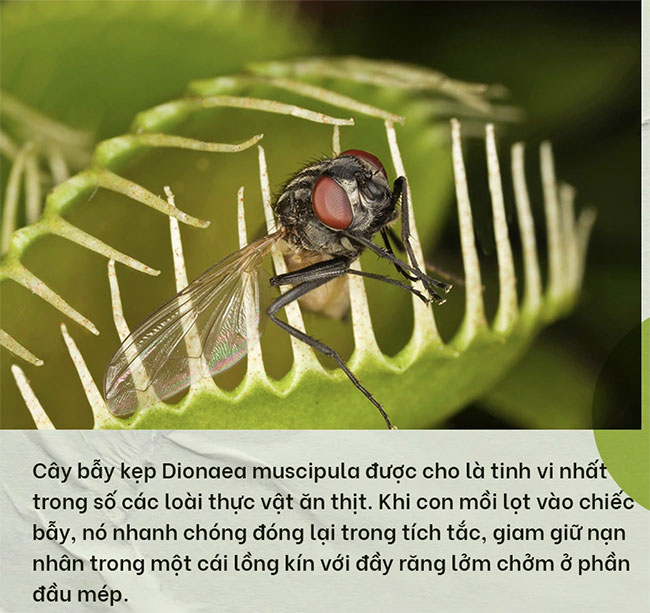
Although they differ enormously in shape, form and killing method, all these carnivorous plants share one feature: their "traps" are made of leaves, or parts of leaves, that have been modified to look different from those of ordinary plants.
Scientists have found that when an insect struggles and generates many electrical signals inside the trap, carnivorous plants begin producing a chemical compound called jasmonate, which signals the trap to "seal" its edges. The plants then begin filling the trap with digestive enzymes.
The list of enzymes includes chitinases, which break down chitin (the tough outer layer of most insects); proteases, which break down proteins; and purple acid phosphatases, which let the plant extract usable phosphorus from the victim's undigested remains. These enzymes work much like many of the plant-based chemical weapons that plants use to fend off harmful bacteria, fungi and plant-eating insects.
As the insect's body breaks down, the trap reabsorbs its enzyme output and once again starts producing nutrient transporters, under the control of jasmonate levels.
Tanya Renner, an evolutionary biologist at Penn State University, said: "That means these plants are getting nutrients not just from their roots, but by another route, mainly through their leaves".
From the earliest times up to the era of Charles Darwin, the father of the theory of evolution, most people rejected the idea that plants could "eat" animals. It plainly went against the natural order, in which animals move and plants do not. And if plants can't move, how could they "hunt" and become predators?
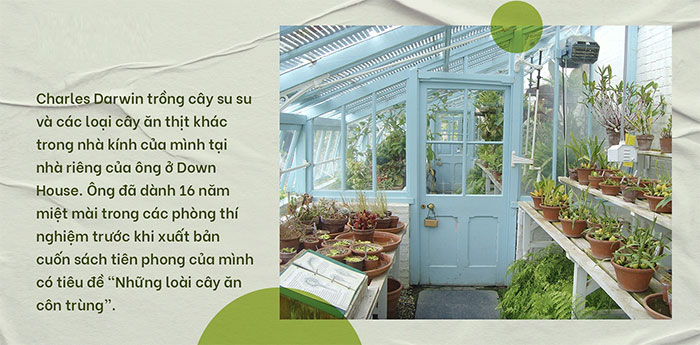
Darwin spent 16 years of painstaking laboratory work proving otherwise. He showed that the leaves of certain plants had been modified into special structures that could not only trap insects and other small creatures, but also digest them and absorb the nutrients released from their bodies.
As a result, in 1875 Darwin published the book "Insectivorous Plants", detailing everything he had discovered about these plants. In 1880, he published another book, titled "The Power of Movement in Plants".
At the time, the realization that plants could move, and even kill other animals, inspired not only horror films on the theme but also generations of biologists eager to learn more about plants with these puzzling habits.
Thanks to Darwin's work, botanists, ecologists, entomologists, physiologists and molecular biologists have gained detailed insight into every aspect of plants that can "drown" prey in fluid-filled pitchers, pin it down with sticky trap leaves or imprison it in snap traps, and then "digest" their catch in a modified, stomach-like organ.
But how could plants — which we tend to see as "inanimate" — evolve in such an exquisitely refined way, one that even resembles the way animals that once tried to eat them on our Blue Planet operate?
One hypothesis was that these plants had stolen genes from the animals that accidentally got stuck and became their "prey". In other words, they had absorbed predatory genes to become a distinct kind of organism, a hybrid between plant and animal.
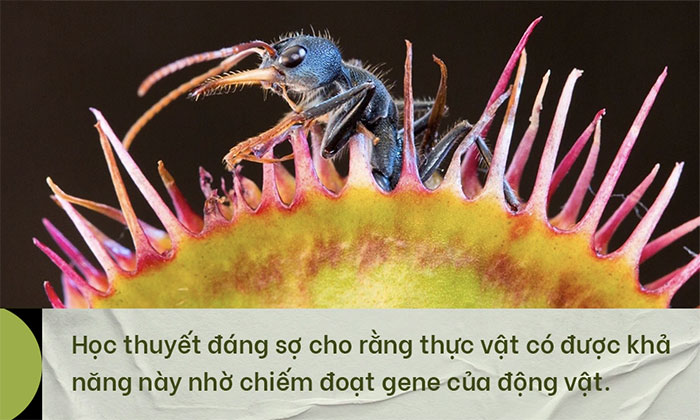
However, biophysicist Rainer Hedrich of the University of Würzburg in Germany, who explored the origins of carnivorous plants in the "Annual Review of Plant Biology in 2021", said there is no evidence at all that carnivorous plants acquired this "beastly" habit by stealing genes from their animal victims. He acknowledged this even though genes do sometimes pass from one type of organism to another.
Instead, these plants actually repurposed existing genes for new, more advanced functions.
According to Victor Albert, a plant genome biologist at the University at Buffalo, this evolution has been extremely "sneaky and flexible". "In evolution, it's easier to reuse something than to invent something new", Albert said.
The path to becoming a predator
Another hypothesis, which most scientists agree with, is co-option. Co-option is an important driver of evolutionary innovation, and it often begins with the accidental duplication of genes during cell division.
While most duplicated genes serve no purpose and are eventually lost, there are cases in which a spare gene acquires beneficial mutations. That paves the way for a change in function for the species.
"Gene duplication happens all the time, and sometimes it's highly adaptive," Albert said. "This seems to be the way carnivorous plants developed their carnivory — at least for the genes examined so far".
In 2017, evolutionary biologist Kenji Fukushima, together with Albert and an international team of researchers, sequenced the genome of an Australian carnivorous plant called Cephalotus follicularis. Like many other carnivorous plants, Cephalotus traps its prey in a structure resembling small "pitchers".
A big surprise came when they traced the origins of the digestive enzymes in Cephalotus and three other, unrelated species: Nepenthes alata (an Asian pitcher plant), Sarracenia purpurea (a North American pitcher plant) and Drosera adelae, a sundew.
It turned out that all four species had rearranged the same ancient enzymes, matching enzymes previously identified in the Venus flytrap.
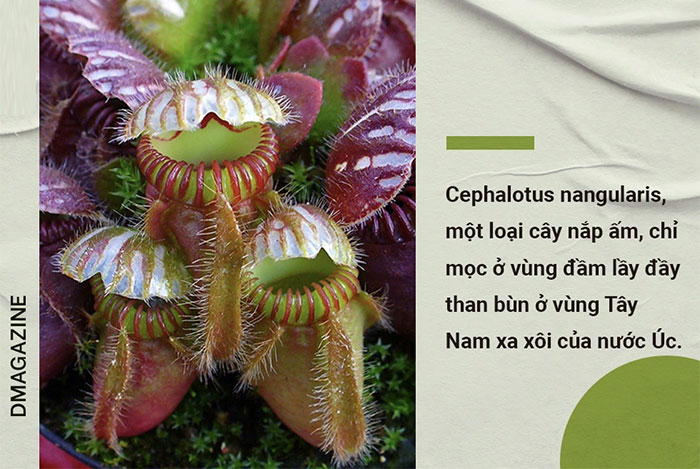
Victor Albert, a co-author of the study, said this is a classic case of convergent evolution. In his view, it shows that there are only a few, very limited, pathways for an ordinary plant to become a carnivorous one.
Once the enzymes took on their new roles (related to carnivory), they continued to evolve, swapping some amino acids for others to improve performance, perhaps by speeding up reactions or increasing the concentration of the protein-destroying chemicals they contain.
Scientists are now very close to answering one of the biggest mysteries in plant evolution. But a new question arises: how many other plants have found, or will find, their own evolutionary path? If Darwin were here today, he would surely "roll up his sleeves" at once to tackle his unfinished work.
New, critically endangered plant species of value discovered in Vietnam's Vũ Quang National Park
A new plant species, Beilschmiedia danhkyii of the laurel family, has been described from Vũ Quang National Park and assessed as critically endangered.
Rare leafless orchid discovered in Vietnam's Quảng Trị province
A rare leafless orchid, Erythrorchis ochobiensis, has been found in the Rú Lịnh forest of Quảng Trị province in central Vietnam.

Tissue culture technology helps conserve Hanoi's West Lake lotus
Vietnamese scientists have developed a tissue culture protocol to propagate the prized Bách Diệp lotus of Hanoi's West Lake and preserve its genes.
Three new plant species with stunning flowers discovered in Vietnam
The three new species, small herbs with beautiful flowers and leaves, have high ornamental value and were described in the journal Phytotaxa.

Rare 'praying-hands' tree Chunia bucklandioides found to be native to Vietnam
A tree once known only from China's Hainan Island has been found in Vietnam, adding a native timber species to the country's flora.
Vietnamese scientist discovers an extremely rare new begonia
A begonia new to science, Begonia tadungensis, has been found in Vietnam's Tà Đùng National Park and is already considered Critically Endangered.