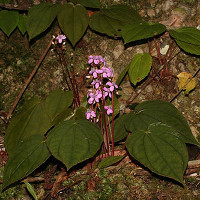
The potato bean could become the next superfood
New research suggests that a wild plant common in the United States could become a sustainable source of protein for both people and livestock.
Known scientifically as Apios americana, the potato bean, or groundnut, is characterized by clusters of purple flowers (7.5–13 cm long), pinnate leaves (8–15 cm long) and large, potato-like tubers. This highly nutritious wild plant has long been used as food by Native Americans. In a new study published in the journal Journal of Food Composition and Analysis, Scottish scientists led by Dr. Madalina Neacsu report that the potato bean has the potential to become part of the everyday diet of both humans and livestock.
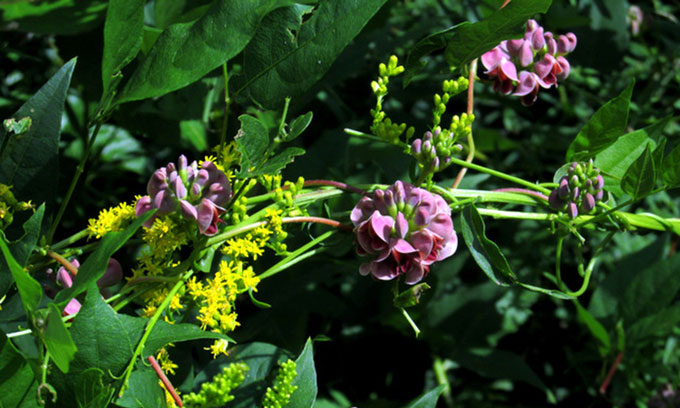
The potato bean grows widely in the U.S. states of Florida, Texas and Colorado. (Photo: CTS).
The study found that Apios americana tubers contain up to 10% fiber and 15% protein, three times more than a standard potato. They also provide a full range of essential micronutrients such as calcium, zinc and potassium. The leaves of this legume are edible too, and contain even higher levels of protein and fiber.
The Scottish government funded the research in the hope that growing protein-rich crops could improve people's diets and cut carbon emissions. Most of the protein consumed in the U.K. today comes from meat, making livestock farming a leading source of greenhouse gas emissions.
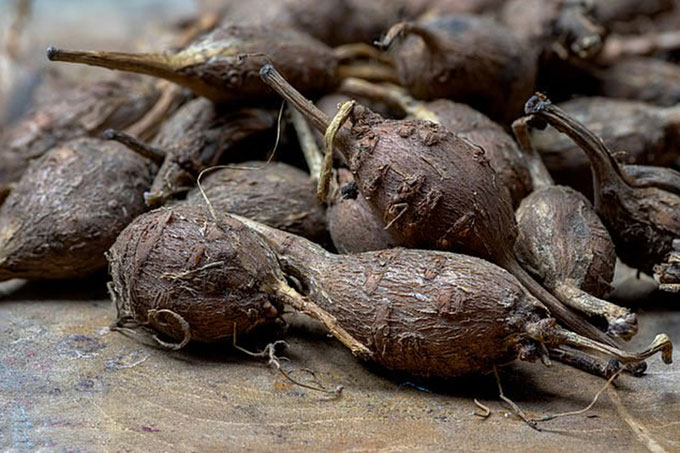
Potato bean tubers. (Photo: Danny Hummel).
"The potato bean has previously been shown to adapt to a wide geographical range and to be highly tolerant of many different conditions, so it could grow in environments far removed from the United States," Neacsu emphasized.
Neacsu and her colleagues have successfully grown the potato bean at two sites in the U.K. and believe it could be scaled up across Northern Europe. At present, Japan is the only country that grows Apios americana as a commercial crop.
"The potato bean is an example of the potential of wild plants to diversify our diets and build sustainable agriculture. An estimated 30,000 plant species are edible, but only about 150 of them are widely consumed," added Dr. Max Coleman of the Royal Botanic Garden Edinburgh.
New insect species discovered in Vietnam
Scientists have described a new beetle, Rhyparus vietnamicus, and two new Sogana planthoppers from Vietnam.
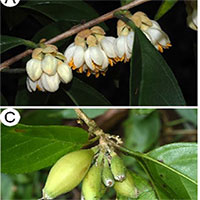
New tree species discovered in Vietnam's Trường Sơn mountains
Vietnamese and international scientists have discovered a new large timber tree in the Trường Sơn range of central Vietnam, named Rehderodendron truongsonense.
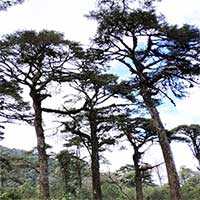
Rare hemlock population discovered in Vietnam's Lào Cai province
A population of more than 100 rare hemlock trees has been found at 1,800-2,000 m in Bát Xát Nature Reserve, Lào Cai province, northern Vietnam.
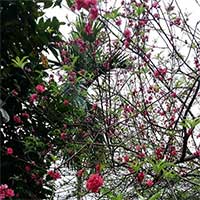
Strange sight: peach tree blossoms at the start of autumn
Peaches aren't alone: many crops are flowering and fruiting out of season, a sign that weather and climate are changing ever more visibly.
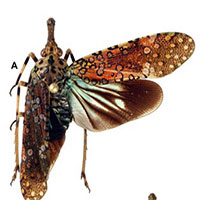
Long-headed lanternfly genus recorded in Vietnam for the first time
Only three species of this long-headed lanternfly genus are known worldwide. In Vietnam, specimens were collected in Huế and Đà Nẵng.

Delightful lotus variety that blooms with hundreds of petals
A large lotus variety with hundreds, even 1,000, petals grown by an enthusiast in central Vietnam is drawing the attention of lotus lovers.