Things you may not know about the Asian arowana, the 'dragon fish'
The dragon fish, or Asian arowana, is a freshwater fish that has become very rare and is listed in Vietnam's Red Data Book. It has a long, slender, laterally compressed body, a pair of long barbels on its chin, large shimmering scales, long pectoral fins, and dorsal and anal fins set far back on the body, and it can reach 60 to 90 cm in length, exceptionally up to 120 cm, and a weight of 7.2 kg. It is an aggressive fish and has the longest lifespan of any species kept as an ornamental fish.
1. Biology
No studies have yet examined the biology of this species. The only observations on its reproduction were made by H.M. Smith (1945) while studying specimens in Thailand. The eggs are large and few in number, and are brooded in the mouth of the male until they hatch.
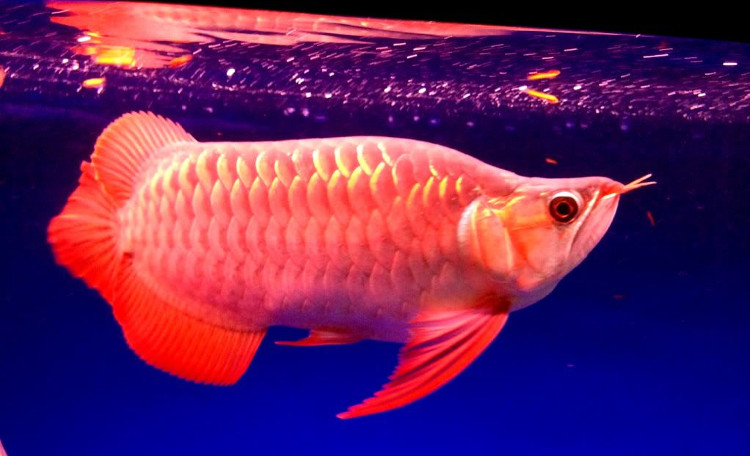
Super red arowana.
2. Habitat
The fish usually lives in fast-flowing rivers and streams, and some fishers say it tends to shelter in holes and crevices. The dragon fish is a carnivore, feeding on insects, small fish and even frogs. In the wild, it can leap quite high out of the water to snatch prey.
3. Distribution
- Vietnam: Đồng Nai province in southern Vietnam (La Ngà River, Trị An Lake, Cây Gáo) and Tây Ninh province (Dầu Tiếng Lake, Sài Gòn River).
- Worldwide: Thailand and Indonesia (Borneo, Sumatra); related arowana species are found in some countries in Africa and the Americas.
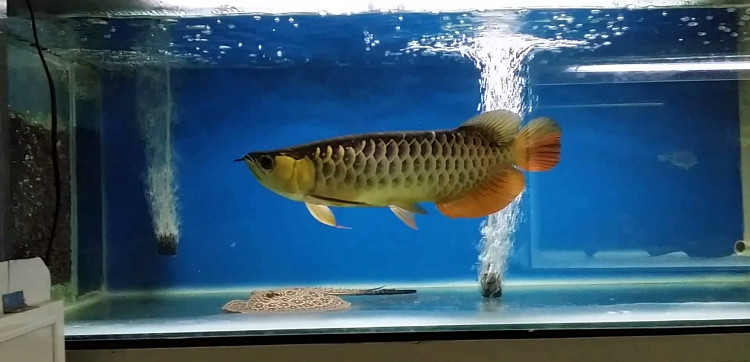
Golden arowana.
4. Value
This species is of unique value both to science and as an ornamental fish. Very few dragon fish remain in the wild today, and most fish kept as pets are second-generation (F2) captive-bred stock. Catching, trading or consuming wild arowanas is illegal and can lead to criminal prosecution.
5. Current status
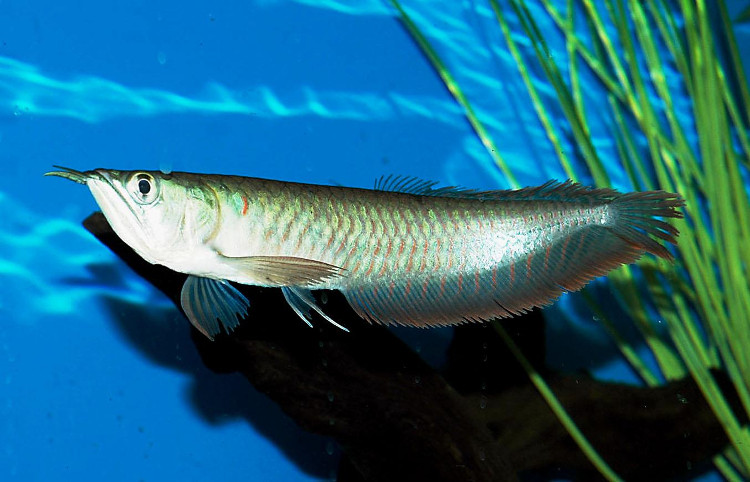
Rare white arowana.
- The species is very rare. According to local fishers, it used to be caught occasionally but is now almost never seen. It has been protected by the IUCN (International Union for Conservation of Nature) since 1969.
- It can be considered category E. Threat level: E (Endangered).
- The species was recently recorded in the La Ngà River in Cát Tiên National Park, Đồng Nai province, on 10 October 1998, and in the Sai stream, Bà Hào sub-area of the Mã Đà Forestry Enterprise (also in Đồng Nai), on 4 February 2003.
6. Classification
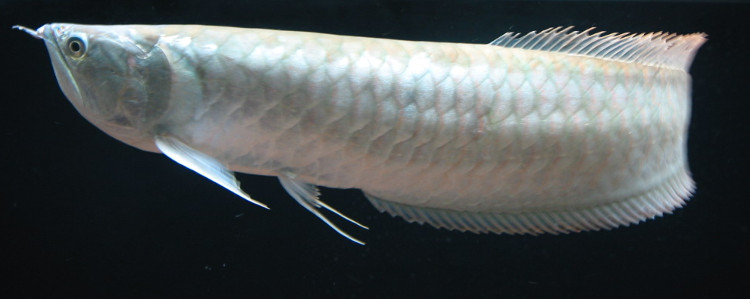
Silver arowana.
Based on their natural coloration and the places where they are found, dragon fish are divided into many different varieties. Aquarium hobbyists generally recognize four main types by color and shape:
- Kim long quá bối (from Malaysia), traded internationally as Cross Back Golden Malaysia.
- Huyết long (from Indonesia), traded internationally as Super Red.
- Kim long hồng vĩ (also from Indonesia), traded internationally as Red Tail Golden.
- Thanh long (found in many parts of tropical Asia), traded internationally as Green Arowana.
Rare Owston's civets successfully bred in captivity in Vietnam
Ten rare Owston's civets have been born naturally at a wildlife conservation center in Cúc Phương National Park, northern Vietnam.

Rare southern Vietnamese box turtle recorded in Vietnam's former Phú Yên province
The Critically Endangered southern Vietnamese box turtle can seal itself inside its shell completely, thanks to a hinged plastron.
Rescued pangolins give birth in Vietnam
Two Sunda pangolins rescued from traffickers and cared for at a wildlife rescue center near Hội An, Vietnam, have given birth.
Rare glossy ibis recorded in central Vietnam for the first time
Fourteen glossy ibises, a rare bird usually seen in southern Vietnam, have been recorded in central Vietnam for the first time.
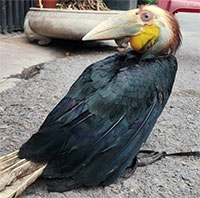
Ho Chi Minh City resident catches rare hornbill on rooftop garden trellis
A family in Ho Chi Minh City found a rare wreathed hornbill perched on a gourd trellis and handed it over to forest rangers.

Rare white-headed langur "couple" spotted cradling their young on Vietnam's Cát Bà Island
Photos of two adult white-headed langurs cradling their newborns on Cát Bà Island, Hải Phòng, have drawn wide attention online.