Rare white-headed langur "couple" spotted cradling their young on Vietnam's Cát Bà Island
Photos of a family of rare white-headed langurs on Cát Bà Island, off the coast of Hải Phòng city in northern Vietnam, have been shared on social media and drawn wide attention online.
On May 6, images appeared on social media showing two adult langurs, believed to be a "couple," cradling their young on Cát Bà Island (Hải Phòng city). Besides the photos, social media posts also claimed that the rare white-headed langur family had just welcomed 3–4 new members with golden fur.
Officials at Cát Bà National Park (Hải Phòng) confirmed the information and that the photos of the troop were taken on Cát Bà Island. The infant langurs were born in April.
The white-headed langur is an endemic primate that survives only on Cát Bà Island, ranging across the Lan Hạ Bay area, and is now strictly protected. Because so few individuals remain, the langurs breeding naturally is a welcome sign for Cát Bà's tourism.
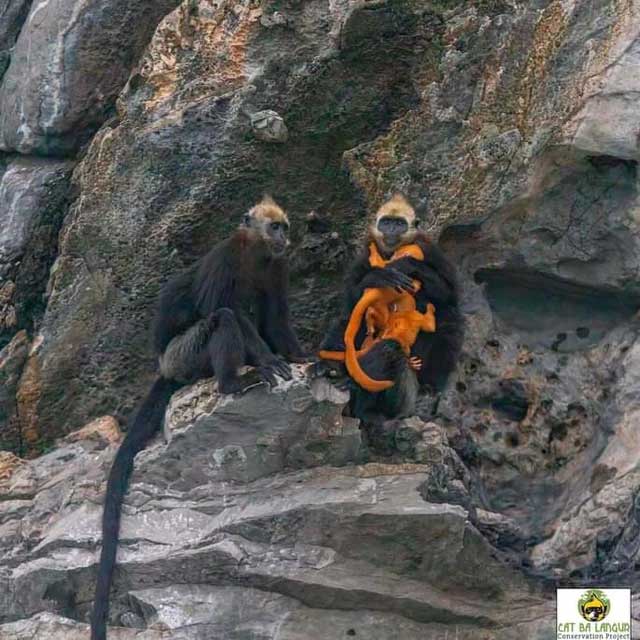
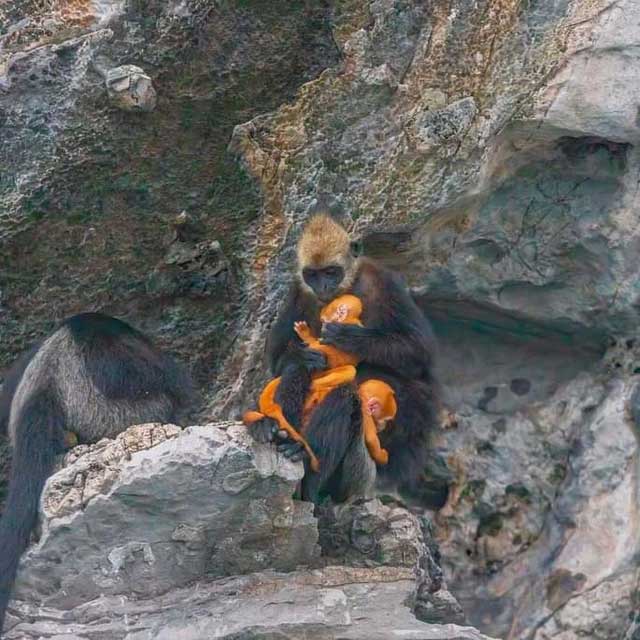
The white-headed langur family photographed on Cát Bà Island.
Adult Cát Bà langurs can be recognized by the pale white fur on the head and shoulders of males, sometimes tinged a light yellow, while females have somewhat darker fur that still stands out clearly against their jet-black coat. Their tails are very long, longer than those of many monkey species, a feature that helps visitors who cannot otherwise tell the different species apart.
Cát Bà langurs live at elevations of 100–150 m above sea level, in forests of climbing vines and woody trees or on sheer limestone cliffs. A group usually has 10 to 20 members and is led by a dominant male.
In Vietnam, the white-headed langur has only been recorded on Cát Bà Island and Cái Chiên Island in Quảng Ninh province, but sadly no individuals remain on Cái Chiên today.
The white-headed langur, also known as the Cát Bà langur, has the scientific name Trachypithecus poliocephalus. It is a primate that survives only in the archipelago whose core zone is Cát Bà National Park, and it is listed on the Red List of the International Union for Conservation of Nature (IUCN) as one of the most endangered primates in the world.
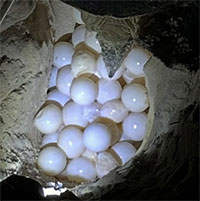
Nearly 100-kg green turtle travels from Malaysia to Côn Đảo to lay eggs
A green turtle weighing nearly 100 kg and wearing a Malaysian tag came ashore on Hòn Bảy Cạnh, Côn Đảo, and laid 108 eggs.
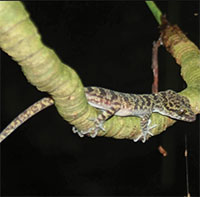
New bent-toed gecko species discovered in Lào Cai, northern Vietnam
The new bent-toed gecko has yellow tubercles scattered across its back and limbs, and the toes on each limb bend in the middle.
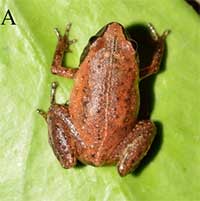
New tree frog and orange-brown dwarf frog discovered in Vietnam
Scientists have described two new amphibians from northern Vietnam: Zhangixalus thaoae and Vietnamophryne aurantifusca.
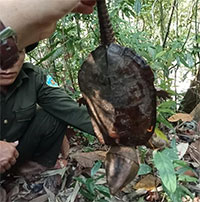
Critically endangered big-headed turtle found in central Vietnam
Forest rangers in central Vietnam rescued a rare big-headed turtle, a strictly protected species, tangled in vines in a forest stream.
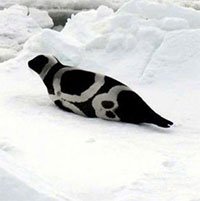
Rarely seen seal sports a "fashionable" zebra-like striped coat
Spotted off the coast of Washington state, the ribbon seal is a rarely seen seal with striking stripes across its entire body.
New freshwater crab species discovered in Quảng Ninh, Vietnam
A new freshwater crab species, Chinapotamon insulare, has been found on islands in Quảng Ninh during a provincial biodiversity survey.