Rarely seen seal sports a "fashionable" zebra-like striped coat
A seal with an extremely rare striped coat has been spotted off the coast of Washington state, USA. It is a one-of-a-kind seal species with striking stripes across its entire body.
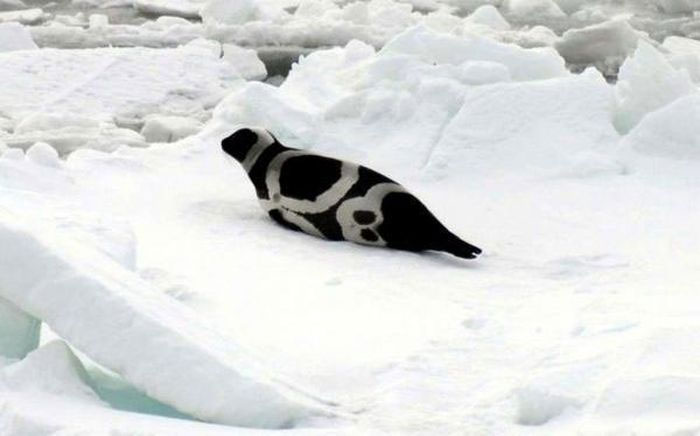
The ribbon seal's scientific name is Histriophoca fasciata. It is a medium-sized pinniped belonging to the true seal family.

With its black-and-white striped coat, the ribbon seal might remind many people of a first-generation hybrid between a seal and a zebra.

The ribbon seal is a one-of-a-kind seal, with striking bands of stripes across its body.

Ribbon seals are rarely seen, living in the Arctic and sub-Arctic waters of the North Pacific, particularly the Bering Sea and the Sea of Okhotsk.

The ribbon seal stands out thanks to its black or brown coat marked with four distinct white patches: one band encircling the neck, one around the tail and one ring on each side of the body.

With its black-and-white striped coat, the ribbon seal looks incredibly adorable.
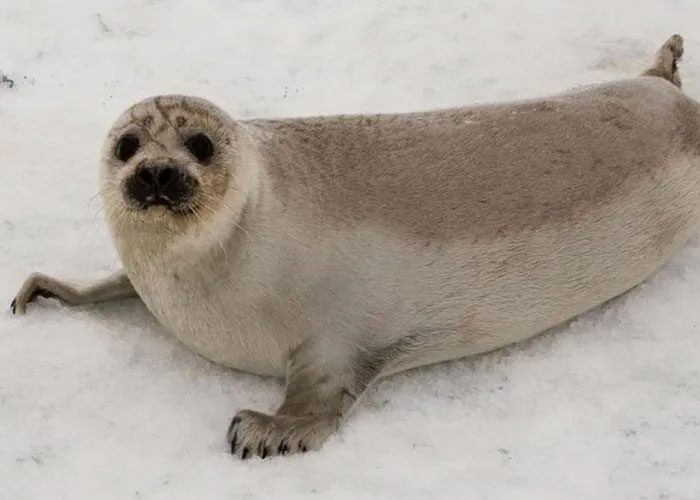
Newborn ribbon seal pups typically have white fur. Their "zebra" coat only becomes clearly visible at around 3 to 4 years of age.

The cute face of a ribbon seal pup.

This seal can grow up to 1.6 m long and weigh 95 kg. On average, an individual lives 20 to 25 years.

They live only in the frigid Arctic region and almost never come ashore on land.
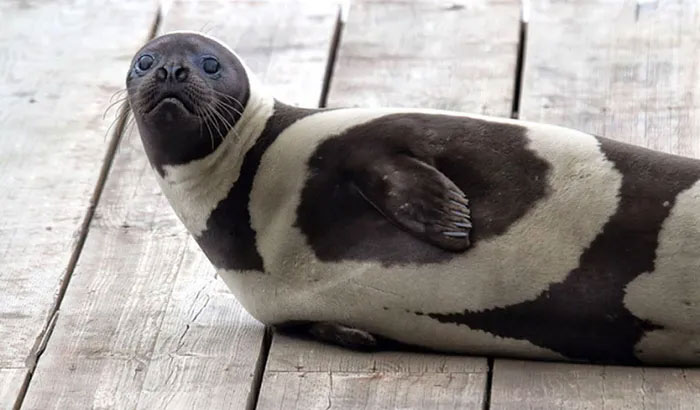
Because of their beautiful and valuable fur, ribbon seal pups have often been hunted by humans.

The species was once hunted heavily for its fur, causing its numbers to fall sharply. Today hunting is strictly regulated; in the United States the species is protected under the Marine Mammal Protection Act, and illegally hunting or trading it can lead to criminal prosecution.
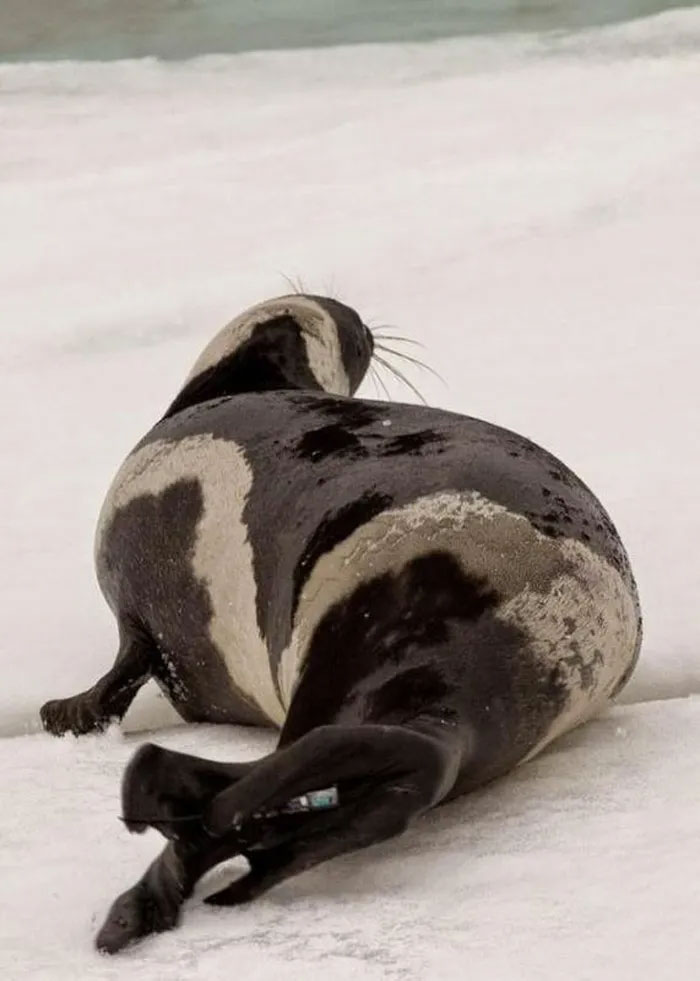
Ribbon seal numbers fell sharply in the past, and the species is now considered vulnerable to the loss of Arctic sea ice. As a result, it is closely monitored by conservation organizations.
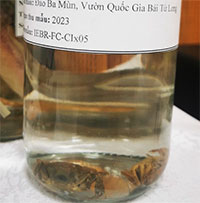
New freshwater crab species discovered in Quảng Ninh, Vietnam
A new freshwater crab species, Chinapotamon insulare, has been found on islands in Quảng Ninh during a provincial biodiversity survey.
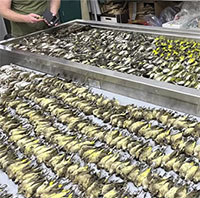
Nearly 1,000 migrating birds die after crashing into a Chicago building
Nearly 1,000 birds died overnight after flying into the windows of Chicago's McCormick Place Lakeside Center.
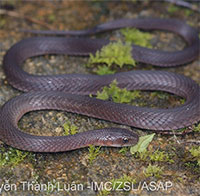
New snake species discovered on Vietnam's Mount Fansipan
Scientists have described a new keelback snake, Rhabdophis hmongorum, found at 2,600 meters on Mount Fansipan in Vietnam's Hoàng Liên National Park.
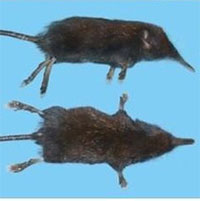
New shrew mole species discovered in Vietnam's Hoàng Liên National Park
Vietnamese and Japanese scientists have described the Fansipan shrew mole, Uropsilus fansipanensis, from Hoàng Liên National Park in northern Vietnam.
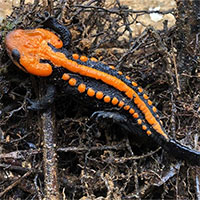
Stunning, rare crocodile newt discovered on Vietnam's Mount Ngọc Linh
The striking Ngọc Linh crocodile newt lives at 1,800 m, higher than any newt previously recorded in Vietnam (250-1,740 m).
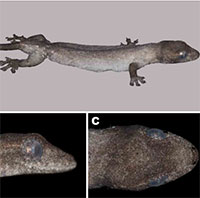
New slender gecko species discovered in Vietnam's Cát Tiên National Park
Scientists have described the Cát Tiên slender gecko, a new species with dark brown and white spots and an ash-gray tail, found in southern Vietnam.