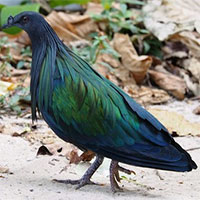
Nearly 1,000 migrating birds die after crashing into a Chicago building
Nearly 1,000 birds died overnight after crashing into the windows of the McCormick Place Lakeside Center, the result of a deadly combination of migration conditions, rain, the exhibition hall's low lighting and its windowed walls.
As part of a migration research program, David Willard has regularly checked the grounds of the lakefront convention center in Chicago for dead birds for the past 40 years. On Thursday morning (Oct. 5, 2023), he found a horrifying sight: Hundreds of dead birds, so thick on the ground that they looked like a carpet.
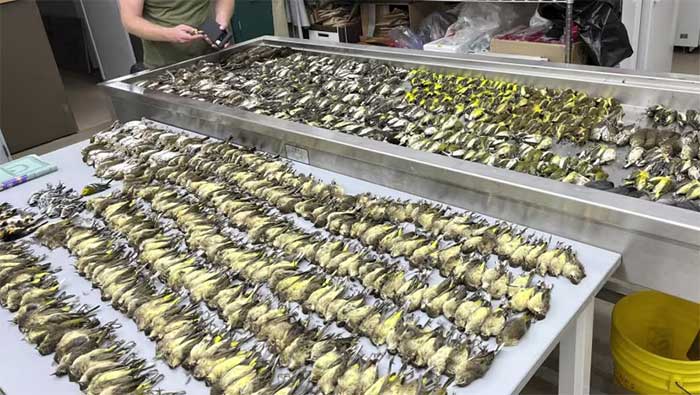
In this image provided by the Field Museum in Chicago, workers examine the bodies of migratory birds on Oct. 5, 2023, that died after crashing into the windows of the McCormick Place Lakeside Center, an exhibition hall in Chicago, during the night of Oct. 4-5, 2023. (Photo: AP)
Willard said: "It was a shocking outlier compared with anything we've experienced. In 40 years of monitoring what's happening at McCormick, we've never seen anything remotely on that scale."
Researchers estimate that hundreds of millions of birds die from window collisions in the U.S. every year. Scientists from the Smithsonian Conservation Biology Institute and the U.S. Fish and Wildlife Service published a study in 2014 putting the number at between 365 million and 988 million birds a year.
Window collisions are a problem in most major U.S. cities. Birds cannot see clear or reflective glass and do not recognize it as a deadly barrier.
Night-migrating birds, such as sparrows and warblers, rely on the stars to navigate. Bright lights from buildings both attract and confuse them, causing them to crash into windows or circle the lights until they die of exhaustion, a phenomenon known as fatal light attraction. In 2017, for example, nearly 400 birds were disoriented by the floodlights of a skyscraper in Galveston, Texas, and died after colliding with its windows.
Stan Temple, a retired professor of wildlife ecology and bird expert at the University of Wisconsin-Madison, said conditions were ripe for a big wave of southbound songbird migration through Chicago on Wednesday night.
Small songbirds feed during the day and migrate at night to avoid air turbulence and predators. They had been waiting for northerly winds to help power their journey south, Temple said, but September brought unusually warm southerly winds that kept the birds bunched up here.
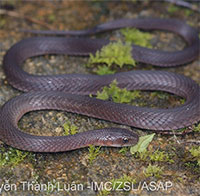
New snake species discovered on Vietnam's Mount Fansipan
Scientists have described a new keelback snake, Rhabdophis hmongorum, found at 2,600 meters on Mount Fansipan in Vietnam's Hoàng Liên National Park.
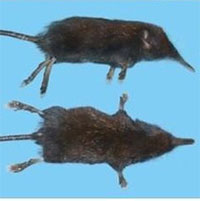
New shrew mole species discovered in Vietnam's Hoàng Liên National Park
Vietnamese and Japanese scientists have described the Fansipan shrew mole, Uropsilus fansipanensis, from Hoàng Liên National Park in northern Vietnam.
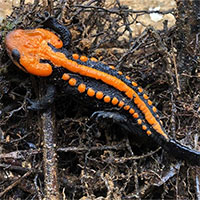
Stunning, rare crocodile newt discovered on Vietnam's Mount Ngọc Linh
The striking Ngọc Linh crocodile newt lives at 1,800 m, higher than any newt previously recorded in Vietnam (250-1,740 m).
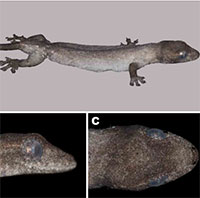
New slender gecko species discovered in Vietnam's Cát Tiên National Park
Scientists have described the Cát Tiên slender gecko, a new species with dark brown and white spots and an ash-gray tail, found in southern Vietnam.
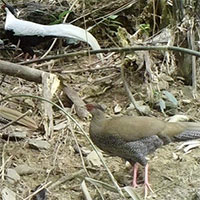
Endangered, rare pheasants found in Vietnam's Pù Hu special-use forest
Five silver pheasants and grey peacock-pheasants, rare and endangered birds, have been found in the Pù Hu special-use forest in Thanh Hóa, Vietnam.
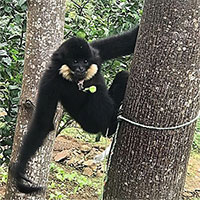
Rare yellow-cheeked gibbon turns up in a residential area in Đà Nẵng
Forest rangers in Đà Nẵng, central Vietnam, have captured a yellow-cheeked gibbon, a rare species that does not naturally occur in the city.