New shrew mole species discovered in Vietnam's Hoàng Liên National Park
Under a cooperation program between the Vietnam Academy of Science and Technology (VAST) and the Japan Society for the Promotion of Science (JSPS), scientists from VAST's Institute of Genome Research and the Kyoto University Museum (Kyoto University, Japan) have discovered a shrew mole species new to science in Hoàng Liên National Park, a protected area in the mountains of northern Vietnam.
According to Hoàng Liên National Park, sequencing of nuclear gene fragments (RAG1, RAG2) and a mitochondrial gene (Cytb), totaling 2901 bp, from two specimens collected near the summit of Fansipan in the park (Lào Cai province) at an elevation of about 2900m, combined with analysis of 107 other sequences from GenBank, revealed a clear divergence between the Uropsilus shrew mole population in Vietnam and populations in China.
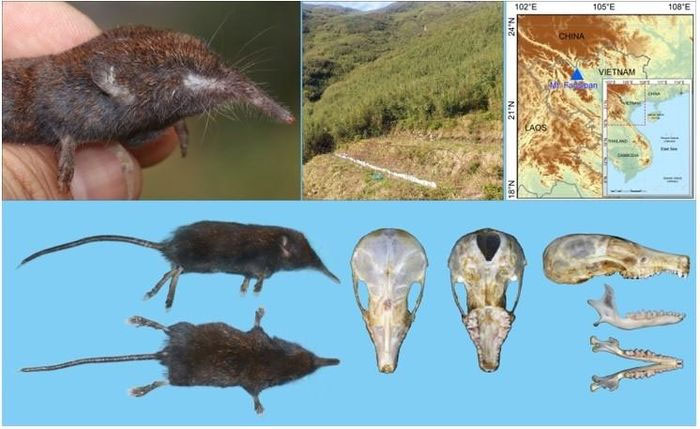
External morphology, skull morphology, habitat and distribution of the Fansipan shrew mole, Uropsilus fansipanensis. (Photo: Hoàng Liên National Park).
Comparison of the Cytb gene sequences also showed that the Fansipan population differs by 8.63% to 20.70% from eight previously described species of the same genus in China.
The authors also compared its body and skull morphology with numerous type specimens held at the Natural History Museum in London (UK).
Combining these analyses, the team described the Fansipan shrew mole (Uropsilus fansipanensis) as a species new to science.
The shrew mole is characterized by an elongated, trunk-like snout; dark reddish-brown fur on the back and gray fur on the belly; a uniformly dark gray tail with white scales at its base; and 38 teeth, with the first and third lower incisors similar in size.
The Vietnam Academy of Science and Technology added that this is also the first record of the shrew mole genus Uropsilus in Vietnam, extending the group's known range southward from the species recorded in China and Myanmar to the Hoàng Liên Sơn mountain range in northwestern Vietnam.
Besides adding one genus and one species to Vietnam's mammal fauna, the discovery highlights the close biodiversity links between the mountains of northern Vietnam and southern China.
Previously, the Vietnam National Museum of Nature had sent a field team to Hoàng Liên National Park to survey, collect and study the diversity of insect species.
The team included Japanese experts, and Hoàng Liên National Park assigned staff from its Department of Science and International Cooperation to join the fieldwork, guide the team and work with them.
The team carried out only the activities authorized by the Lào Cai Provincial People's Committee, without affecting nature conservation or other activities of Hoàng Liên National Park.
By the end of the survey, the team had recorded 13 butterfly species of the order Lepidoptera at the survey sites.
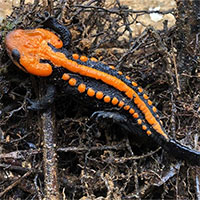
Stunning, rare crocodile newt discovered on Vietnam's Mount Ngọc Linh
The striking Ngọc Linh crocodile newt lives at 1,800 m, higher than any newt previously recorded in Vietnam (250-1,740 m).
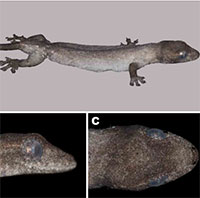
New slender gecko species discovered in Vietnam's Cát Tiên National Park
Scientists have described the Cát Tiên slender gecko, a new species with dark brown and white spots and an ash-gray tail, found in southern Vietnam.
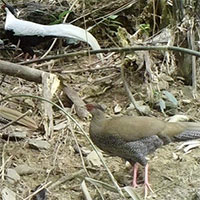
Endangered, rare pheasants found in Vietnam's Pù Hu special-use forest
Five silver pheasants and grey peacock-pheasants, rare and endangered birds, have been found in the Pù Hu special-use forest in Thanh Hóa, Vietnam.
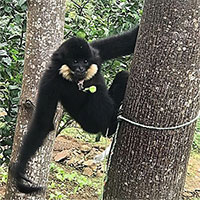
Rare yellow-cheeked gibbon turns up in a residential area in Đà Nẵng
Forest rangers in Đà Nẵng, central Vietnam, have captured a yellow-cheeked gibbon, a rare species that does not naturally occur in the city.
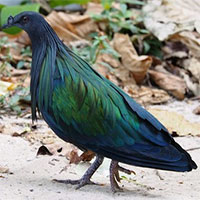
Rare Nicobar pigeon spotted in Vietnam's Côn Đảo National Park
The Nicobar pigeon, listed in Vietnam's Red Data Book and the global Red List, is a strikingly beautiful bird of great scientific value.
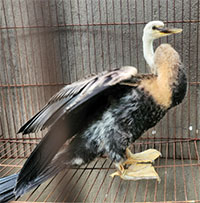
Rare Oriental darter lands on a roof in Ho Chi Minh City, refuses to fly even as residents climb up to catch it
A rare Oriental darter perched on a house roof in Gò Vấp, Ho Chi Minh City, and did not fly away; the homeowner handed it to forest rangers.