Chickens were domesticated thanks to the rice fields of Southeast Asia, new research suggests
Rice and chicken have long been a beloved pairing, but new archaeological data suggest the bond between the bird and the grain runs deeper than we thought. According to new research, without flourishing rice fields, the modern chicken would not exist.
The findings suggest chickens may have been domesticated much later than previously assumed, beginning only when people started growing rice in forested areas near where wild junglefowl lived.
According to archaeologist Dale Serjeantson of the University of Southampton, who was not involved in the new research, the rice paddies of Southeast Asia played a major role in the domestication of junglefowl. She said the new work "demolishes a lot of myths about the origins of the modern chicken."
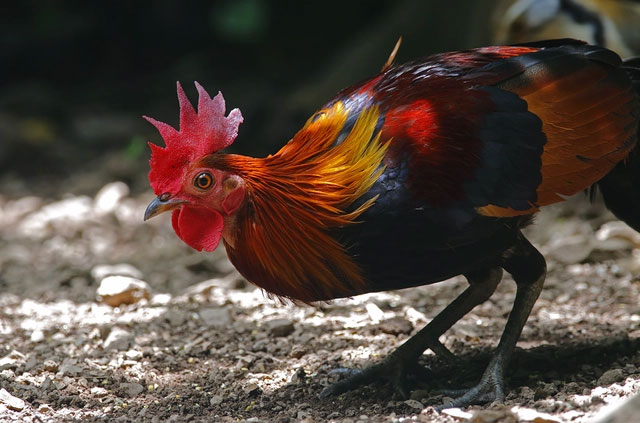
A red junglefowl in Thailand.
Charles Darwin argued that the modern chicken descends from the red junglefowl, one of four species in the junglefowl genus, scientifically known as Gallus gallus. Judging by the birds' appearance, Darwin's conclusion seems well founded.
Proving Darwin right has not been easy, however, because the red junglefowl comprises many subspecies spread from India to northern China. On top of that, fossil chicken bones are rarely found at archaeological sites.
In 2020, a genetic analysis of 863 chickens confirmed that the subspecies Gallus gallus spadiceus, also known as the Burmese red junglefowl, is the ancestor of the modern chicken; today's chickens share more DNA with Gallus gallus spadiceus than with any other subspecies. Based on these results, scientists could say with confidence that domestication took place in Southeast Asia.
The image below shows, from left to right, subspecies of the red junglefowl: Gallus gallus jabouillei (the Vietnamese red junglefowl), Gallus gallus bankiva (the Javan red junglefowl), Gallus gallus gallus (the Indochinese red junglefowl), Gallus gallus spadiceus (the Burmese red junglefowl), Gallus gallus murghi (the Indian red junglefowl), and the domestic chicken, Gallus gallus domesticus.
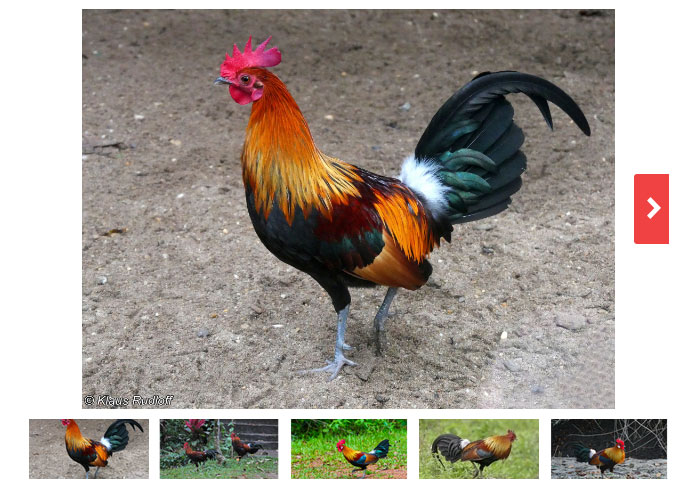
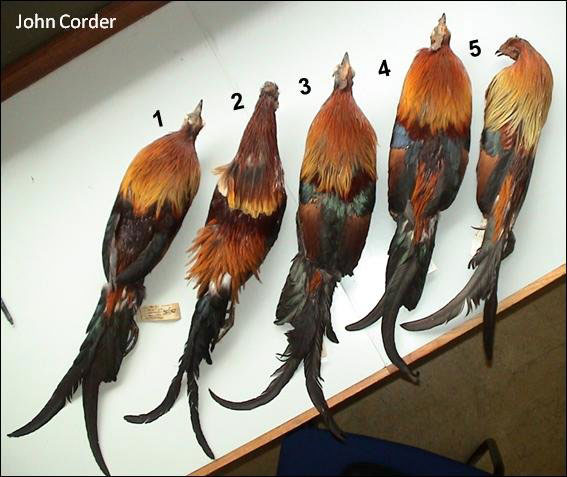
Gallus gallus jabouillei (Vietnamese red junglefowl), Gallus gallus bankiva (Javan red junglefowl), Gallus gallus gallus (Indochinese red junglefowl), Gallus gallus spadiceus (Burmese red junglefowl), Gallus gallus murghi (Indian red junglefowl).
In the past, many organizations and experts tried, without success, to pin down when chickens were domesticated. They were unable to recover enough DNA from ancient chicken bones to resolve the mystery. To crack the problem, zooarchaeologist Joris Peters and paleogeneticist Greger Larson, an expert on animal domestication, set out to find the answer in a vast collection of bones.
Combing through records from more than 600 archaeological sites around the world and reassessing the age of every chicken bone found, the two researchers and their colleagues were determined to get to the bottom of the question. They also published a separate study dating chicken bones from western Eurasia and North Africa.
The team found that the oldest chicken bones came from an excavation at the village of Ban Non Wat in Thailand. There, farmers grew rice between 3,250 and 3,650 years ago and took care to bury bones of birds of the genus Gallus alongside other domesticated animals, evidence that these birds were domesticated chickens rather than wild junglefowl.
The researchers infer that vast rice fields drew wild junglefowl out of the forest. The birds nested at the edges of the paddies and gradually grew used to people.
Tracing chicken bones across Asia to the Middle East and Africa, the team found surprising correlations between cereal farming and the presence of chickens. Chickens appeared in China and India about 3,000 years ago and reached the Middle East and North Africa around 2,800 years ago. The research also concluded that earlier studies had been wrong, either because they analyzed remains that were not chickens or because their dating was flawed.
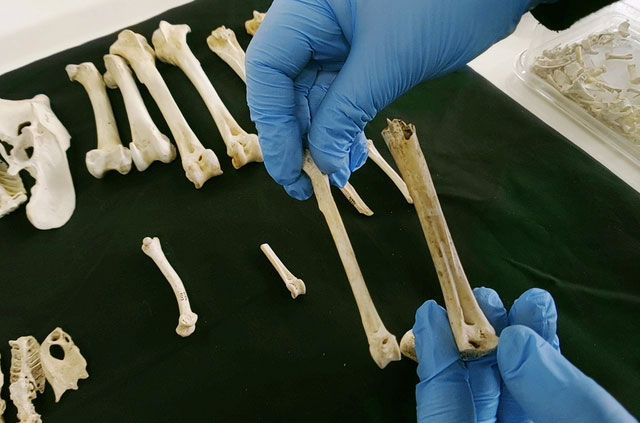
Ancient chicken bones with a familiar shape.
To determine when chickens first arrived in Europe, the scientists directly re-dated the bones of 23 of the earliest chicken specimens. In a report just published in the journal Antiquity, the team concluded that the oldest chicken bones in Europe come from an Etruscan archaeological site in Italy and are 2,800 years old.
Historical texts, including the Bible, also partly support the scientists' conclusions. "Chickens don't appear in the Old Testament," said the study's lead author, archaeologist Naomi Sykes. "Then they suddenly appear in the New Testament."
It took another 1,000 years for chickens to reach Britain (hitching a ride with the Romans), the Scandinavian Peninsula and Iceland. According to archaeologist Julia Best, who took part in both chicken studies, the subtropical bird had to find ways to adapt to these cold climates.
Overall, the results indicate that humans only later began to use chickens as a major source of food. According to Sykes, people once regarded chickens as prized creatures for their beautiful, striking plumage and their loud crowing at daybreak. The way they were depicted in art and carefully buried also shows how culturally important chickens were. Moreover, the early domesticated chickens offered little in the way of food, since they were still fairly small.
The report also points to a sad milestone for chickens: about 500 years after spreading far and wide, they lost their special status and became an everyday food for humans.
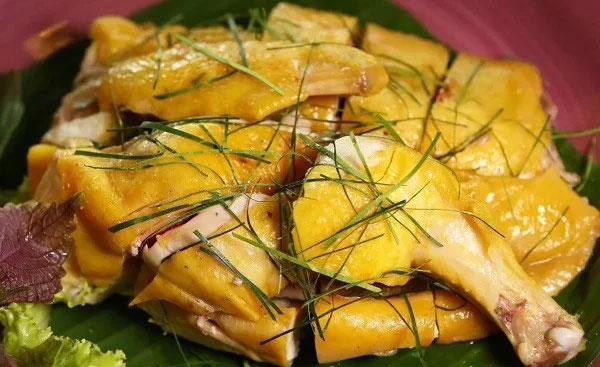
Was the chicken's decision to live near rice paddies a mistake?
According to zooarchaeologist Masaki Eda of Hokkaido University, the new research shows that "the dispersal of domesticated chickens is a very recent event, much more recent than previously thought." Still, Eda believes the chicken bones from Thailand should be re-examined to confirm that they belonged to domesticated chickens rather than red junglefowl buried alongside people.
He would also like to survey other parts of Southeast Asia, hoping to trace the routes domesticated chickens took across the Indochinese Peninsula and throughout Eurasia.
According to paleogeneticist Greger Larson, even though chickens were domesticated later than other animals, they remain the most successfully domesticated species on the planet. Chickens now outnumber humans by a ratio of 10 to 1. Archaeologist Naomi Sykes added: "This research is not just about chickens or rice. The way people relate to chickens is a lens that helps us see clearly how humans relate to the natural world."
This fish starves itself and raises other males' young, just to win over females
Male mouth almighty fish brood young in their mouths without eating, and a new study shows some carry offspring that aren't even their own.
Bats imitate hornets to avoid being eaten by owls
When caught by an owl, the greater mouse-eared bat (Myotis myotis) mimics the buzzing of hornets to fool the predator.
Giant coconut crab attacks golfer on Christmas Island
A golfer was stunned when one of the world's largest crabs attacked and snapped his sturdy club 'like a chainsaw.'

The little-known tiny worm snake of Vietnam
The worm snake looks much like an earthworm, but it is a true snake with all the anatomical features of one.

New mole species discovered in Vietnam's Central Highlands
A new mole, Euroscaptor ngoclinhensis, has been identified on Mount Ngọc Linh and in the Central Annamite range of Vietnam.

The rhinoceros ratsnake: a Vietnamese snake with a horn on its nose
The rhinoceros ratsnake of Vietnam looks bizarre and intimidating, yet this horned-nose snake is harmless, non-venomous and docile.