Giant coconut crab attacks golfer on Christmas Island
Paul Buhner, a man playing golf on Australia's Christmas Island, captured on video the moment a giant coconut crab tried to steal his golf club.
According to the man who filmed it, the coconut crab is enormous and is often called the "robber crab" because of its habit of stealing belongings from visitors to the island in search of food.
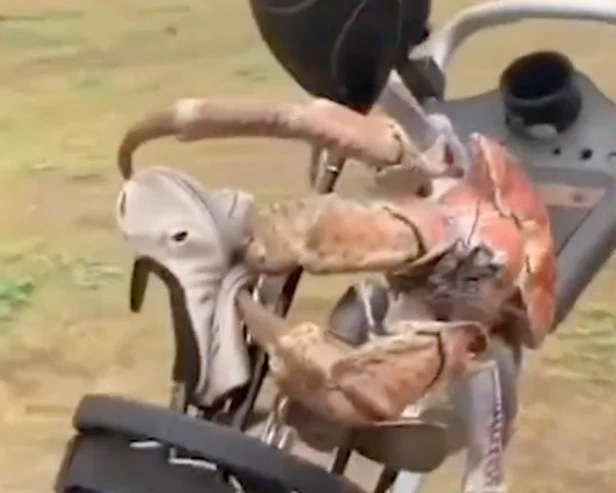
A coconut crab steals a golf club.
Adult coconut crabs can measure up to a meter across and weigh more than 5 kilograms. The video, recorded at the golf course, shows the man trying to wrestle the club from the crab's grip, before the animal ultimately used its claws to snap right through the club's shaft.
Buhner said the crab then walked away, leaving the broken club behind. According to Buhner, the coconut crab had been attracted by food in his friend's bag, but for some unknown reason it mistakenly went for the club instead.
Christmas Island, an Australian territory in the Indian Ocean roughly 1,500 km northwest of the mainland, is famous for its endemic red crabs, which blanket the island's roads during their annual migration.
But the island is also home to the coconut crab, the world's largest land-dwelling arthropod, which tends to be aggressive and will steal just about anything it can get its claws on.
The species is known as a skilled tree climber, using its powerful pincers to crack open coconuts for food and even hunting prey such as birds. Its name comes from its close association with coconuts: it climbs coconut palms and eats the fruit by breaking open the husk and feeding on the flesh.
Christmas Island is currently home to more than 1 million coconut crabs. The species is protected by local authorities, and catching or eating coconut crabs is illegal.
In 2020, a horde of giant coconut crabs invaded a family picnic on Christmas Island to steal food, turning the outing into a disaster. The frightening incident happened while the group was enjoying a holiday and holding an outdoor barbecue on the island.
Amy Luetich and her family were camping with some friends at Grants Well, in the island's dense rainforest. Dozens of unusually large crabs quickly surrounded them and made off with their food. Luetich said her son counted 52 of them.
The picnickers, nervous, tried to finish their meal before moving on. Fortunately, no one was hurt, but they lost a lot of food and several pairs of sneakers to the party-crashing coconut crabs.
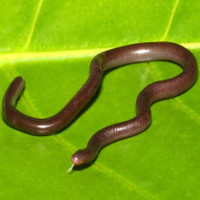
The little-known tiny worm snake of Vietnam
The worm snake looks much like an earthworm, but it is a true snake with all the anatomical features of one.

New mole species discovered in Vietnam's Central Highlands
A new mole, Euroscaptor ngoclinhensis, has been identified on Mount Ngọc Linh and in the Central Annamite range of Vietnam.
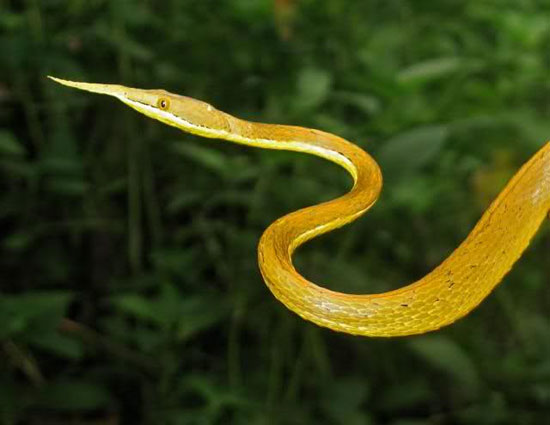
The rhinoceros ratsnake: a Vietnamese snake with a horn on its nose
The rhinoceros ratsnake of Vietnam looks bizarre and intimidating, yet this horned-nose snake is harmless, non-venomous and docile.
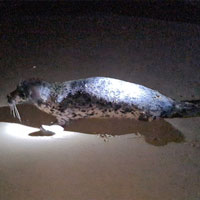
Rare seal unexpectedly turns up off Vietnam's Quảng Nam coast
A rare seal, an animal of cold climates, was caught in fishermen's nets off the former Quảng Nam province in central Vietnam and released.
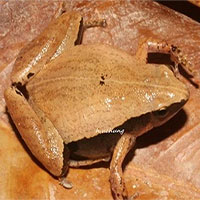
Two cryptic frog species discovered in Vietnam
Scientists from Vietnam, Russia, Germany and China have described two cryptic frog species from Ninh Thuận and Đắk Lắk in southern Vietnam.
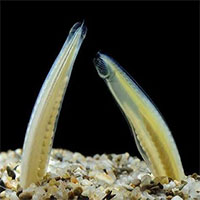
No head, no heart, no bones: this "fish" has survived for 500 million years
The lancelet, or amphioxus, has no head, heart or bones, yet this living fossil has survived for 500 million years.