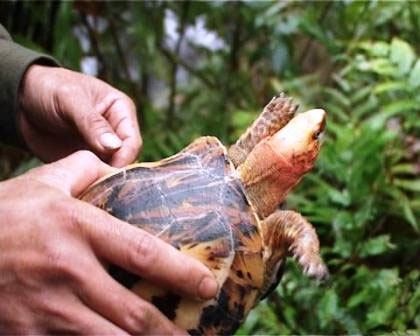
How alligators survive in freezing water
Alligators use a hibernation-like strategy to survive freezing weather in the US.
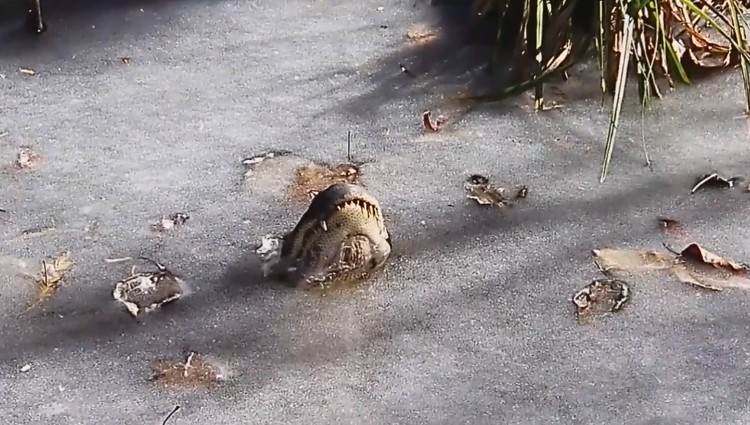
An alligator pokes its snout up through the ice.
Shallotte River Swamp Park in North Carolina posted a video on Facebook showing alligators in an unusual pose, with only their snouts sticking up through the ice.
The alligators use a hibernation-like strategy called brumation, according to park manager George Howard. Although they look dead in the photos, the alligators are in fact alive. They lower their body temperature and slow their metabolism to survive the cold.
"The alligators stick their noses up, still breathing and healthy. They do this so that if the water freezes over, they can still breathe. It's an amazing survival technique," Howard explained.
Howard was surprised when he first saw the alligators in the pond and wasn't sure what was poking out of the ice. "Then I saw the teeth and realized the alligators were sticking their heads up," he recalled. Howard carefully researched the behavior to make sure the alligators were not in trouble.
David Arbor of the Oklahoma Department of Wildlife Conservation replied in a comment: "The alligators won't freeze as long as the water stays liquid. Their snouts are just cartilage, so freezing doesn't affect them. They can still move and are aware of everything."
In nature, different animals cope with freezing temperatures in different ways.
In winter, wood frogs can freeze solid, their hearts even stopping, until it is safe for them to thaw out.
Red bats, on the other hand, lie on the ground and cover themselves with leaves like a blanket to hide from predators.
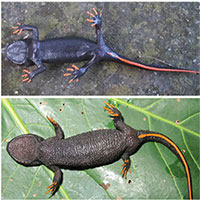
Super-cute new crocodile newts discovered in Vietnam
Scientists have described two new species and one new subspecies of crocodile newt from northern Vietnam, already threatened by trade and habitat loss.
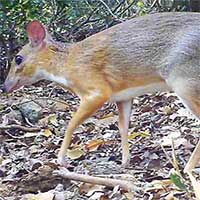
Half-deer, half-mouse creature resurfaces in Vietnam after nearly 30 years
The silver-backed chevrotain, a tiny mouse-deer feared lost for nearly three decades, has been photographed by camera traps in southern Vietnam.
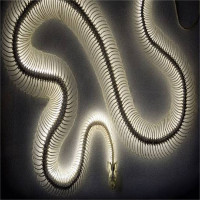
New bizarre "ghost snake" species discovered in Madagascar
Experts believe the pale grey snake, named Madagascarophis lolo, is a new species of cat-eyed snake.
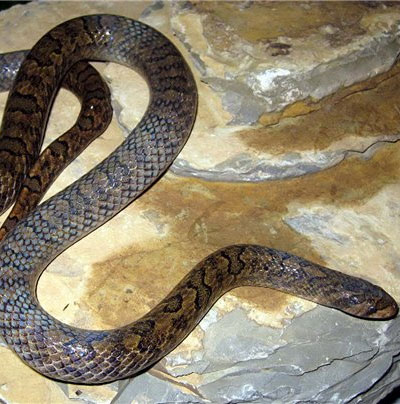
New kukri snake species discovered in Vietnam
Scientists from France, Vietnam, China and Germany have described a new kukri snake, Oligodon nagao, from specimens collected in China, Vietnam and Laos.
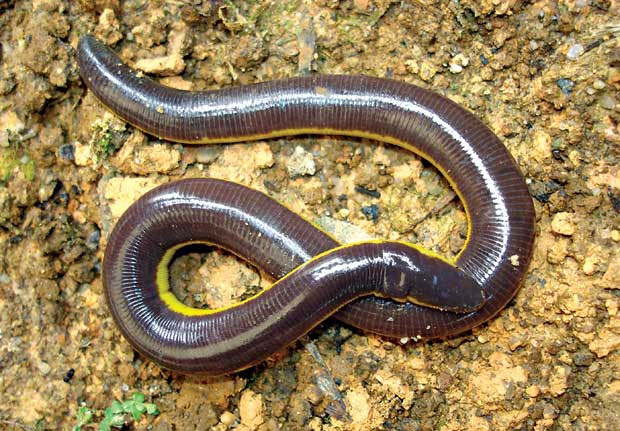
New species of caecilian discovered in Vietnam
Japanese and Russian scientists have described a new caecilian from Vietnam's Central Highlands, only the second caecilian species recorded in the country.
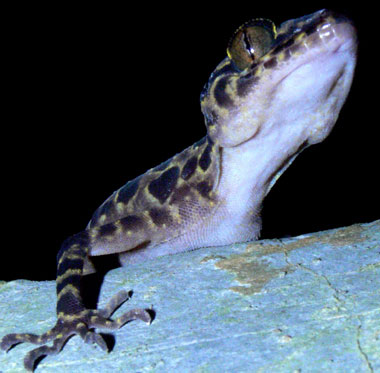
New bent-toed gecko species discovered in Vietnam
Two zoologists have found a bent-toed gecko new to science in Cúc Phương National Park in Ninh Bình province, northern Vietnam.