No head, no heart, no bones: this "fish" has survived for 500 million years
You might never have imagined that an animal could live without a head, a heart or bones. In fact, this creature already existed 500 million years ago and survives to this day; it is also regarded as a "cousin" of the ancestors of many of today's vertebrates.
Today's vertebrates are extraordinarily successful, with more than 60,000 members that differ widely in appearance, habits and temperament. Their "cousin", however, has only a single surviving lineage: amphioxus, also known as the lancelet, which is widely considered a living fossil.
Although the lancelet is often called a fish and looks much like one at first glance, it is not actually a fish. Most of the animals on our planet today are vertebrates, such as horses, cattle, sheep, chickens, ducks, dogs, cats, tigers, leopards and soft-shelled turtles... and, of course, us humans. What makes this unusual "fish" so strange, and unlike any real fish, is that it is a cephalochordate: it has no backbone, yet it is classified alongside the vertebrates and the other animals with a notochord in the phylum Chordata.
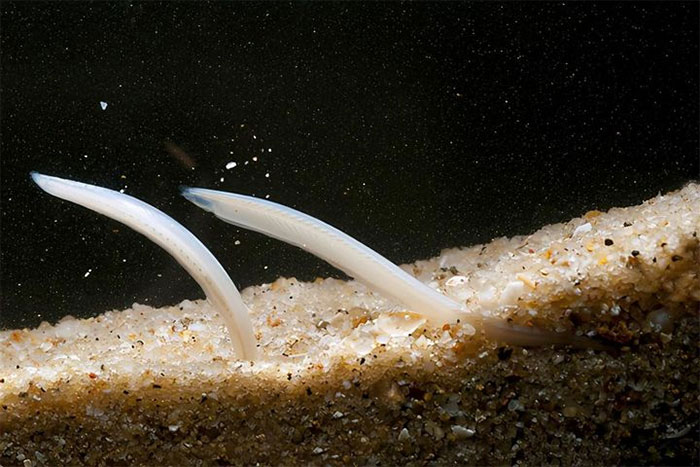
Biologists consider the lancelet to represent a transitional stage in evolution between invertebrates and vertebrates. Today it is seen as a close relative of the ancestors of fish, yet it is not a fish at all.
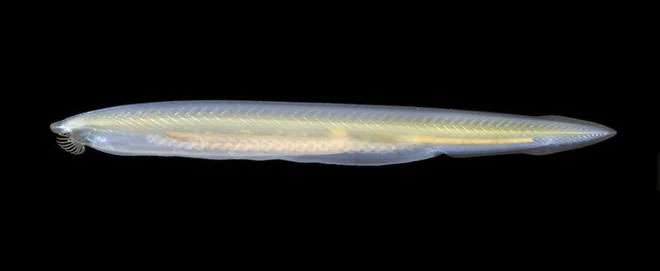
The lancelet's skin has two main layers: an outer epidermis and an inner dermis. Unlike most vertebrates, its epidermis is only a single layer of cells, while the dermis is poorly developed and consists mainly of gelatinous material or elastic connective tissue.
There are more than 69,000 animal species in the phylum Chordata. Most notably, vertebrates make up by far the largest share, with more than 66,000 species; the tunicate subphylum consists mainly of sea squirts, with about 3,000 known species; and the cephalochordates include just a handful of genera, such as the lancelets (Branchiostoma) and Asymmetron, with around 30 species.
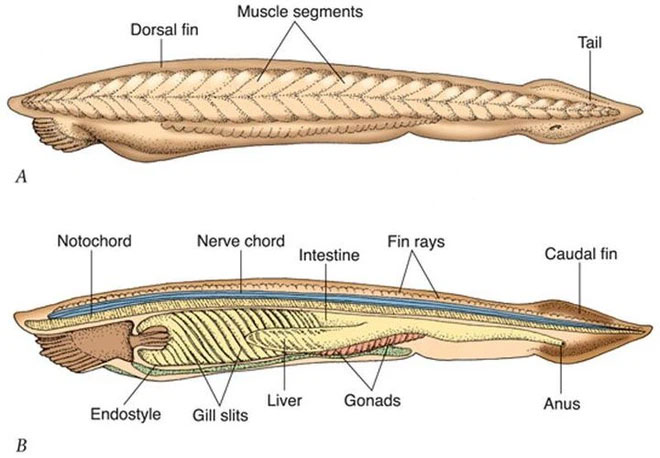
In fact, this animal's "skeleton" is the notochord, a rod running the length of its body along the back from tail to head. In the gill-slit region, the skeleton is a network of horizontal and vertical connective rods. The fins and tentacles are also supported by connective rods. Its central nervous system is a nerve tube running along the body above the notochord, but not reaching the notochord's front tip, and it is wrapped in a protective gelatinous sheath.
Although the lancelet looks like a fish, the biggest difference between it and vertebrates is that it has no true head. Sense organs for smell, sight and hearing, let alone a skull or teeth, are completely beyond it. The animal has only a tuft of flexible "feelers" at its front end that help support its body. Most astonishingly, it does not even have a heart; instead, it relies on the pulsing of part of its blood vessels to move blood around.
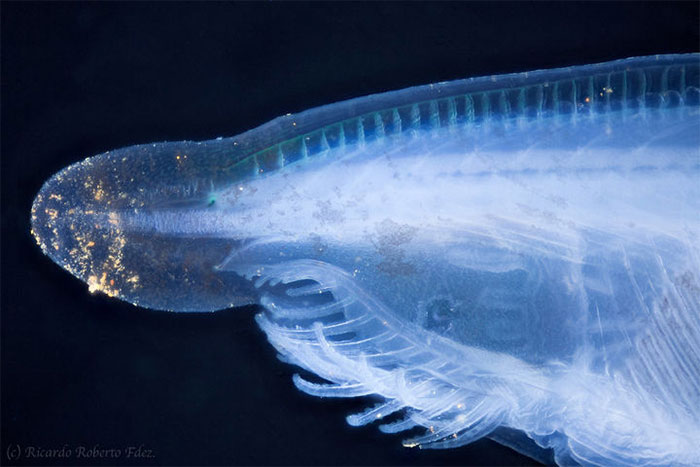
Its muscles are poorly differentiated and typically segmented, so they can produce only simple bending movements, suited to a life spent buried in sand. The musculature consists of many muscle segments (myomeres) arranged from the front end to the rear of the body, separated by connective-tissue partitions (myosepta). The muscle segments on the two sides of the body are staggered and interlock like the teeth of a comb. As a result, when the lancelet swims, its body flexes from side to side in the horizontal plane.
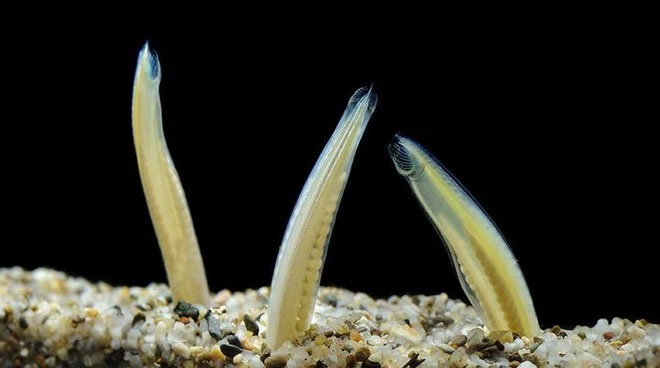
Amphioxus is widely distributed in shallow ocean waters, with Qingdao and Xiamen in China being its main habitats. It is also found along the coasts of Southeast Asia, California and Florida, Norway, the Mediterranean and Africa. Because it is nutritious and tasty, the lancelet is considered a traditional delicacy in Southeast Asia.

Lancelets are 3 to 5 cm long and have a very unusual shape. The body is long and flattened, almost like a carrying pole. The whole body is a translucent pale pink, with parallel muscle fibers clearly visible running lengthwise. They have no scales, no paired fins and no backbone, and instead of a heart they have only a rhythmically pulsing vessel. They lack sense organs such as eyes, a nose or ears, and the digestive system is barely differentiated: apart from the mouth and pharynx, it is just a stretch of gut leading straight to the anus. Lancelets often ride the tides into estuaries where the seabed is shallow. They have almost no means of defense but are able to burrow into the sediment. They live for about 3-4 years, usually burying more than half of their bodies in the sand while the rest sticks out to catch plankton carried in by the river.
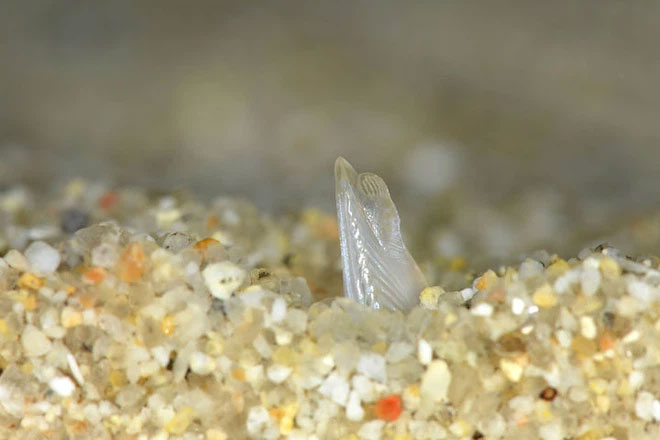
Because their muscles are poorly differentiated, they move through water only by simple bending motions. When not on the move, they usually lie buried in the sand. Lancelets breathe in a way quite similar to fish: they beat cilia (tiny hair-like structures lining the pharynx) to drive a current of water toward the gill slits. The walls of the gill slits are rich in blood vessels, and gas exchange takes place there.
How alligators survive in freezing water
Alligators use a hibernation-like strategy called brumation to survive freezing weather in the US.
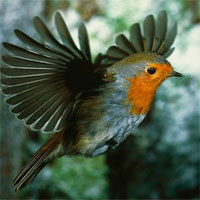
The mystery of birds' "quantum sense"
University of Tokyo scientists have directly observed a quantum reaction thought to let birds and other animals sense Earth's magnetic field.
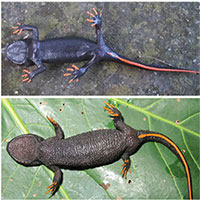
Super-cute new crocodile newts discovered in Vietnam
Scientists have described two new species and one new subspecies of crocodile newt from northern Vietnam, already threatened by trade and habitat loss.
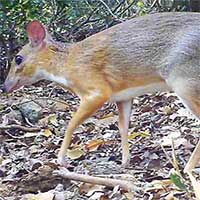
Half-deer, half-mouse creature resurfaces in Vietnam after nearly 30 years
The silver-backed chevrotain, a tiny mouse-deer feared lost for nearly three decades, has been photographed by camera traps in southern Vietnam.
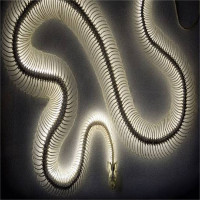
New bizarre "ghost snake" species discovered in Madagascar
Experts believe the pale grey snake, named Madagascarophis lolo, is a new species of cat-eyed snake.
Rare giant muntjac spotted in Vietnam's Saola Nature Reserve
Staff at the Saola Nature Reserve in central Vietnam have captured images of the rare giant muntjac (Muntiacus vuquangensis) living in the wild.