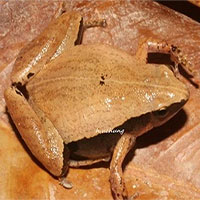
This fish starves itself and raises other males' young, just to win over females
Hidden among the weeds of ponds and streams in Australia is the “mouth almighty” — a remarkable fish with a huge, powerful jaw that can snap up passing prey. But that's not all: male mouth almighties also use their all-powerful mouths as a shelter for hundreds of young.
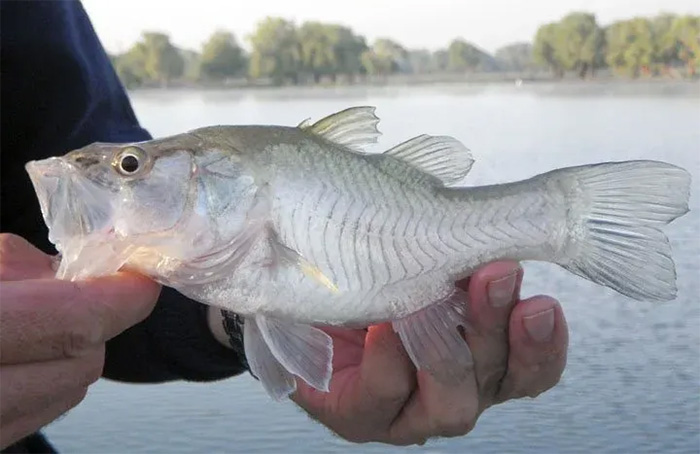
The mouth almighty has a wide mouth and strong jaws.
Carrying eggs in the mouth is known as “mouthbrooding,” and in the mouth almighty it is the males that do it, at a rate of 2–3 times per week. Like other mouthbrooding fish, the mouth almighty pays a heavy nutritional price each time it broods. You might expect this to make the fish cautious about parenting, but surprisingly, according to a study recently published in the journal Biology Letters, mouth almighty fathers sometimes raise young that are not their own.
Janine Abecia, the study's lead author, is a PhD candidate at Charles Darwin University in Australia, where she studies the mouth almighty and the blue catfish Neoarius graeffei. Both species live in Australian fresh waters and are mouthbrooders. The research also showed that the two species eat nothing at all while carrying eggs.
“I looked at the stomachs of the mouthbrooders and found them empty,” Abecia said.
What's more, a mouth crammed with young can make breathing difficult and slow the parent down, making it harder to escape predators. Given these costs, evolutionary logic suggests mouthbrooders should care only for their own offspring. That, however, is not what happens.
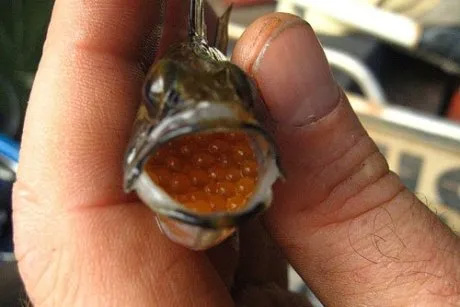
The young inside a male mouth almighty's mouth are not always its own.
Abecia collected mouth almighties and blue catfish from rivers in Australia's Northern Territory. She also gathered adult fish without young in their mouths for genetic comparison. She then took about 10 eggs or young from the mouths of the males and analyzed their DNA to determine their parentage.
The results showed that among the blue catfish, all nine fathers were raising their own offspring, and the young in each brood shared a single mother. Inside the mouths of mouth almighties, however, things were a bit strange. Of the 15 broods she collected from the wild, Abecia said, four were of mixed origin.
Specifically, 2 of the 15 broods had multiple mothers, suggesting that a male had courted another female when he already had eggs in his mouth. One brood had multiple fathers, possibly because another male sneakily fertilized some of the eggs before the father took them into his mouth. And in yet another brood, the young were not related at all to the fish caring for them.
Scientists had previously found that some mouthbrooding fish carry the wrong young. In one species of cardinalfish, about 8% of parents were raising unrelated offspring. In addition, a study of the silver arowana found that 2 of 14 parents were carrying “stray” young in their mouths.
Clearly, raising unrelated young is mostly a disadvantage for mouthbrooders, so why don't the fish seem to avoid it?
One possibility is that a mouth full of young makes a male look more attractive.
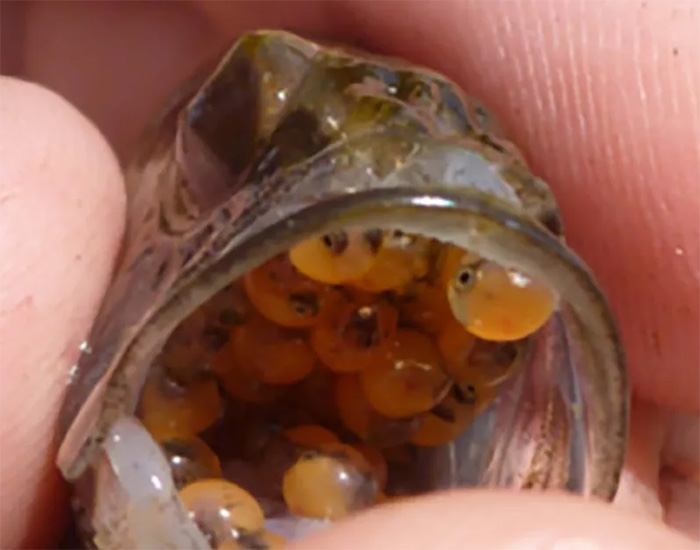
A male mouth almighty tries to impress females with a mouth full of young, even if they are not its own.
Indeed, Abecia explained: “Some females are attracted to males that are caring for young because they look more reliable. So the males' effort in ‘raising someone else's kids’ may pay off later. More females will be eager to fill their mouths with eggs, and the males will get more mates. That is also better for passing on their genes.”
However, according to Tony Wilson, an evolutionary biologist at Brooklyn College, this is only a small study, so it is still too early to draw any conclusions. Scientists need to do further research and gather more data to reach firmer conclusions.
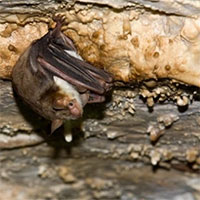
Bats imitate hornets to avoid being eaten by owls
When caught by an owl, the greater mouse-eared bat (Myotis myotis) mimics the buzzing of hornets to fool the predator.
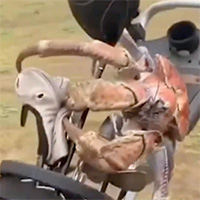
Giant coconut crab attacks golfer on Christmas Island
A golfer was stunned when one of the world's largest crabs attacked and snapped his sturdy club 'like a chainsaw.'
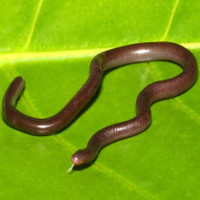
The little-known tiny worm snake of Vietnam
The worm snake looks much like an earthworm, but it is a true snake with all the anatomical features of one.

New mole species discovered in Vietnam's Central Highlands
A new mole, Euroscaptor ngoclinhensis, has been identified on Mount Ngọc Linh and in the Central Annamite range of Vietnam.
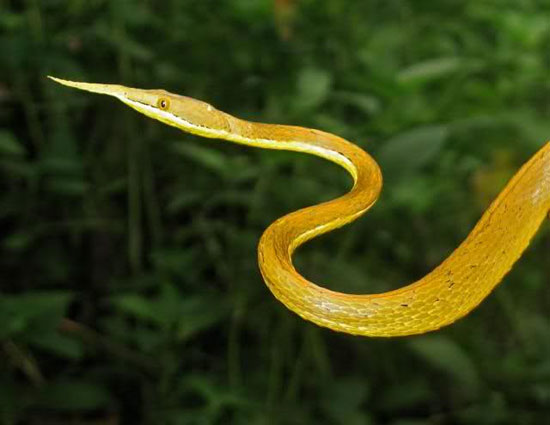
The rhinoceros ratsnake: a Vietnamese snake with a horn on its nose
The rhinoceros ratsnake of Vietnam looks bizarre and intimidating, yet this horned-nose snake is harmless, non-venomous and docile.
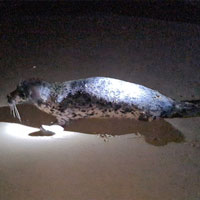
Rare seal unexpectedly turns up off Vietnam's Quảng Nam coast
A rare seal, an animal of cold climates, was caught in fishermen's nets off the former Quảng Nam province in central Vietnam and released.