New slender gecko species discovered in Vietnam's Cát Tiên National Park
Scientists have discovered the Cát Tiên slender gecko for the first time, a distinct species with dark brown and white spots and an ash-gray tail.
The new slender gecko species, scientifically named Hemiphyllodactylus cattien, belongs to the family Gekkonidae (the gecko family). It was first described in 2023 by researchers from the Vietnam-Russia Tropical Centre (Trung tâm Nhiệt đới Việt - Nga), including Dr. Lê Xuân Đắc, Nikolay A. Poyarkov and Platon Yushchenko, together with their colleagues. The study was published in the journal Zootaxa in late June.
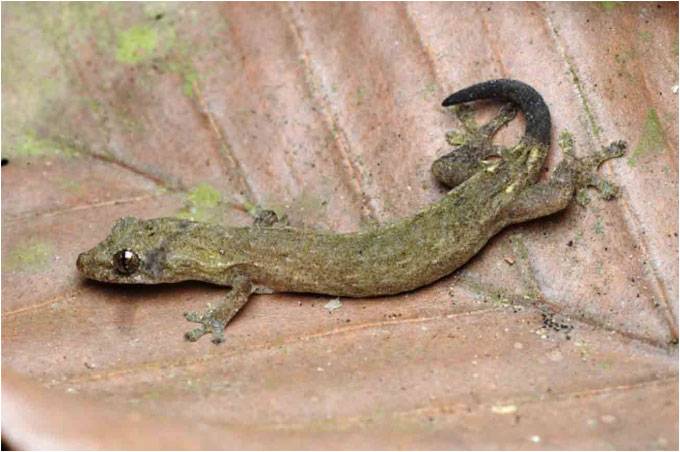
The Cát Tiên slender gecko discovered by the scientists. (Photo: Vietnam-Russia Tropical Centre).
According to the Vietnam-Russia Tropical Centre, the Cát Tiên slender gecko was recorded on a tree trunk 1.5 m above the ground, in primary dipterocarp forest along the trail to Bàu Sấu (Crocodile) Lake in Cát Tiên National Park, southern Vietnam. It is the eighth species of the genus Hemiphyllodactylus to be described from Vietnam. Unlike most members of the genus Hemiphyllodactylus, which are endemics restricted to highland areas, the new species lives in the lowlands.
The Cát Tiên slender gecko is a small species: females reach a maximum snout-vent length of 35.1 mm, and the head is triangular in dorsal view. Analysis of the mitochondrial ND2 gene sequence shows that the Cát Tiên slender gecko is genetically close to H. indosobrinus from Laos and H. flaviventris from Thailand.
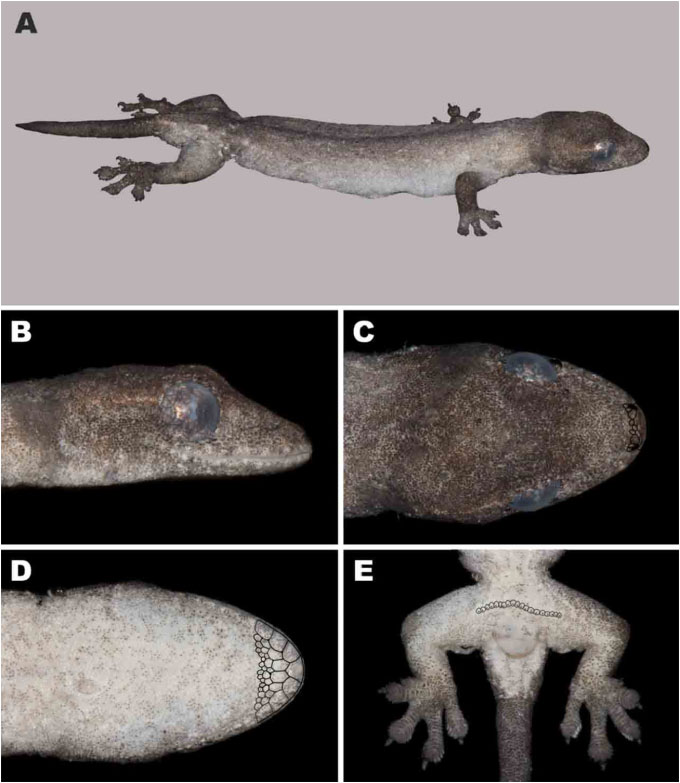
Photos from the analysis of the new species' specimen. (Photo: Vietnam-Russia Tropical Centre).
Dr. Nikolay A. Poyarkov, the study's lead author, said the discovery of the new species was quite unexpected. Since 2021, Poyarkov's team had been surveying reptiles and amphibians in Cát Tiên National Park. During one field survey, they happened upon a strange creature with a triangular head that fell from a tree. DNA analyses revealed a genetic divergence of about 20% to 24% from previously recognized species of the genus. This allowed the scientists to recognize it as a separate species.
The Cát Tiên slender gecko has been described as "a mysterious species that is very hard to encounter". The researchers made great efforts to collect more specimens, carrying out many intensive surveys along the trail to Bàu Sấu Lake, but so far only a single specimen has been collected.
| Cát Tiên National Park, nearly 150km northeast of Ho Chi Minh City, is a humid lowland forest with rich flora and fauna. Covering a total area of nearly 72,000 ha, Cát Tiên National Park is currently one of Vietnam's UNESCO-recognized world biosphere reserves. |
Endangered, rare pheasants found in Vietnam's Pù Hu special-use forest
Five silver pheasants and grey peacock-pheasants, rare and endangered birds, have been found in the Pù Hu special-use forest in Thanh Hóa, Vietnam.
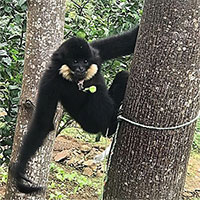
Rare yellow-cheeked gibbon turns up in a residential area in Đà Nẵng
Forest rangers in Đà Nẵng, central Vietnam, have captured a yellow-cheeked gibbon, a rare species that does not naturally occur in the city.
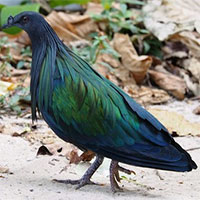
Rare Nicobar pigeon spotted in Vietnam's Côn Đảo National Park
The Nicobar pigeon, listed in Vietnam's Red Data Book and the global Red List, is a strikingly beautiful bird of great scientific value.
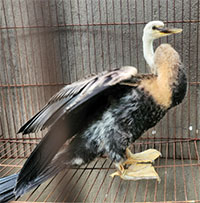
Rare Oriental darter lands on a roof in Ho Chi Minh City, refuses to fly even as residents climb up to catch it
A rare Oriental darter perched on a house roof in Gò Vấp, Ho Chi Minh City, and did not fly away; the homeowner handed it to forest rangers.
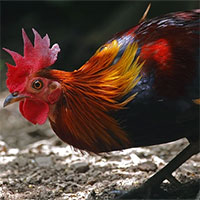
Chickens were domesticated thanks to the rice fields of Southeast Asia, new research suggests
Chickens may have been domesticated far later than thought, only after people began farming rice near forests where wild junglefowl lived.
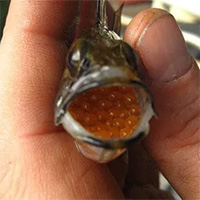
This fish starves itself and raises other males' young, just to win over females
Male mouth almighty fish brood young in their mouths without eating, and a new study shows some carry offspring that aren't even their own.