New snake species discovered on Vietnam's Mount Fansipan
International and Vietnamese scientists have discovered a new snake species at an altitude of 2,600 meters on Mount Fansipan (Sa Pa), within Hoàng Liên National Park in Lào Cai province, northern Vietnam.
According to Hoàng Liên National Park, in September 2023 a new snake species was discovered and described from the Hoàng Liên highlands of Sa Pa (formerly a district-level town of Lào Cai province), based on a single adult male specimen.
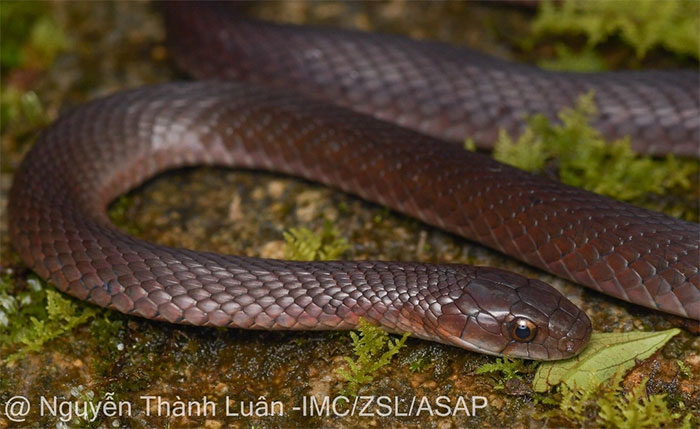
Close-up of the head of the H'mong keelback. (Photo: Hoàng Liên National Park).
The new reptile has the scientific name Rhabdophis hmongorum Kane, Tapley, La and Nguyen, 2023; its English name is the H'mong keelback snake, and its Vietnamese name is Rắn hoa cỏ H'mông.
It is the 32nd species in the keelback genus Rhabdophis worldwide and the ninth found in Vietnam.
The species is named after the H'mông ethnic group, in recognition of the H'mông guides who have accompanied the authors on an amphibian conservation project on Fansipan since 2017.
The discovery came out of a collaboration between the Hoàng Liên Center for Wildlife Rescue, Conservation and Development (part of Hoàng Liên National Park), the Zoological Society of London, Indo-Myanmar Conservation and the National Museum of Australia, aimed at studying and conserving amphibians and reptiles in the Hoàng Liên mountain range from 2022 to 2027.
Key identifying features of the new species are as follows: a cylindrical body with a snout-to-vent length of 409 mm and a tail of 106 mm; 17 rows of scales around the body near the neck, 17 rows at midbody and 15 rows near the vent.
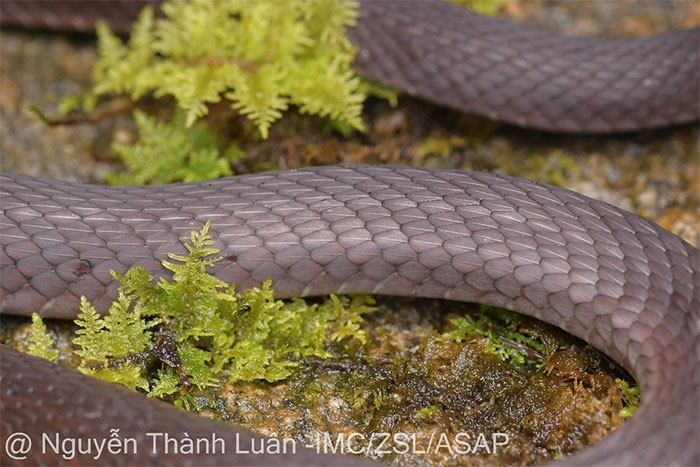
Dorsal scales of the H'mong keelback. (Photo: Hoàng Liên National Park).
The snake has 151 ventral scales and 59 divided subcaudal scales; its dorsal scales are keeled, with the five vertebral rows the most strongly developed. It has 25 maxillary teeth, the two rearmost being the largest and longest. The whole body is pinkish gray, the eyes are black with a copper-colored upper section, and the chin is grayish white. The belly bears iridescent light-brown scales.
The new snake can be distinguished from other members of the genus by its number of maxillary teeth, its body scale characteristics, and genetic differences of about 4% in a segment of the mitochondrial cytochrome b (cytb) gene.
A specimen collected in Honghe prefecture, Yunnan province, China, whose genetic sequence had been published on GenBank, matches the specimen described in the paper.
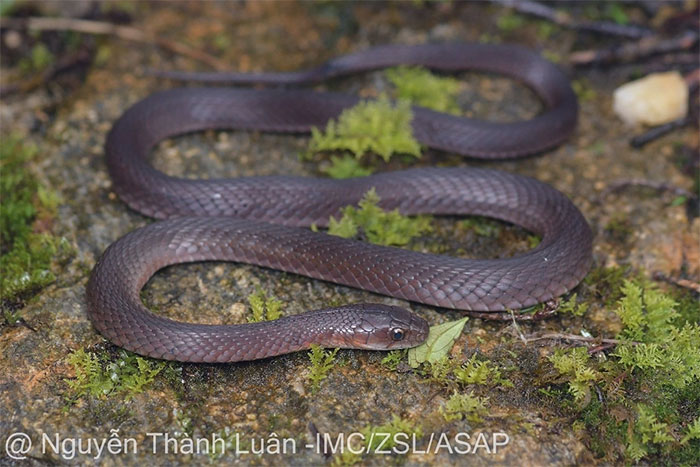
The H'mong keelback was described as a new species in the animal taxonomy journal Zootaxa, issue 5343 (2), on September 7. (Photo: Hoàng Liên National Park).
This indicates that the new snake's range is not limited to Vietnam but also extends into China.
Further research is needed to learn about the species' distribution, natural history and biology.
The findings show the need for continued research into reptile diversity in Hoàng Liên National Park and the wider Hoàng Liên Sơn range, as well as stronger cooperation between Hoàng Liên National Park and domestic and international agencies and organizations on wildlife research and conservation.
Images of the H'mong keelback were published in the animal taxonomy journal Zootaxa, issue 5343 (2), on September 7.
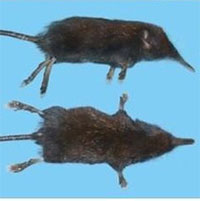
New shrew mole species discovered in Vietnam's Hoàng Liên National Park
Vietnamese and Japanese scientists have described the Fansipan shrew mole, Uropsilus fansipanensis, from Hoàng Liên National Park in northern Vietnam.
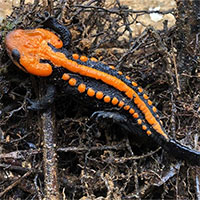
Stunning, rare crocodile newt discovered on Vietnam's Mount Ngọc Linh
The striking Ngọc Linh crocodile newt lives at 1,800 m, higher than any newt previously recorded in Vietnam (250-1,740 m).
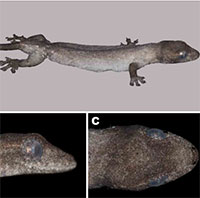
New slender gecko species discovered in Vietnam's Cát Tiên National Park
Scientists have described the Cát Tiên slender gecko, a new species with dark brown and white spots and an ash-gray tail, found in southern Vietnam.
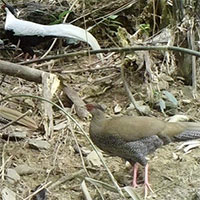
Endangered, rare pheasants found in Vietnam's Pù Hu special-use forest
Five silver pheasants and grey peacock-pheasants, rare and endangered birds, have been found in the Pù Hu special-use forest in Thanh Hóa, Vietnam.
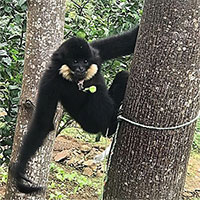
Rare yellow-cheeked gibbon turns up in a residential area in Đà Nẵng
Forest rangers in Đà Nẵng, central Vietnam, have captured a yellow-cheeked gibbon, a rare species that does not naturally occur in the city.
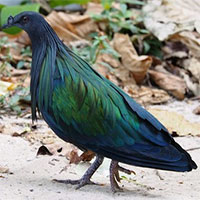
Rare Nicobar pigeon spotted in Vietnam's Côn Đảo National Park
The Nicobar pigeon, listed in Vietnam's Red Data Book and the global Red List, is a strikingly beautiful bird of great scientific value.