Vietnamese scientist discovers an extremely rare new begonia
Dr. Đỗ Văn Trường of the Vietnam National Museum of Nature (Bảo tàng Thiên nhiên Việt Nam) says a plant species previously unknown to science has been found in Tà Đùng National Park in Vietnam's Central Highlands. The new begonia has an attractive stem and strikingly vivid flowers.
According to Dr. Đỗ Văn Trường, the new begonia species was discovered during a field survey of plant diversity in Tà Đùng National Park, in the former Đắk Nông province (now part of Lâm Đồng province), carried out by botanists from the Vietnam National Museum of Nature, the Vietnam Academy of Science and Technology (Viện Hàn lâm Khoa học & Công nghệ Việt Nam) and the Beijing Botanical Garden in China.
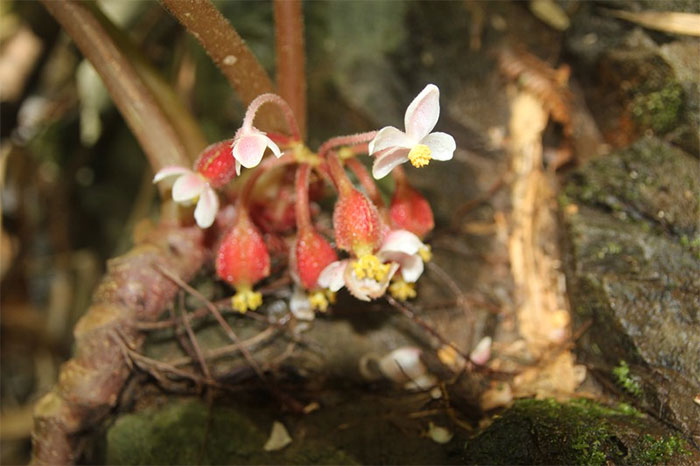
The new begonia is a rare genetic resource thanks to its attractive form and brightly colored flowers.
While trekking through the forest in a torrential downpour, the scientists found the new begonia tucked away beneath the foliage of the vast forests of the Central Highlands.
Fifteen months later (from discovery to publication), the new plant was named the Tà Đùng begonia, Begonia tadungensis T.V.Do.
This begonia has an attractive stem, leaves, flowers and fruit, both in shape and color. Specifically, the plant has broadly ovate leaf blades with smooth undersides. The female flowers have 6 petals and lovely colors, and the berries are covered in dense gray hairs. With its beautiful coloring, the new begonia could be grown as an ornamental plant.
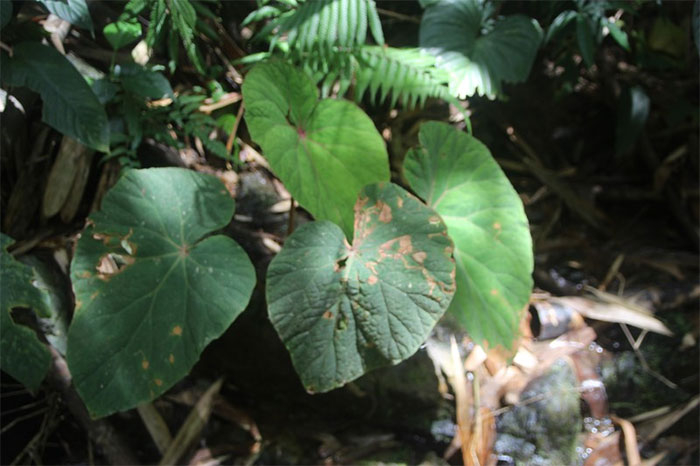
The new begonia was found beneath the forest canopy of the Central Highlands.
Dr. Trường added that, beyond being a beautiful flower, the discovery of this new begonia also sounds a conservation alarm, because the species is threatened: it grows in forest areas under heavy pressure from deforestation for coffee plantations, fruit orchards and other crops.
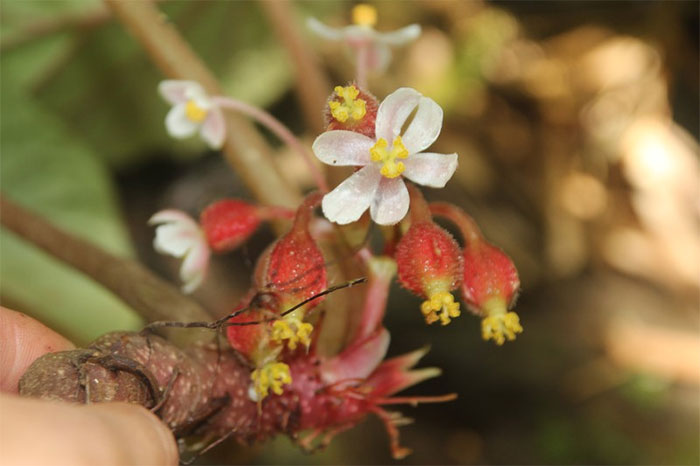
The new begonia is under heavy pressure from human activities.
"The species has a small wild population and is under heavy pressure from local people expanding coffee cultivation, which is destroying its habitat, so it has been provisionally assessed as Critically Endangered (CR)," Dr. Trường said with concern.
Notably, according to Dr. Trường, the story of this new begonia being "in danger" is also the story of many other valuable species in Vietnam.
Vietnam is one of the world's most biodiverse countries, with nearly 19,000 animal species and nearly 14,000 plant species known. These numbers keep growing, as hundreds of species new to science are discovered in Vietnam every year.
However, many new species receive little attention for research, conservation and development after their discovery, especially rare species with potential value and practical applications (as food, raw materials for medicines, dietary supplements and so on). This is deeply worrying, because without attention these new species will be threatened, and may even disappear forever.
| Begonia is one of the 10 largest plant genera, with more than 2,000 species. Its members are terrestrial (sometimes epiphytic) herbs or small shrubs that grow in humid tropical and subtropical regions of South and Central America, Africa and southern Asia. Begonia flowers come in a wide range of colors, from white, pink and bright red to purple and yellow. Thanks to their vivid flowers and attractive stems and leaves, many species are grown as ornamentals. In Vietnam today, begonias are very popular ornamental plants because their flowers come in many colors, their stems are attractive, and they grow and bloom quickly. Many different begonia species are sold on the ornamental plant market (under names such as "thu hải đường" or "sen cạn", meaning "land lotus", because their leaves closely resemble lotus leaves). |
The potato bean could become the next superfood
New research suggests a wild legume common in the United States could become a future superfood and a sustainable protein source.
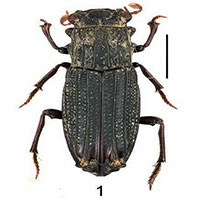
New insect species discovered in Vietnam
Scientists have described a new beetle, Rhyparus vietnamicus, and two new Sogana planthoppers from Vietnam.
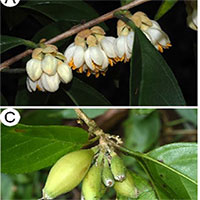
New tree species discovered in Vietnam's Trường Sơn mountains
Vietnamese and international scientists have discovered a new large timber tree in the Trường Sơn range of central Vietnam, named Rehderodendron truongsonense.
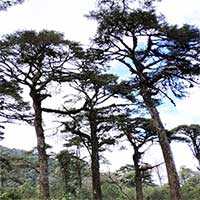
Rare hemlock population discovered in Vietnam's Lào Cai province
A population of more than 100 rare hemlock trees has been found at 1,800-2,000 m in Bát Xát Nature Reserve, Lào Cai province, northern Vietnam.
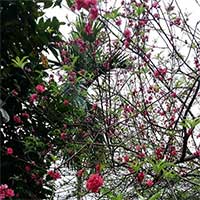
Strange sight: peach tree blossoms at the start of autumn
Peaches aren't alone: many crops are flowering and fruiting out of season, a sign that weather and climate are changing ever more visibly.
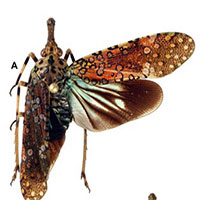
Long-headed lanternfly genus recorded in Vietnam for the first time
Only three species of this long-headed lanternfly genus are known worldwide. In Vietnam, specimens were collected in Huế and Đà Nẵng.