The animals with the weirdest hair in the world
The Victoria crowned pigeon, the bearded pig and the alpaca are three of the animals with distinctive tufts on their heads that look like bizarre hairstyles.
15 animals with the weirdest hair in the world
- 1. Bactrian camel
- 2. Alpaca
- 3. Victoria crowned pigeon
- 4. Highland cattle, also known as Scottish Highland cows
- 5. Bearded pig
- 6. Dalmatian pelican
- 7. Great curassow (Crax rubra)
- 8. Visayan warty pig
- 9. Komondor (the "mop dog")
- 10. Silkie chicken
- 11. Nicobar pigeon
- 12. Angora rabbit
- 13. Resplendent quetzal
- 14. Golden pheasant
- 15. Mangalitsa (or Mangalica) pig
1. Bactrian camel

The two-humped Bactrian camel lives in deserts across Central and East Asia. It is a relative of the Arabian camel. Its head is covered with sparse, scraggly tufts of hair. (Photo: Silvain de Munck/Flickr)
2. Alpaca
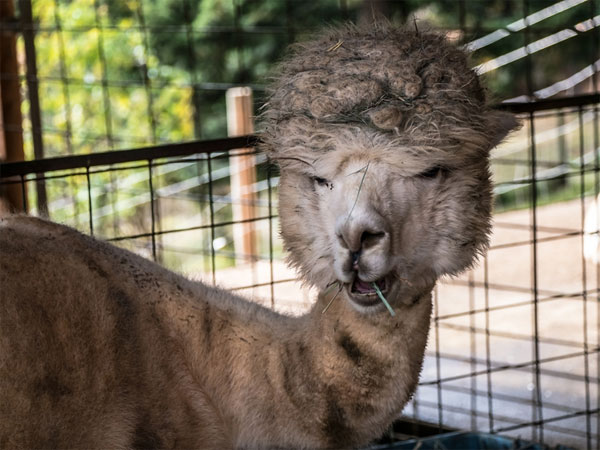
The alpaca is a humpless camelid that lives mainly in the Andes mountains of South America. Alpacas have small heads, long necks, short tails and a truly impressive mop of hair on top of their heads. Their very thick fleece helps them cope with the cold climate. (Photo: kwtraveller/Flickr)
3. Victoria crowned pigeon
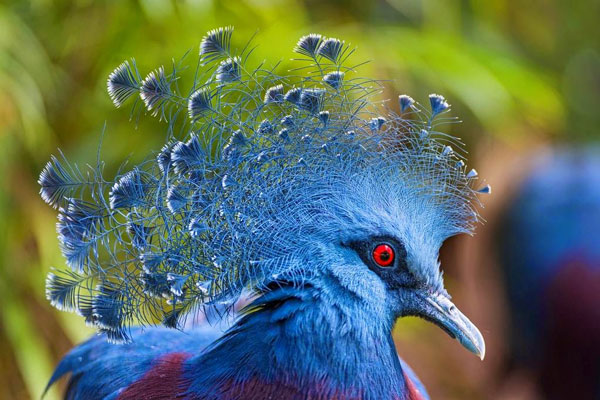
The Victoria crowned pigeon is the largest pigeon in the world. It usually lives in the forests of New Guinea. Beyond its blue-grey plumage, this bird's splendor comes from its standout feature: a fan-shaped "hairdo" on top of its head. Although it is not currently endangered, the Victoria crowned pigeon was once pushed close to extinction by human hunting. (Photo: Tambako The Jaguar/Flickr)
4. Highland cattle, also known as Scottish Highland cows

Highland cattle are striking for their long horns and shaggy coats, especially on the forehead. Their "hair" is considered the longest of any cattle breed and helps protect them through cold winters.
Highland cattle are raised mainly for their meat, which is prized for its quality and is said to be low in cholesterol. Their milk, meanwhile, typically has a very high butterfat content.
This is a domestic breed native to Scotland. Today it is raised for beef in many places, including Europe, North America and Australia. Its standout feature is its "long hair", which helps it adapt to harsh weather. (Photo: Michael Pollack/Flickr)
5. Bearded pig
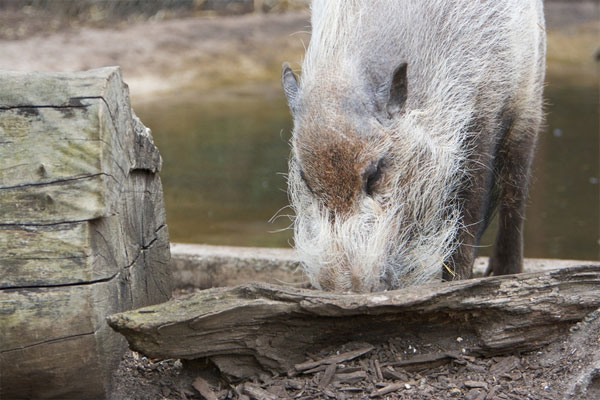
This pig has a lot of hair on its face. Females also grow plenty of facial hair, though less than males. (Photo: Jonathan Tweed/Flickr)
6. Dalmatian pelican
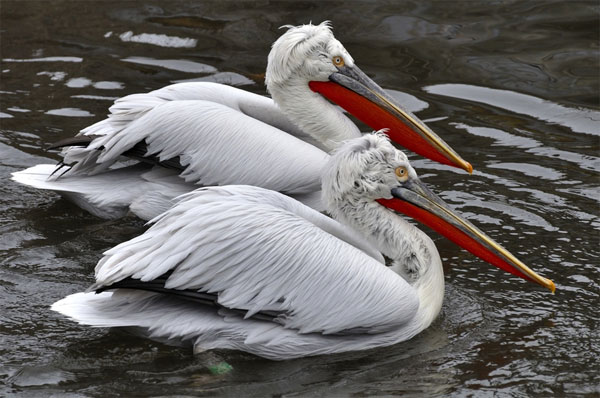
The Dalmatian pelican has downy feathers on its head that look like a wig. It is one of the heaviest flying birds. (Photo: Herr P)
7. Great curassow (Crax rubra)
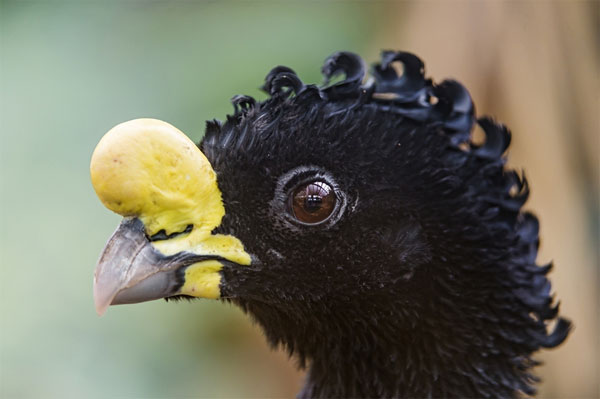
The great curassow (Crax rubra) lives in Central America and stands about one meter tall. The bird's most striking feature is the prominent "curly hair" crest on top of its head. (Photo: Tambako The Jaguar/Flickr)
8. Visayan warty pig
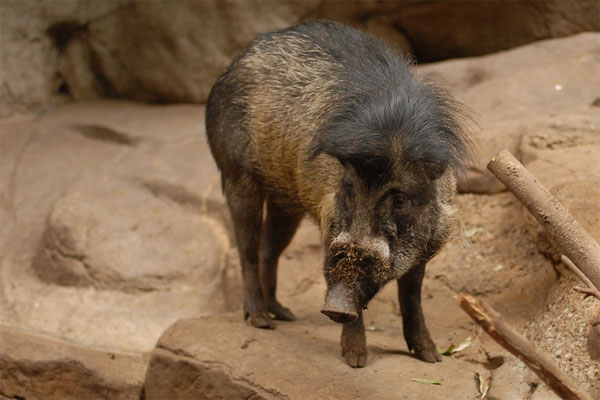
During the breeding season, this pig's mane usually grows to about 23cm long. (Photo: Josh More)
9. Komondor (the "mop dog")
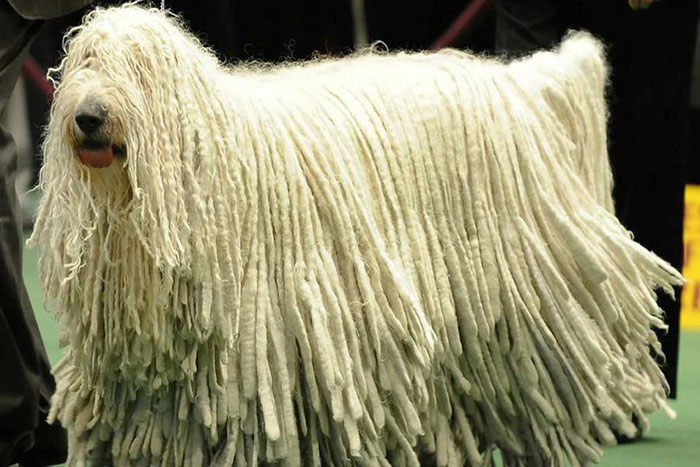
This is an ancient traditional dog breed and a national treasure of Hungary. Its white coat twists into tight cords. A Komondor's coat can be 20 - 27cm long, with a total weight of around 30kg.
Although the Komondor's hair is soft and silky, it is naturally curly, so it tends to twist itself into small clumps that look like the strands of a mop. As a result, after each bath it takes more than 2 days for the coat to dry completely.
Besides its "giant" coat, the Komondor has remarkable strength along with agility and stamina. People traditionally keep these mop dogs to guard flocks of sheep against wolves and bears.
10. Silkie chicken
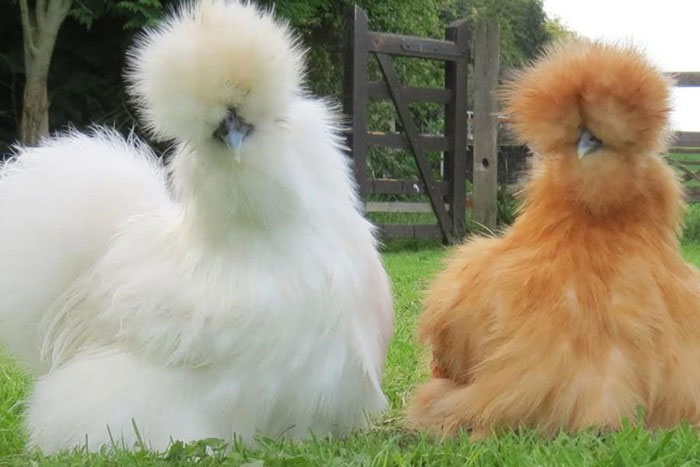
The Silkie is one of the most popular ornamental chicken breeds today. Originating in China, the Silkie was brought to Europe about 200 years ago. It has been likened to a cross between a chicken and a rabbit.
Silkies look incredibly cute, with a fluffy coat like that of a Japanese Chin. This plumage covers the whole body so that only the face is visible. Thanks to this distinctive fluffy plumage, Silkies can live in places with harsh climates. Silkies live for about nine years and are easy to keep. Their diet consists mainly of greens, paddy and rice.
11. Nicobar pigeon
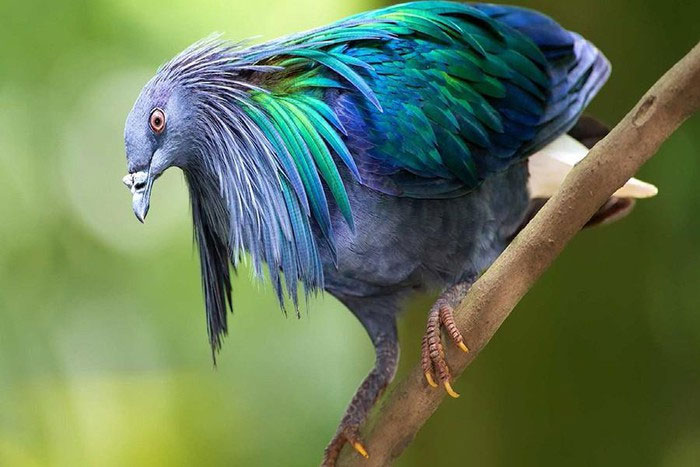
With its colorful, peacock-like appearance, the Nicobar pigeon is found on small islands and coastal areas of the Nicobar Islands, the eastern Malay Archipelago, and as far as the Solomon Islands and Palau.
The Nicobar pigeon's head is blue-grey, like the feathers on its upper neck. Its tail is very short and pure white. The rest of its plumage is metallic green, interspersed with brilliant hues such as pink, purplish pink, orange, green and emerald... With such a special appearance, the Nicobar pigeon has been dubbed the owner of the most beautiful plumage in the bird world.
According to scientists, Nicobar pigeons are far more colorful than ordinary pigeons because of where they mainly live. On small islands with few natural predators, Nicobar pigeons can afford to wear eye-catching plumage without fear of being spotted.
12. Angora rabbit

The Angora rabbit is one of the animals with the most unusual coats in the world. Angoras have round, ball-like bodies and weigh 2-3.4kg. In addition, the rabbit has a very striking feature: a long, soft coat that covers its face, feet and ear tips. With such an adorable look, Angora rabbits are often likened to "hopping cotton balls".
An Angora rabbit's fur can grow about 2.5cm each month. It is used to make a wool also called Angora. This wool is soft, smooth, fine and fluffy but not durable enough.
13. Resplendent quetzal

The resplendent quetzal (scientific name Pharomachrus mocinno) is one of the birds with the most beautiful plumage in the world. It usually lives in the mountainous tropical forests of Central America. Its favorite foods are fruit, insects, lizards and other small creatures.
During the breeding season, males are adorned with two tail feathers up to 1m long and vividly colored plumage. Unlike males, females lack the long tail and are less brightly colored. Legend has it that quetzals cannot bear captivity and would rather die than be kept in a cage or chains. That is why the bird became the symbol of Guatemala, a Central American country, as well as the embodiment of a powerful god in ancient Maya mythology.
14. Golden pheasant
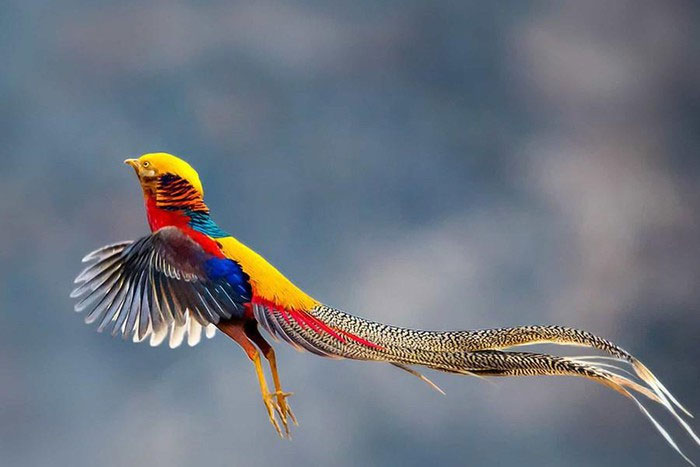
The golden pheasant's scientific name is Chrysolophus pictus. It is native to China but is also found in dense woodlands in England, Scotland, Spain and France.
The golden pheasant is one of the most brilliantly colored birds, with a bright golden "hairdo" combined with its characteristic scarlet and green. Males in particular are hugely impressive, measuring 90-105cm in total length, with the tail making up about 2/3 of that.
Golden pheasants rarely fly and spend most of their time on the ground foraging for food such as fruit, seeds and insects. The golden pheasant is a symbol of good fortune and prosperity.
15. Mangalitsa (or Mangalica) pig
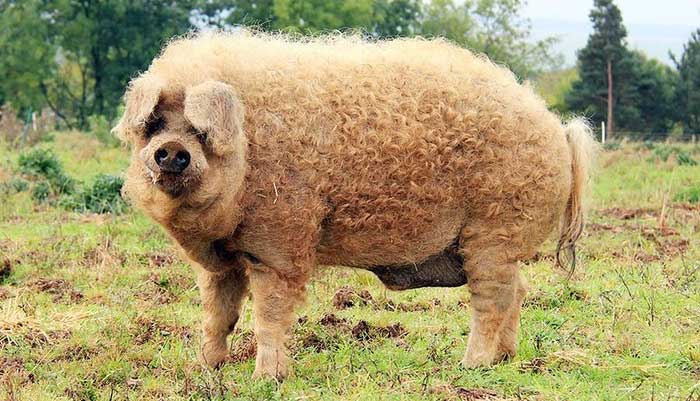
This is a rare pig breed originating in Hungary. What makes it special is the thick, long, shaggy coat covering its entire body like a sheep's fleece. Mangalitsa pigs come in several coat colors, such as blond, pale blond and reddish...
Mangalitsa pigs need no special care; they feed mainly on wheat, corn, barley, grass... Mangalitsa pork is considered one of the tastiest meats in the world. Compared with other pigs, Mangalitsas are exceptionally intelligent. That is why they are famous as pigs that look as cute as sheep and are as smart as dogs.
Treasure of the Trường Sơn Range: An extremely rare bird found in only two countries, flagged by the IUCN for urgent protection
The IUCN Red List urges urgent protection for the Vietnamese crested argus, a Critically Endangered pheasant at risk of vanishing from the wild.
Venomous snakes of Vietnam
Vietnam is home to nearly 200 snake species, 53 of them venomous, mostly vipers and elapids. Some can kill a person within a short time.
How to tell dugongs and manatees apart: Two rare look-alike sea mammals
Dugongs and manatees look remarkably alike, but a glance at the tail gives them away. Only the dugong lives in Vietnam's waters.
Why can't humans domesticate wolves?
Dogs and wolves share very similar genes, yet wolves stay wild. A study points to differences in their earliest sensory experiences.
Meet the new snake species found only in Vietnam
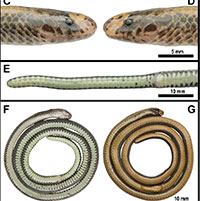
Scientists have described a new snake species, Colubroelaps adleri, known only from Hòn Tre, a small island in Khánh Hòa province, Vietnam.
Hepu mitten crab identified in Vietnam
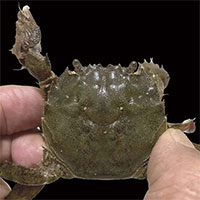
In Vietnam, the Hepu mitten crab goes by many local names, such as cà ra, cua lông and cua da, depending on the province.