Why can't humans domesticate wolves?
Why do wolves remain wild animals forever, while dogs could be domesticated?
>>> Little-known facts about wolves
Dogs and wolves have very similar genomes, which has made it hard for biologists to understand why wolves remain so wild while dogs can readily become "man's best friend."
Now, doctoral research by evolutionary biologist Kathryn Lord at the University of Massachusetts Amherst suggests that the behavioral differences between dogs and wolves are linked to the animals' earliest sensory experiences and the critical period of socialization. The study is described in the journal Ethology.
Until now, scientists knew very little about sensory development in wolf pups, and assumptions were usually extrapolated from what is known about dogs, Lord explained. That might be reasonable, except that scientists already knew there are significant differences in early development between wolf pups and dog puppies, chiefly in the timing of their ability to walk, she added.
To clarify this, she studied how 7 wolf pups and 43 dog puppies responded to familiar and new smells, sounds and visual stimuli, testing them weekly, and found that they developed their senses at the same time. However, her study also revealed new information about how the two subspecies of Canis lupus experience their environment during a 4-week developmental window known as the critical period of socialization, and these new findings may significantly change our understanding of how wolves and dogs develop.
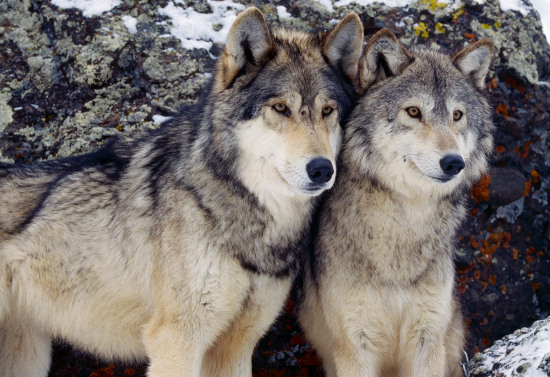
When the "socialization window" is open, puppies and wolf pups begin to walk and explore without fear, and they retain a lifelong familiarity with whatever they encounter. Domestic dogs can get used to humans, horses and even cats at this stage and remain comfortable with them forever. But as they develop, fear increases, and after the window closes, new sights, sounds and smells elicit a fear response.
Through her observations, Lord confirmed that both dogs and wolves develop their sense of smell at 2 weeks of age, hearing at 4 weeks and vision at around 6 weeks on average. However, the two subspecies enter the critical period of socialization at different ages. Dogs begin it at about 4 weeks, while wolves begin at 2 weeks. So how each subspecies experiences the world during that crucial time is very different, and likely leads to different developmental paths, she said.
Lord is the first to report that wolf pups still have their eyes closed and cannot yet hear when they begin to walk and explore their surroundings at two weeks of age. "No one knew this about wolves: when they start exploring, their eyes are closed, they can't hear, and at this stage they explore their environment mainly by smell, so this is very interesting," she noted.
She added: "When wolf pups first begin to hear, they are initially frightened by sounds, and when they first begin to see, they are also afraid of new visual stimuli. As each sense comes online, wolf pups experience a new round of sensory shocks that dog puppies do not."
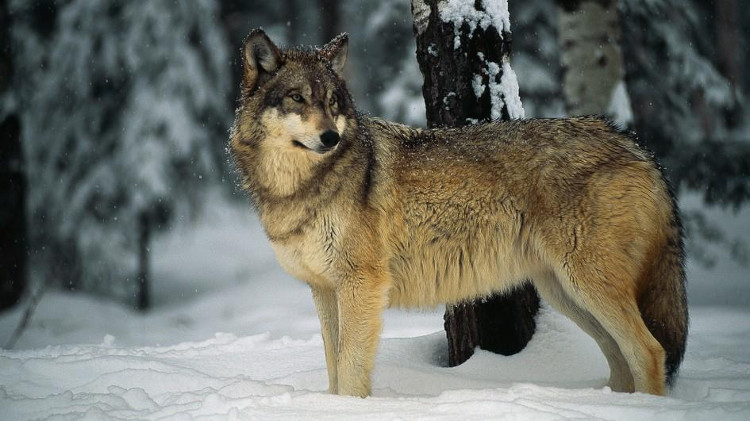
Dog puppies, meanwhile, only begin to explore and walk after all three senses (hearing, smell and sight) are working. Overall, "The differences between dog puppies and wolf pups in their first weeks of life are quite surprising, given how genetically similar they are. Two-week-old puppies basically can't yet stand steadily or walk. But at this age wolf pups are already actively exploring, walking vigorously with good coordination and starting to climb small steps and mounds of earth."
These significant differences in developmental experience between dog puppies and wolf pups lead to marked differences in their social relationships, especially with humans. This new information will help with the management of both wild and captive wolf populations, Lord said.
Meet the new snake species found only in Vietnam
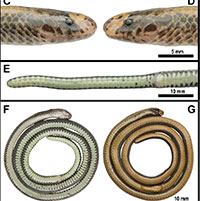
Scientists have described a new snake species, Colubroelaps adleri, known only from Hòn Tre, a small island in Khánh Hòa province, Vietnam.
Hepu mitten crab identified in Vietnam
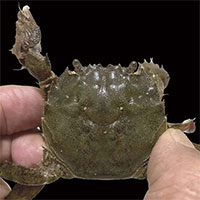
In Vietnam, the Hepu mitten crab goes by many local names, such as cà ra, cua lông and cua da, depending on the province.
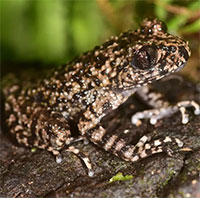
New toad species discovered, found only in Vietnam
A new toothed toad of the genus Oreolalax, discovered on Pờ Ma Lung mountain, has been recognized as endemic to Vietnam.

Man drinking coffee in Thủ Đức spots a rare stray oriental pied hornbill
A man in Ho Chi Minh City spotted a big-billed bird on a branch; it flew toward him instead of away, so he caught it and handed it to forest rangers.

Silvered langur family's orange baby causes a stir at Saigon Zoo
A baby silvered langur with bright orange fur at Ho Chi Minh City's Saigon Zoo has gone viral, sparking jokes that it is a hybrid. The zoo says it is normal.

Up close with the new venomous pit viper discovered in Vietnam
An international team has discovered a new venomous pit viper with yellow eyes and blue lips in the coastal forests of central Vietnam.