Treasure of the Trường Sơn Range: An extremely rare bird found in only two countries, flagged by the IUCN for urgent protection
The IUCN Red List is calling for urgent protection of this animal, which faces the risk of disappearing entirely from the wild.
The animal, classified as Critically Endangered (CR) on the Red List of the International Union for Conservation of Nature (IUCN) in 2021, is the Vietnamese crested argus (scientific name: Rheinardia ocellata), known in Vietnamese as trĩ sao.
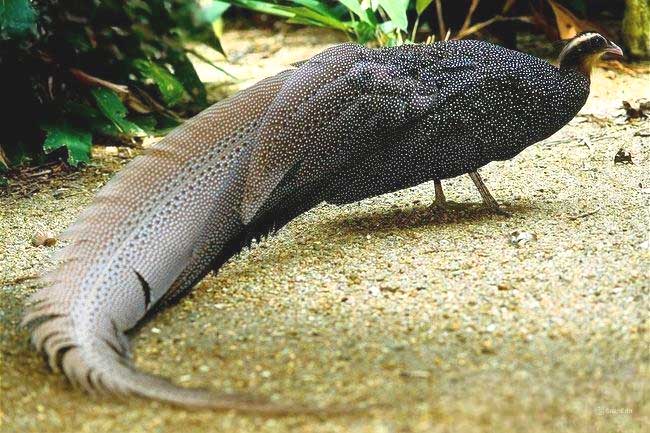
A male Vietnamese crested argus. (Source: Fletcher & Baylis/Arkive).
According to the IUCN Red List, the Vietnamese crested argus lives in only two countries in the world: Vietnam and Laos. It is found mainly along the Trường Sơn Range (Annamite Range), which forms the border between Laos and Vietnam, as well as in other mountain ranges of central and southern Vietnam and in the humid evergreen forests of Laos's highlands.
Because the bird faces an extremely high risk of vanishing entirely from the wild in the near future, the Vietnamese crested argus is regarded as a "treasure" of the Trường Sơn Range in particular and of the world in general. Rising more than 2,700 meters, the Trường Sơn Range is one of the world's major mountain systems and the longest mountain range in Vietnam.
The Vietnamese crested argus is a strikingly beautiful, graceful bird. It belongs to a genus of large, peacock-like birds in the pheasant family, with mostly black and dark-brown plumage dotted with star-like spots, a deep pink bill, brown irises and blue skin around the eyes.
Males measure 190-239 cm in total length, while females measure 74-75 cm. Adult males stand out for their enormous tail of 12 feathers, in which the central tail feathers are five times longer than the outermost pair. Females, by contrast, are smaller with shorter tails. The male is unmistakable, with a long white erectile crest, while the female has a distinctive head pattern (browner and duller than the male, with a shorter crest) and barred upperparts.
Besides calling, male Vietnamese crested argus often use their huge plumage to impress females during the breeding season.
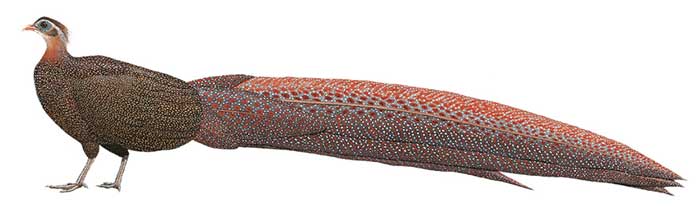
A male Vietnamese crested argus. (Photo: Francesc Jutglar/Birdsoftheworld).
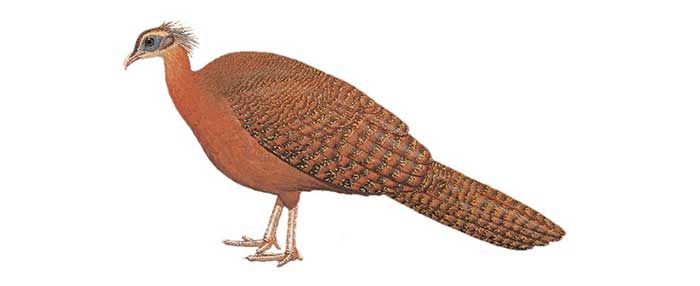
A female Vietnamese crested argus. (Photo: Francesc Jutglar/Birdsoftheworld).
The bird is omnivorous. Its diet includes various leaves, berries, larvae, amphibians, other insects and small frogs.
The Vietnamese crested argus inhabits primary and secondary evergreen forest from sea level up to 1,500 meters, and from 1,700 to 1,900 meters on the Đà Lạt Plateau in Lâm Đồng, in Vietnam's Central Highlands. It is most abundant in humid primary forest at around 900 meters.
The IUCN Red List gives no specific population figure for the wild, but the IUCN stresses that although the species' range remains large, its population is strongly suspected to have declined significantly and to still be declining extremely rapidly. Bạch Mã National Park in Huế city (formerly Thừa Thiên Huế province) in central Vietnam was known as a site where the species was common, but it appears to have vanished from the wild there over the past decade as well.
Two major threats to the Vietnamese crested argus
According to international experts, the most serious threat to the Vietnamese crested argus comes from high levels of hunting, mainly through snaring. The species is hunted chiefly for its meat, but also for the pet trade. In Vietnam, the crested argus is a legally protected species, and hunting, trading or consuming it is illegal and can lead to criminal prosecution.
Snaring has increased dramatically since the early 2000s, especially in lowland forests across Vietnam and Laos. The most recent wave of "industrial-scale" snaring has swept across forested areas of central Vietnam and Laos.
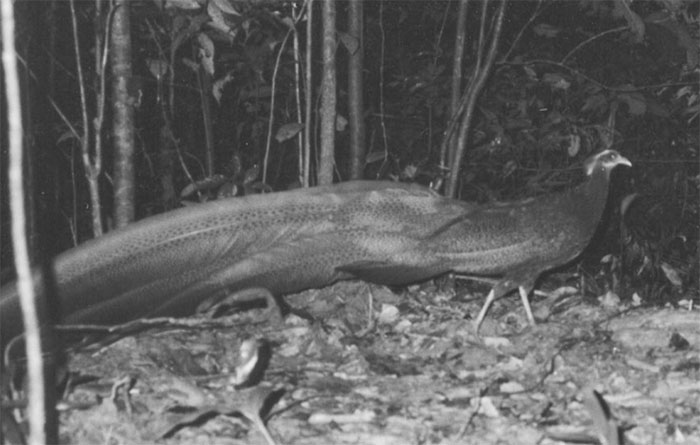
A Vietnamese crested argus captured by a camera trap. (Photo: Paul Sweet/Birdsoftheworld).
Areas in the southern Trường Sơn Range are now thought to be facing this wave of snaring, and this may be where the fastest declines are currently occurring. Until recently, the southern Trường Sơn was believed to be the last area still unaffected by it.
No effective measures have been put in place to reduce snaring levels within the species' range, so the population decline is very likely to continue.
The second threat is habitat loss, as deforestation has recently increased. Experts note that the rate of forest-cover loss rose over the 2003-2020 period. If this rate continues, total forest loss within the species' range between 2016 and 2033 will reach 21.4%.
Since it was first described to science in the late 19th century, and despite being considered fairly common until a few decades ago, this pheasant is now very rare throughout its range, and its population appears to be in near-inevitable decline. As a result, the Vietnamese crested argus has become extremely hard to find.
To prevent the species from disappearing entirely from the wild, the IUCN has proposed conservation actions to safeguard species diversity in Southeast Asia and the world at large, including: strictly enforcing hunting regulations in protected areas; combining this with targeted local conservation-awareness initiatives; and surveying suitable habitat in Laos and Vietnam to clarify the species' current distribution and assess its abundance.
Venomous snakes of Vietnam
Vietnam is home to nearly 200 snake species, 53 of them venomous, mostly vipers and elapids. Some can kill a person within a short time.
How to tell dugongs and manatees apart: Two rare look-alike sea mammals
Dugongs and manatees look remarkably alike, but a glance at the tail gives them away. Only the dugong lives in Vietnam's waters.
Why can't humans domesticate wolves?
Dogs and wolves share very similar genes, yet wolves stay wild. A study points to differences in their earliest sensory experiences.
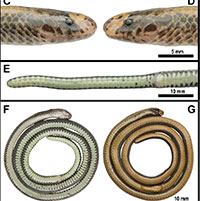
Meet the new snake species found only in Vietnam
Scientists have described a new snake species, Colubroelaps adleri, known only from Hòn Tre, a small island in Khánh Hòa province, Vietnam.
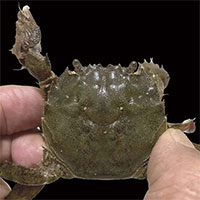
Hepu mitten crab identified in Vietnam
In Vietnam, the Hepu mitten crab goes by many local names, such as cà ra, cua lông and cua da, depending on the province.
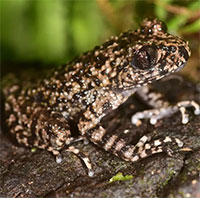
New toad species discovered, found only in Vietnam
A new toothed toad of the genus Oreolalax, discovered on Pờ Ma Lung mountain, has been recognized as endemic to Vietnam.