Unique Mid-Autumn Festival customs around the world
Vietnam is not the only place that celebrates the Mid-Autumn Festival on the 15th day of the eighth lunar month: many other parts of Asia mark it too.
Mid-Autumn Festival customs around the world
- Vietnam - The Mid-Autumn Festival belongs to children
- China - Mid-Autumn is the festival of family reunion
- Japan - The moon-viewing festival
- South Korea - A harvest festival and a time to thank the ancestors
- North Korea - The autumn evening festival
- Singapore – A lively Mid-Autumn celebration
- The Philippines and Indonesia: Lion dance troupes fill the Chinese quarters
- Malaysia – Mid-Autumn is festival season
- Myanmar – Mid-Autumn lights up everywhere
- Laos – Mid-Autumn is the festival of the blessed moon
- Cambodia – Mid-Autumn is the "moon worship festival"
- Thailand – Mid-Autumn is the "moon prayer festival"
- Taiwan - Outdoor barbecue parties
Vietnam - The Mid-Autumn Festival belongs to children
In Vietnam, the Mid-Autumn Festival is a holiday for children, tied to the legends of Hằng Nga (the moon goddess Chang'e) and Chú Cuội, the boy who watches over the moon. Children usually parade with star-shaped lanterns, wear masks and form lion dance troupes, beating drums with great gusto.
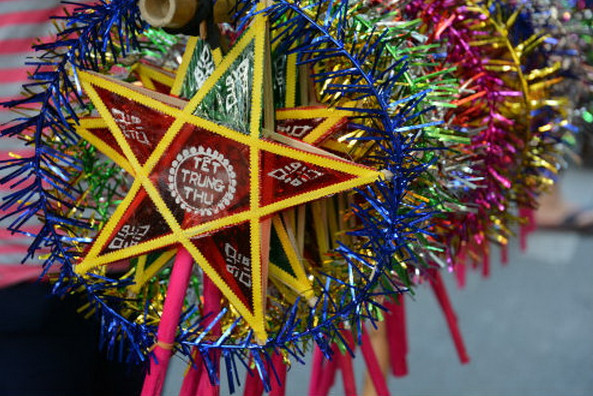
During the festival, Vietnamese families set out cakes and fruit in their yards as offerings to the moon. Children in particular look forward to Mid-Autumn eagerly, because it is when relatives buy them plenty of toys and sweets. Some cakes are typically made only for the festival, such as sticky rice cakes (bánh dẻo) and baked mooncakes (bánh nướng). Traditional toys of the past included star lanterns, paper lanterns, revolving shadow lanterns and animal-shaped lanterns, and they came in far fewer types and designs than they do today.
In many places, Mid-Autumn is an occasion for women to compete in preparing feast trays and baking cakes. Children join lantern processions and trống quân folk singing contests. When the moon is high, the children gather around a tray laden with cakes and fruit to enjoy the moon-watching feast, then "break the feast" late into the night. The traditional moon-watching tray of Vietnamese children usually features baked mooncakes, sticky rice cakes, a little dog made from pomelo segments, and autumn fruits such as bananas, persimmons, "thị" fruit (Diospyros decandra), custard apples and sugarcane.
China - Mid-Autumn is the festival of family reunion
In Chinese tradition, the Mid-Autumn Festival is also called the festival of reunion. It is the time when every member of the family gathers together. No matter how far away people work, on this day they return home to see their family and relatives and share a reunion dinner.
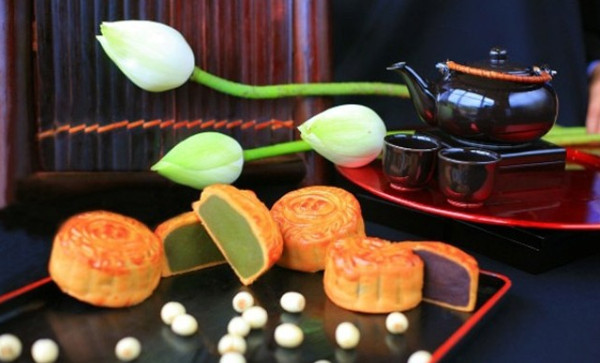
After the reunion meal, family members admire the moon together and eat mooncakes under the glow of lanterns. Two activities that Chinese communities never skip at Mid-Autumn are lantern processions and fire dragon dances. People believe the fire dragon brings luck and peace to every household.
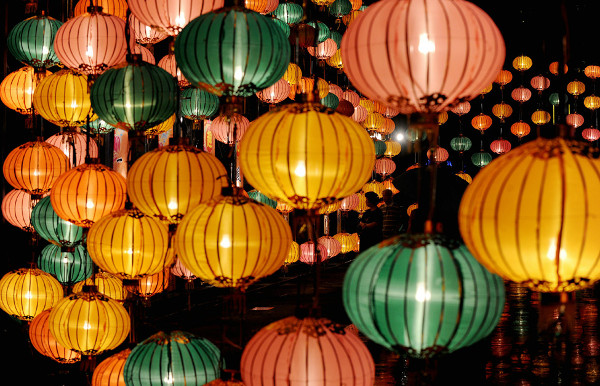
Chinese people usually hang lanterns in front of their homes and along the streets during the festival. On the full-moon night, they float lanterns on rivers and release Kongming sky lanterns to pray for luck and happiness for their families and loved ones. There are also lantern processions for children, lion and dragon dances, and clown figures dancing in the streets.
Chinese mooncakes are quite similar to Vietnamese ones: a thin crust with fillings such as mung bean, lotus seed and salted egg yolk, baked until evenly golden, which is when they taste best. The traditional cake varies from region to region in China according to local tastes. Its round shape symbolizes completeness and reunion. The atmosphere during the festival in China is very joyful, with children playing all day long.
Japan - The moon-viewing festival
The Mid-Autumn Festival came to Japan from China more than 1,000 years ago. But whereas the Chinese eat cakes while admiring the moon, the Japanese eat rice dumplings at Mid-Autumn. The festival on the 15th day of the eighth lunar month is called "jūgoya" (the fifteenth night) or "chūshū no meigetsu" (the harvest moon of mid-autumn).
Although Japan dropped the lunisolar calendar in favor of the Gregorian calendar after the Meiji Restoration (in the late 19th century), the custom of viewing the moon on the night of Mid-Autumn is still kept throughout the country, and some temples and shrines still hold special moon-viewing gatherings for the occasion.
During the festival, Japanese people view the moon and eat traditional foods, especially tsukimi dango – small, round sticky rice dumplings that symbolize the moon in the sky. Other Mid-Autumn dishes include sweet potatoes, chestnuts, and noodles such as soba and ramen.
South Korea - A harvest festival and a time to thank the ancestors
For Koreans, this is one of the biggest festivals of the year (known as Chuseok or Hangawi). Also held on the 15th day of the eighth lunar month, it is the Korean festival celebrating the harvest and giving thanks to the ancestors.
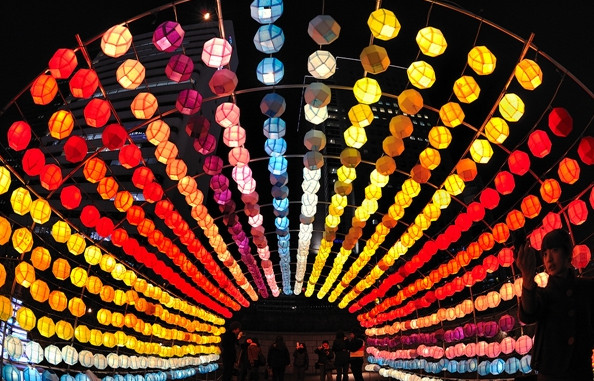
It is an occasion for family members to reunite, admire the moon and feast together. Families place crescent-shaped rice cakes coated with seaweed, beans or peanuts, along with other dishes, on the ancestral altar. It is also a time to pay respect to ancestors. People usually visit family graves, clear away weeds and clean the area around the tombs, a tradition similar to the grave-sweeping ritual of the Qingming Festival. Children dress in traditional clothes just like adults, play games and eat holiday cakes.
The Korean Mid-Autumn cake is called songpyeon. It is made from rice flour, mung beans and sugar, and steamed with pine needles. It is shaped like a crescent or half-moon rather than round or square like the mooncakes of many other Asian countries. Besides the traditional white, the cakes also come in pink, dark green, yellow and other colors.
On this occasion, people wear hanbok and eat traditional foods such as songpyeon, pan-fried meatballs and mung bean pancakes, and drink sindoju (new-rice wine)...
North Korea - The autumn evening festival
North Koreans call the Mid-Autumn Festival "Chuseok" (the autumn evening festival). Families steam cakes and give them to one another as gifts. The cakes are half-moon shaped, made from rice flour and filled with beans, candied fruit, jujubes and so on... The name is said to come from the way the cakes swell when they are steamed.
When darkness falls, people admire the moon together while holding tug-of-war and wrestling matches or performing songs and dances. Young women wear splendid festive clothes and gather beneath the old trees to play on swings.
Singapore – A lively Mid-Autumn celebration
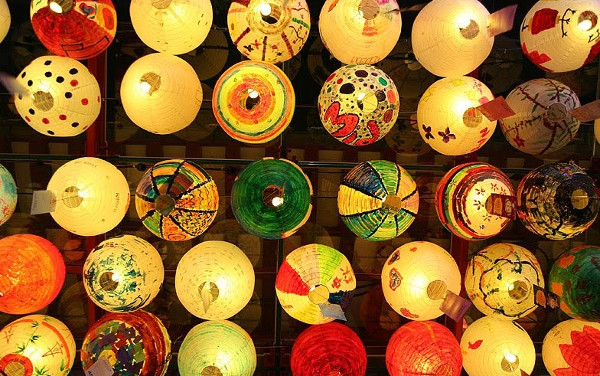
In Singapore, the Mid-Autumn Festival is also called the Lantern Festival or the Mooncake Festival. By the lunar calendar, it falls on the 15th day of the eighth month every year. It is when the moon rides high, and children sing and dance while admiring the moon and enjoying the festive feast. Streets are hung with lanterns and decorated with symbols of the festival.
For the people of the "Lion City", Mid-Autumn is an ideal time to strengthen ties and send thanks and best wishes to family, friends and business partners.
As a famous tourist destination, Singapore never misses the chance to draw visitors during the festival. Orchard Road – the shopping paradise – the riverside, Chinatown, the Chinese Garden and many other places are decorated to welcome tourists from around the world.
Celebrations here are lively. At Sengkang Square, people gather to enjoy fun games. It is also an occasion for Singapore's Chinese community to showcase its rich and diverse culture in Chinatown, with colorful lanterns, and families gathering to share their happiness over delicious mooncakes and cups of strong tea.
The Philippines and Indonesia: Lion dance troupes fill the Chinese quarters
Overseas Chinese and ethnic Chinese living in the Philippines and Indonesia always hold distinctive activities to welcome the Mid-Autumn Festival each year. In the Chinese quarters, lion dance troupes parade one after another. People wear traditional costumes, light lanterns and sing joyfully.
Malaysia – Mid-Autumn is festival season
In recent years, Malaysia has held not only a Mooncake Festival at Mid-Autumn but also a lantern festival. At this time, the streets are decorated with hundreds or even thousands of brightly colored lanterns. It is a chance for Malaysians and visitors to take to the streets and join in the festive atmosphere.
Myanmar – Mid-Autumn lights up everywhere
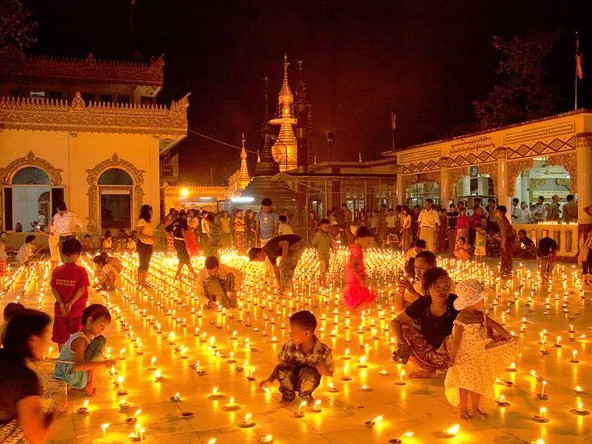
In Myanmar, the full-moon festival is called the "Full Moon Festival" or the "Festival of Light". On the full-moon night, every household lights lanterns so the city glows and light shines everywhere. People also watch plays, dance performances and films, and enjoy many other lively entertainments on this festive night.
Laos – Mid-Autumn is the festival of the blessed moon
Lao people call the Mid-Autumn Festival the festival of the blessed moon. Everyone gathers with their families to drink tea and view the moon. As dusk falls, young men and women dance and sing all night long.
Cambodia – Mid-Autumn is the "moon worship festival"
On the 15th day, Cambodians hold the traditional "moon worship festival". Early that morning, they begin preparing offerings to the moon, including fresh flowers, cassava soup, flattened rice and sugarcane juice.
In the evening, people place the offerings on trays, set them on a large mat and sit waiting for the moon to rise. When the moon appears above the treetops, they sincerely worship it and pray for blessings. Afterward, the elders feed flattened rice to the children, stuffing their mouths until they cannot take any more, as a wish for fulfillment and good fortune.
Thailand – Mid-Autumn is the "moon prayer festival"
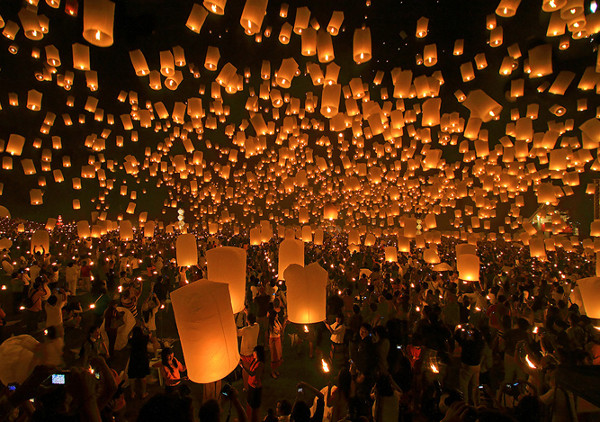
Mid-Autumn in Thailand comes with many attractive activities. Thais call it the "moon prayer festival". Everyone takes part in the full-moon offering ceremony. People sit around feast trays with typical autumn foods such as peaches, durian and mooncakes, and wish each other well. Pomelo in particular is an indispensable fruit on the traditional tray, as Thais believe it symbolizes fulfillment and togetherness.
That is why Thai mooncakes are shaped like peaches. Today, however, the most popular Thai mooncake is a baked cake filled with durian and salted egg yolk, symbolizing the full moon.
Taiwan - Outdoor barbecue parties
As in Vietnam, people in Taiwan make offerings of fruit on this day and eat mooncakes while watching the moon with their loved ones.
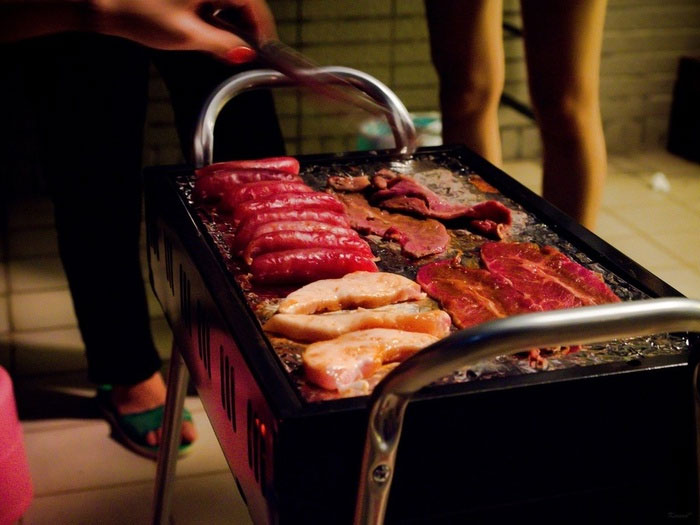
In Taiwan, many families hold outdoor barbecue parties on Mid-Autumn Day.
Taiwanese families usually reunite for a family meal on Mid-Autumn Day. Because the holiday is often long, people also take the chance to go home and be with their families.
Eating pomelo at Mid-Autumn: in Chinese, the word for pomelo sounds similar to the word for "friend", so eating pomelo also carries the meaning of peace, a wish for the safety of relatives and friends.
What makes Taiwan special is that on Mid-Autumn Day, many families hold outdoor barbecue parties. The habit of grilling food at Mid-Autumn began quite by chance, with a soy sauce commercial aired in Taiwan long ago under the slogan: "When one family barbecues, ten thousand families smell the aroma." The ad ran continuously for years and became familiar and widespread in Taiwan, eventually turning into a habit for Taiwanese people. Today, grilled meat and other barbecued foods are an indispensable part of Mid-Autumn in Taiwan. You may even see people slicing mooncakes, putting them on the grill and then enjoying them.
Decoding Vietnam's “ma đưa” ghost-led phenomenon and how to survive when lost in the forest
Vietnamese folklore abounds with eerie tales of “ma đưa,” being led astray by ghosts. Psychology explains it, and these skills help you get out alive.
Where does the Mid-Autumn Festival come from?
Every year on the full moon of the eighth lunar month, children eagerly prepare for their big day of moon-watching and feasting with friends.
The 8 longest rivers in Vietnam
Vietnam's heavy rainfall has created a vast network of waterways, with around 2,360 rivers and canals, large and small.
Expert explains the funnel-shaped vapor trail in the sky over Thanh Hóa
A strange vapor streak seen near the horizon over the former Hậu Lộc district in Thanh Hóa, Vietnam, was caused by jet engine exhaust, experts say.
How do the lunar and solar calendars differ?
The lunar calendar is a key part of East Asian tradition. Here is how it differs from the solar calendar and why it matters in Vietnam.
Could humans live underground to escape climate change?
Is living underground a viable solution to an approaching climate crisis? Scientists weigh the benefits and the risks.