Three new plant species and six new records found in caves of northern Vietnam
For the first time, scientists have compiled a checklist of 337 species belonging to 142 genera and 63 families of plants growing in the caves of northern Vietnam.
While surveying the diversity of cave plants in the north of the country, Associate Professor Đỗ Văn Trường and colleagues at the Vietnam National Museum of Nature (Bảo tàng Thiên nhiên Việt Nam), part of the Vietnam Academy of Science and Technology (Viện Hàn lâm Khoa học và Công nghệ Việt Nam), discovered and described three plant species new to science (Bredia bullata, Microchirita minor, Primulina crassifolia) and added six species to the flora of Vietnam (namely: Aristolochia austroyunnanensis, Brandisia kwangsiensis, Euchresta tubulosa, Henckelia nanxiensis, Primulina jingxiensis, Spiradiclis baishaiensis).
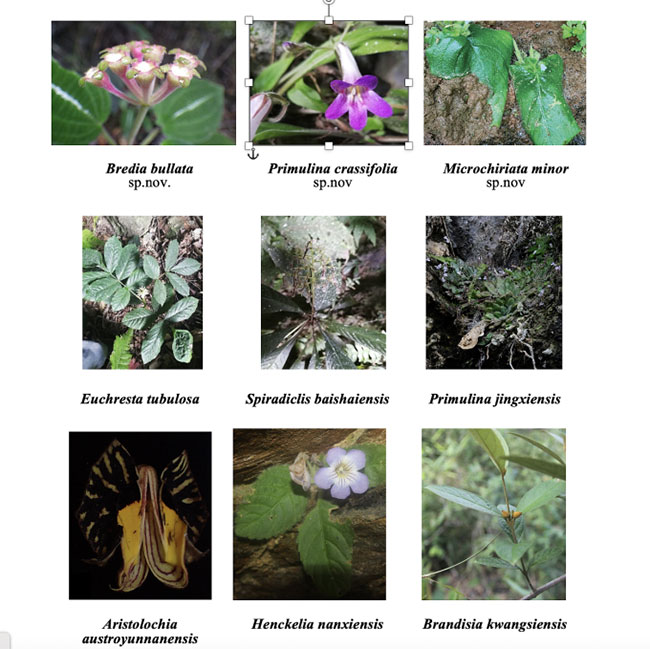
Some of the new species and new records for Vietnam's cave flora. (Photo: Research team).
The scientists collected plant specimens from 33 caves in eight provinces of northern Vietnam (as they were at the time): Hà Giang (now part of Tuyên Quang), Tuyên Quang, Cao Bằng, Lạng Sơn, Hòa Bình (now part of Phú Thọ), Sơn La, Ninh Bình and Thanh Hóa.
The team identified 337 species belonging to 142 genera and 63 families of cave plants in the north. Of these, ferns (Pteridophytes) account for 53 species (15.73%) and flowering plants (Angiospermae) for 284 species (84.27%).
The study also found that 221 species have practical uses, serving as ornamental plants, traditional medicine, timber and firewood, or food, and that 40 species in particular hold rare and valuable genetic resources. Following the discoveries, the team built a morphological and ecological database for all 337 plant species and generated molecular data for 25 cave plant species that are endemic or were newly discovered and described in Vietnam.
According to Trường, 25 cave plant species in the north have been listed on the Red List and four are included in the Vietnam Red Data Book. The scientists have also made a preliminary assessment of the threat status and conservation situation of the newly discovered cave plant species in Vietnam.
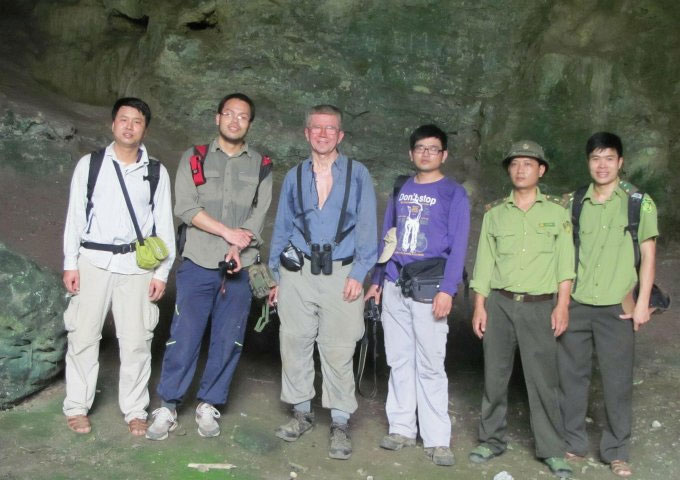
Associate Professor Đỗ Văn Trường (far left) and colleagues during a field survey of caves in northern Vietnam. (Photo: Research team).
Vietnam's cave systems harbor many unique biological values. Assessing the diversity of cave plants provides a scientific basis for conservation programs and the sustainable development of genetic resources from rare, endemic and valuable plant species, contributing to socio-economic development and the restoration of forest ecosystems on Vietnam's limestone mountains.
Trường and his team will continue surveying cave plant species in the limestone mountains of central Vietnam. He said that screening and conserving the endemic and rare plants of limestone and cave areas is important, as their unique genetic resources can serve as a basis for restoring cave landscapes for both conservation and tourism development.
New rock aspidistra species discovered in Phong Điền Nature Reserve, Huế
Aspidistra phongdiensis, a new plant species in the asparagus family, has been found only in the Phong Điền Nature Reserve in central Vietnam.
Strange new bee species with a dog-like face discovered in Australia
A new native bee with a snout-like face, Leioproctus zephyr, has been discovered in bushland around Perth, Western Australia.
Stunning discovery reveals the evolutionary path that turned plants into carnivores
Scientists are uncovering how ordinary plants evolved into carnivores, by repurposing ancient genes and enzymes rather than stealing them.
New, critically endangered plant species of value discovered in Vietnam's Vũ Quang National Park
A new plant species, Beilschmiedia danhkyii of the laurel family, has been described from Vũ Quang National Park and assessed as critically endangered.
Rare leafless orchid discovered in Vietnam's Quảng Trị province
A rare leafless orchid, Erythrorchis ochobiensis, has been found in the Rú Lịnh forest of Quảng Trị province in central Vietnam.
Tissue culture technology helps conserve Hanoi's West Lake lotus
Vietnamese scientists have developed a tissue culture protocol to propagate the prized Bách Diệp lotus of Hanoi's West Lake and preserve its genes.