Three rare plant species being conserved and expanded in Vietnam's Pù Luông Nature Reserve
To assess the current distribution of rare and precious plant species, identify the threats they face and draw up a plan to conserve their gene pools, the management board of Pù Luông Nature Reserve in Thanh Hóa province, north-central Vietnam, has carried out the project “Survey and assessment of the current distribution and development of a conservation plan for 3 rare and precious plant species: Garcinia fagraeoides, Cephalotaxus mannii and Camellia pleurocarpa in Pù Luông Nature Reserve, Thanh Hóa province (2021 - 2024)”.
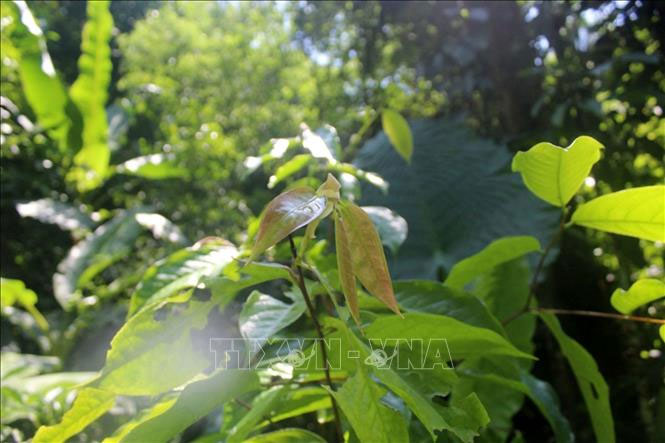
Leaves of Camellia pleurocarpa in Pù Luông Nature Reserve. (Photo: VNA)
The project team found 130 Garcinia fagraeoides trees, 25 Cephalotaxus mannii trees and 120 Camellia pleurocarpa plants in the forests of Pù Luông, and used the findings to draw up plans to conserve and expand the populations of these valuable species.
According to Lê Đình Phương, director of Pù Luông Nature Reserve, the reserve surveyed the species' distribution and the threats they face along 47 survey transects with a total length of 217km. The team also fully studied the biological and ecological traits of the three species, and on that basis set up 12 monitoring transects and 30 standard monitoring plots for Garcinia fagraeoides, Cephalotaxus mannii and Camellia pleurocarpa in the buffer zone and core zone of the reserve.
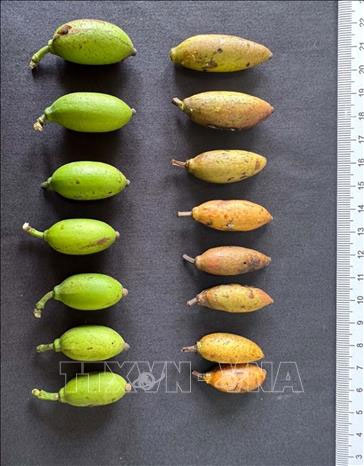
Fruit of Garcinia fagraeoides A. Chev. in Pù Luông Nature Reserve. (Photo: VNA).
Forest rangers handed out 1,500 leaflets to local residents and ran training sessions to raise awareness of biodiversity conservation among teachers at lower secondary and primary schools in the communes of the reserve's buffer zone. They also held a course for 20 reserve staff on identifying, surveying and monitoring Garcinia fagraeoides, Cephalotaxus mannii and Camellia pleurocarpa, and on drawing up detailed conservation plans for the three species.
The management board of Pù Luông Nature Reserve has now determined the ecological characteristics of the three species:
- Garcinia fagraeoides grows at elevations of 465 - 1,041 meters above sea level, with 130 mature trees.
- Cephalotaxus mannii was found in limestone mountain areas at elevations of 741 - 1,234 meters above sea level, with 25 mature individuals.
- Camellia pleurocarpa is represented by 120 mature plants, growing at elevations of 184 - 1,009 meters.
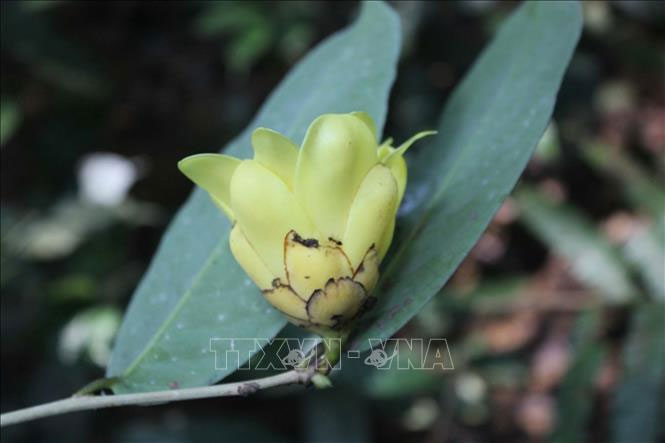
A Camellia pleurocarpa plant. (Photo: VNA).
Right after the survey results came in, rangers propagated and planted an additional 200 Garcinia fagraeoides, 150 Cephalotaxus mannii and 200 Camellia pleurocarpa seedlings across 0.83 hectares of the reserve's special-use forest. The project helps the management board of Pù Luông Nature Reserve protect forest resources, restore vegetation, increase forest cover, protect the soil and improve environmental quality. It also helps the board devise solutions to conserve and grow the populations of rare species in the forests of Pù Luông.
According to the management board of Pù Luông Nature Reserve, Garcinia fagraeoides (Garcinia fagraeoides A. Chev.) is a tree that grows up to 35 meters tall, with a round, fairly straight trunk and leaves 17cm long. Its fruit is oblong-oval, 2 - 3.5 cm long, and its skin turns from green to pale yellow when ripe. It is a valuable timber tree, commonly used in construction, boatbuilding and carving, and its attractive flowers make it suitable as an ornamental tree in parks, on streets or in villa gardens. Elsewhere in the world, the tree typically grows in China.
In Vietnam, the tree commonly grows in the provinces of Cao Bằng, Lạng Sơn, Nghệ An and Thanh Hóa.
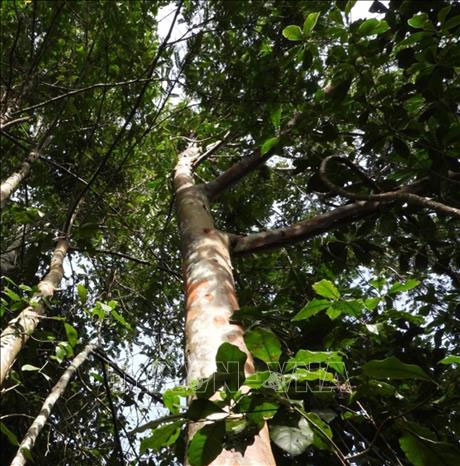
Cephalotaxus mannii Hook. f. in Pù Luông Nature Reserve, Thanh Hóa province. (Photo: VNA).
Cephalotaxus mannii (Cephalotaxus mannii Hook. f.) grows 2 - 20 meters tall and has a columnar trunk. Its seeds are completely enclosed by a covering. The species produces cones from January to March, and its seeds ripen from September to December of the following year. It is a woody tree whose timber is used in construction and especially for making high-end furniture. Elsewhere in the world, it grows in India, China, Myanmar and Thailand.
In Vietnam, the tree commonly grows in the provinces of Thanh Hóa, Sơn La, Hà Giang (now part of Tuyên Quang), Cao Bằng and others.
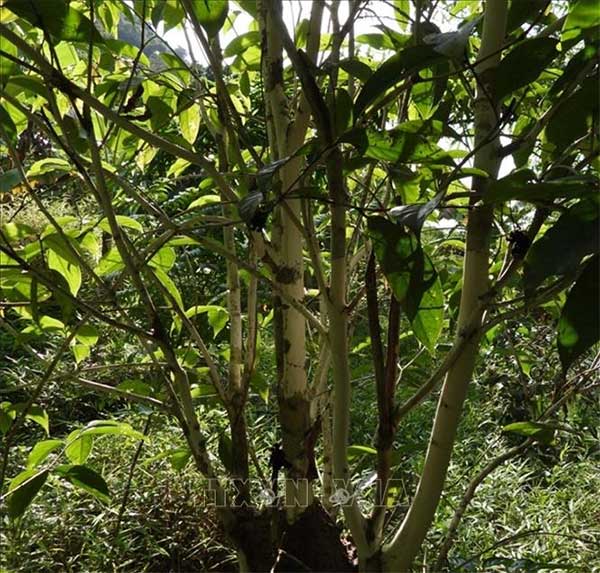
Camellia pleurocarpa in Pù Luông Nature Reserve, Thanh Hóa province. (Photo: VNA).
Camellia pleurocarpa (Camellia pleurocarpa (Gagnep.) Sealy) is a small tree with an unevenly rounded trunk, simple alternate leaves and pale yellow capsule fruits. It flowers almost year-round, peaking in December and January, and most of its fruits ripen in July - August, turning pale yellow when ripe. It is a rare medicinal plant genetic resource: its branches and leaves are traditionally used to treat rheumatism and are often taken as a tonic by women after childbirth, although it is not a proven treatment. Elsewhere in the world, the plant has been found in Thailand.
In Vietnam the plant has been found in Thanh Hóa and Gia Lai provinces.
New critically endangered plant genus and species discovered in Vietnam's Quảng Trị limestone mountains
Scientists have described a new endemic plant genus and two critically endangered species from limestone mountains in Quảng Trị, central Vietnam.
Three new plant species and six new records found in caves of northern Vietnam
Scientists have compiled the first checklist of cave plants in northern Vietnam: 337 species from 142 genera and 63 families.
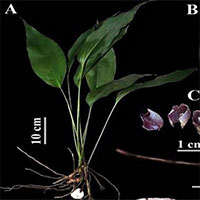
New rock aspidistra species discovered in Phong Điền Nature Reserve, Huế
Aspidistra phongdiensis, a new plant species in the asparagus family, has been found only in the Phong Điền Nature Reserve in central Vietnam.
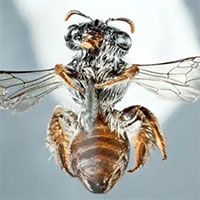
Strange new bee species with a dog-like face discovered in Australia
A new native bee with a snout-like face, Leioproctus zephyr, has been discovered in bushland around Perth, Western Australia.
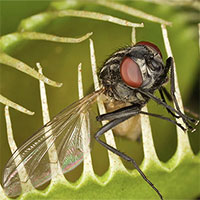
Stunning discovery reveals the evolutionary path that turned plants into carnivores
Scientists are uncovering how ordinary plants evolved into carnivores, by repurposing ancient genes and enzymes rather than stealing them.
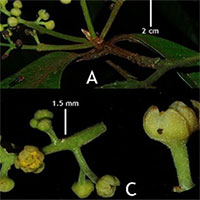
New, critically endangered plant species of value discovered in Vietnam's Vũ Quang National Park
A new plant species, Beilschmiedia danhkyii of the laurel family, has been described from Vũ Quang National Park and assessed as critically endangered.