Vietnam's "four great national dogs": Which rare breeds make the list?
Vietnam has four native dog breeds known as the "four great national dogs": the Bắc Hà dog, the Lài dog, the Hmong Bobtail and the Phú Quốc Ridgeback.
1. The Bắc Hà dog
The Bắc Hà dog, one of the "four great national dogs", originates from the mountains of northwestern Vietnam, specifically the Bắc Hà highlands of Lào Cai province. The breed is also known as the Vitespitz. It is sometimes simply called the "shaggy dog".
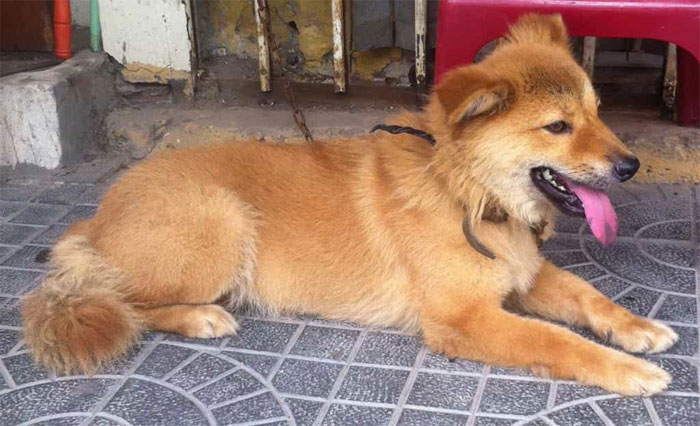
The Bắc Hà dog is also known as the Vitespitz.
The Hmong people keep the shaggy Bắc Hà dog to guard their homes, keep watch, or hunt alongside them on long expeditions into the forest.
Overall, the Bắc Hà dog is a medium-sized breed, compact, muscular and bold. The Lào Cai shaggy dog moves quickly and nimbly even across rugged, mountainous terrain, and it is also very clever. Its keen sensitivity to sound makes it a popular choice as a hunting or working dog.
Like many other breeds, the purebred Bắc Hà dog has a body slightly longer than it is tall. Adult Bắc Hà dogs typically stand between 50 and 60 cm tall, depending on sex: females measure 50-55 cm and males 55-60 cm. They weigh between 16 and 26 kg — 16-23 kg for females and 19-26 kg for males.
The most striking feature of this mountain breed is its long, thick coat. The nickname "shaggy dog" comes from exactly this trait. Some Bắc Hà dogs are particularly remarkable for their thick, long neck fur that stands up much like a lion's mane. This ruff forms a clear boundary between the head and the body. Males always have a longer ruff than females.
However, relatively few Bắc Hà dogs have a ruff. It is considered one of the signs of a high-quality Bắc Hà dog — and, naturally, such dogs do not come cheap.
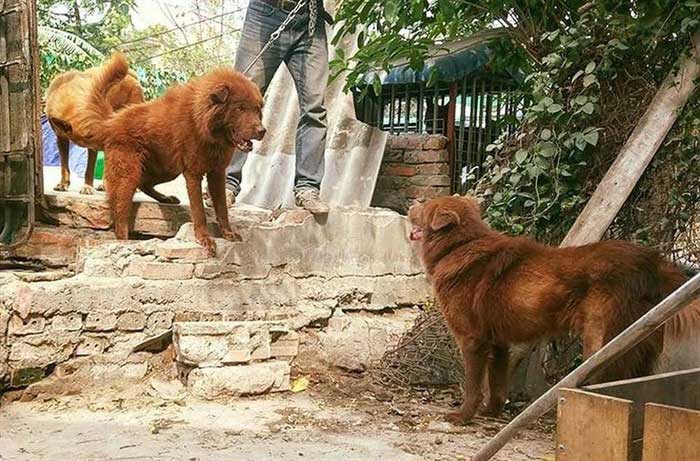
Local people raise these dogs and take them along on long journeys.
The shaggy Bắc Hà dog has lived alongside the Hmong people for generations in the high, rugged mountains of northwestern Vietnam. This harsh environment has shaped the breed's wild temperament and remarkable resilience.
Local people raise these dogs and take them along on long journeys. They have become close companions, bodyguards that keep their owners safe, and valuable helpers on many successful hunting trips. This close relationship has tamed the breed's wild nature, turning it into a loyal and devoted companion to the local people.
2. The Lài dog (Indochinese Dingo)
The Lài dog (also called the Indochinese Dingo) is a purebred dog native to Vietnam. Some books record that traces of this dog on the Indochinese Peninsula date back more than 6,000 years.
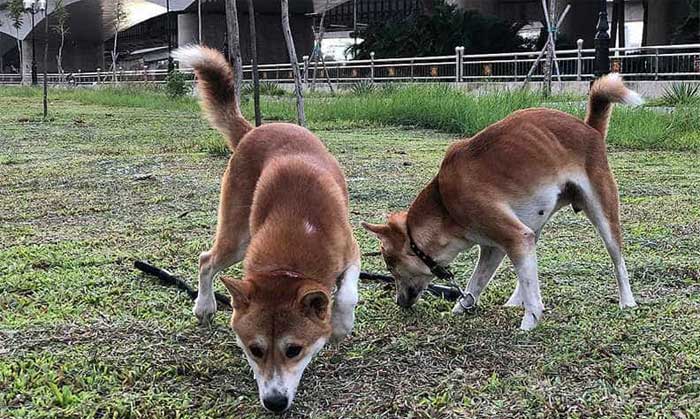
This breed was kept to help farmers guard their homes.
The Indochinese Dingo is most common in the midlands of northwestern Vietnam, in Lào Cai and in the country's mountainous regions. It was kept to help farmers guard their homes, herd livestock and accompany them into the forest.
For the Hmong people, the Lài dog is both a friend and a valued source of emotional support. When there was no food at home, the dingo would go into the forest to hunt, then carry its catch back to its owner. That may be why this breed has long been a prized animal and is counted among Vietnam's "four great national dogs".
The Lài dog is highly intelligent, quick and somewhat fierce. It is fiercely loyal to its owner and will always do its utmost to protect them from lurking dangers.
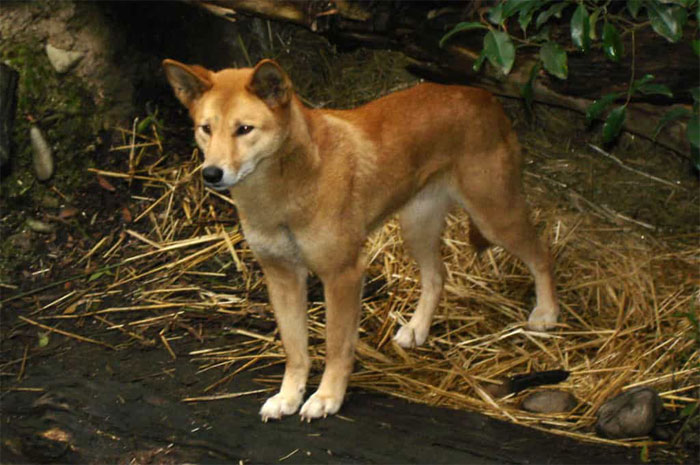
The Lài dog is highly intelligent, quick and somewhat fierce.
In the past, the Hmong raised the Lài dog as a true hunting dog. It would go into the forest, catch all kinds of animals such as junglefowl, mountain rats and squirrels, then bring them back to its owner. It could also act as a "lure", driving game and venomous snakes toward the hunter's gun. When it caught its prey, the Lài dog would bark to alert its owner.
Back then, Lài dogs were like "brave hunters", playing an important role in the lives of the Hmong people. Today, however, the breed has gradually declined. Its hunting instinct is no longer as strong as it once was, and it has become friendlier and more obedient.
With proper training, this breed's wild temperament can become a tremendous asset. These dogs are very good at remembering routes and rarely get lost. When guarding a home, the Lài dog is highly focused and reacts extremely quickly.
3. The Hmong Bobtail
Today, many people rush to buy expensive imported breeds such as the Husky, Alaskan Malamute, Pit Bull and Golden Retriever, forgetting that Vietnam itself has a breed that is highly intelligent, beautiful and blessed with many admirable qualities: the Hmong Bobtail, one of Vietnam's treasured "four great national dogs".
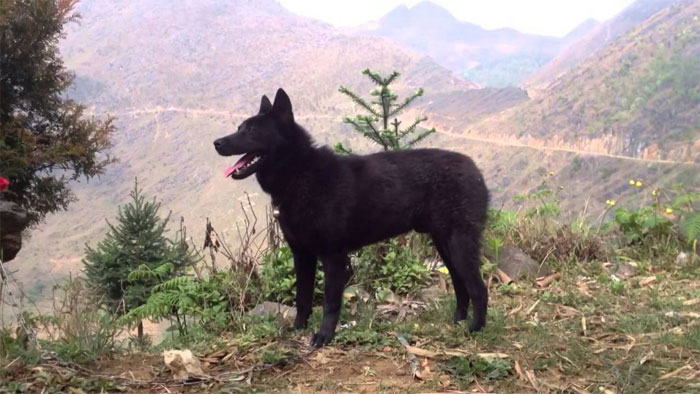
Hmong Bobtail dogs live scattered across the mountains of northwestern Vietnam.
The Hmong Bobtail is the result of crossbreeding between wild dogs and local dogs. These dogs live scattered across the mountains of northwestern Vietnam. Because they lived in remote, sparsely populated areas, Hmong Bobtails have retained the wild nature of their wild-dog ancestors.
When the Hmong people migrated to the region, they found these dogs and domesticated them, mainly to help with hunting, herding livestock and guarding homes.
The Hmong Bobtail is considered a medium-sized breed, with adults standing about 45-55 cm tall on average and weighing 15-25 kg. Males are usually slightly taller and heavier than females.
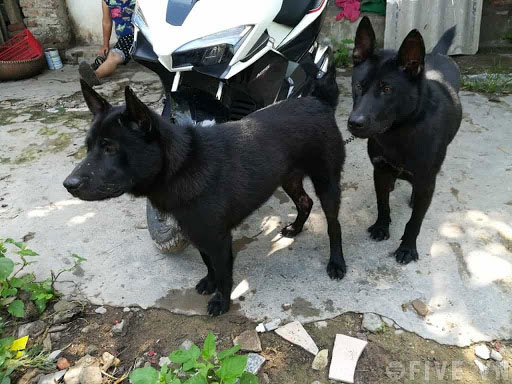
They rarely fall ill, and when they do, the illness is usually mild and clears up on its own.
Born and raised in the wild mountains of northwestern Vietnam, the Hmong Bobtail has excellent natural resistance. These dogs rarely fall ill, and when they do, the illness is usually mild and clears up on its own. The breed is also highly adaptable, quickly adjusting to all kinds of climates, from sweltering summer days to bone-chilling winters.
From birth, Hmong Bobtails show innate intelligence and an excellent memory, which makes training quicker and easier. Their most outstanding traits are a superb sense of direction and an ability to remember routes, which is why the Hmong Bobtail has always accompanied the Hmong people on their hunting and foraging trips into the forest.
4. The Phú Quốc Ridgeback
The Phú Quốc Ridgeback (also known as the Phú Quốc swirl dog) is a rare Vietnamese breed.
The Phú Quốc dog has been around for a long time, appearing about 400 years ago on Phú Quốc island (formerly part of Kiên Giang province, now An Giang province) in southern Vietnam. Its origins remain a subject of much debate.
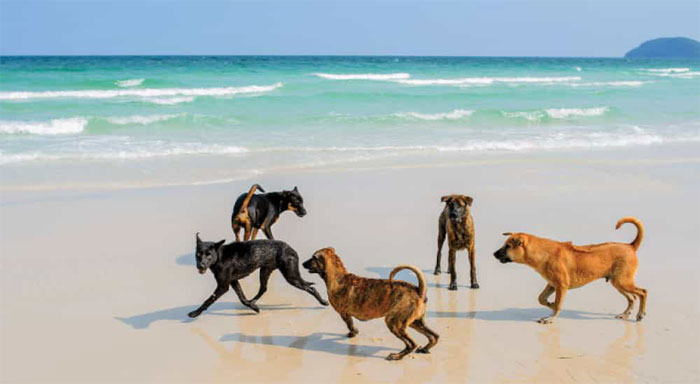
The Phú Quốc dog has been around for a long time, appearing about 400 years ago on Phú Quốc island.
The Phú Quốc dog is one of the world's three rare ridgeback breeds (along with the Thai Ridgeback and the Rhodesian Ridgeback of southern Africa). Besides its signature ridge of hair running along its back, the Phú Quốc dog has several other distinctive traits that make it easy to identify a purebred.
The ridge of the Phú Quốc dog is shaped rather like a small sword, about 35-40 cm long and 3-5 cm wide depending on the individual. The tip of the "sword" points toward the tail, while the hilt sits at the shoulders. The hair on the ridge is fairly stiff, tends to grow in the opposite direction and converges toward the middle. It is darker than the rest of the coat and clearly visible to the naked eye.
The ridge of the Phú Quốc dog comes in many shapes, such as an arrow, a leaf or a guitar. However, it must be symmetrical along the spine and no wider than the back. Phú Quốc dogs also have swirls of hair on other parts of the body, typically the neck and both sides of the hindquarters. The ridge is a key factor in choosing a true Phú Quốc dog.
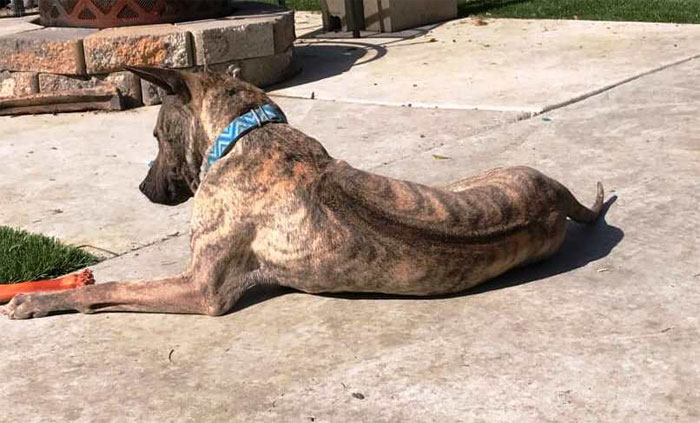
Phú Quốc dogs can swim on their own from a young age without any training from their owners.
The feet of the Phú Quốc dog are special in that they have thin webbing between the toes, much like a duck's webbed feet. This may explain why the breed is such an excellent swimmer. They can swim on their own from a young age without any training from their owners.
The Phú Quốc dog's four legs are straight and parallel. The hind hocks sit lower than the front elbows, which helps the dog accelerate when chasing prey.
The Phú Quốc dog has a compact build. Adult females stand about 48-52 cm tall and weigh 12-18 kg, while males stand 50-55 cm and weigh 15-20 kg. They are smaller than the Thai Ridgeback. The body is long and rectangular.
The belly is deeply tucked, while the chest is broad and firm. In adults, the chest reaches down to the elbows. The ribs are strong and closely spaced.
Besides being intelligent, Phú Quốc dogs are physically fit, alert and tireless when hunting. They are very fast and can change direction with agility. The breed is not afraid of heights, and it climbs, jumps and swims very well.
Phú Quốc dogs are rather fierce and watchful. They can be friendly and affectionate with family members, but never with strangers. Phú Quốc dogs do bite people, but rarely, and only when they sense danger from you.
The Phú Quốc dog is a superb hunter. Livestock and poultry can easily become its targets. It can also hunt large prey such as sambar deer and wild boar. Once it has spotted a target, it usually corners the prey against a wall and never lets go unless its owner signals it to. Note that hunting protected wild species such as the sambar deer is illegal in Vietnam and can lead to criminal prosecution.
10 of Vietnam's rarest and most unusual birds
Vietnam's rich, diverse ecosystems are home to many rare birds, some with unusual names and distinctive calls.
Found only in Vietnam: the bizarrely evolved fish with a truly unique way of mating
The Mekong priapiumfish, endemic to Vietnam, was named one of the world's 10 strangest discoveries by National Geographic in 2012.
Rare animals rescued in Vietnam
Leopards, yellow-cheeked gibbons, grey-shanked doucs, silvered langurs and Asian black bears are among rare animals rescued by Wildlife At Risk in Vietnam.
"Gan lì cóc tía": The strange animal behind a famous Vietnamese idiom
The fire-bellied toad lives on in the Vietnamese idiom "gan lì cóc tía," yet today almost no one ever gets to see one in the wild.
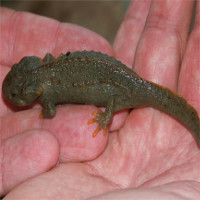
What to know about Vietnam's rare crocodile newt
Like the Tam Đảo newt, the Vietnamese crocodile newt (Tylototriton vietnamensis) is an exceptionally rare animal found only in Vietnam.
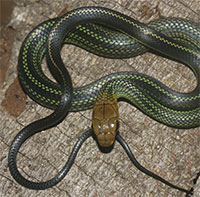
Close-up of a new snake species found only in Vietnam
A new rat snake species, Ptyas bachmaensis, has been recognized as endemic to Vietnam and has so far been recorded only in the country.