"Gan lì cóc tía": The strange animal behind a famous Vietnamese idiom
The cóc tía, or fire-bellied toad, has long been lodged in the Vietnamese psyche through the idiom "gan lì cóc tía" ("as gutsy as a fire-bellied toad"). Today, however, almost no one ever gets the chance to see one in the wild.
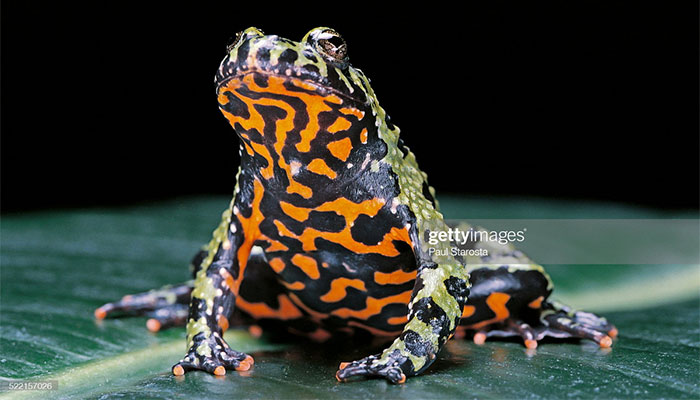
Scientifically, the fire-bellied toad family (Bombinatoridae) comprises toads characterized by flattened bodies and bellies in vivid red or yellow, distributed widely from Europe to Asia. (Photo: Getty Images).
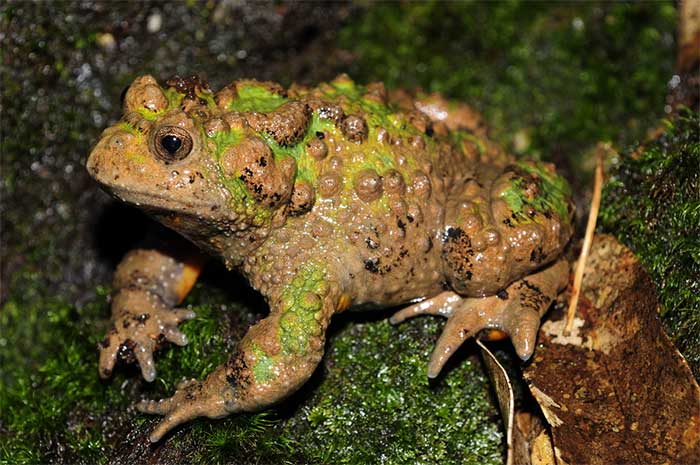
Vietnam has just one fire-bellied toad species, the small-webbed fire-bellied toad, scientifically named Bombina microdeladigitora. In many Vietnamese sources, it is simply called the cóc tía. (Photo: Luan Thanh Nguyen/ Berkeley.edu).
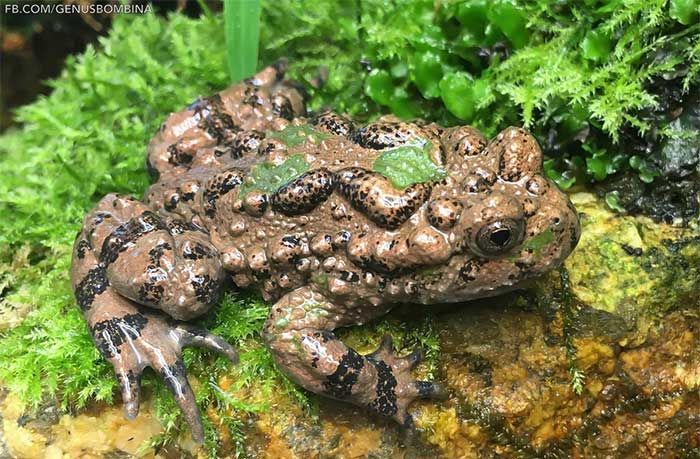
At first glance, this toad looks rather like the common Asian toad, but a closer look at its anatomy reveals many differences, such as triangular pupils, no eardrum, and a round tongue attached to the floor of the mouth. Its body measures about 70 - 80 mm long. (Photo: Genus Bombina.)
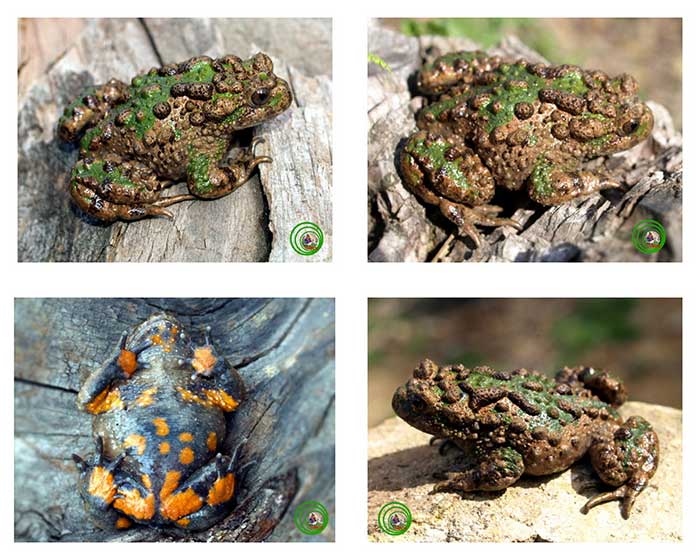
The back of the Vietnamese fire-bellied toad is brassy or green, covered in large warts with tiny pores that secrete a sticky fluid, a form of venom. Its belly, hands and feet bear large, bright red and yellow blotches on a black background. Males have rougher skin than females. (Photo: Phùng Mỹ Trung/ Vncreatures.net).
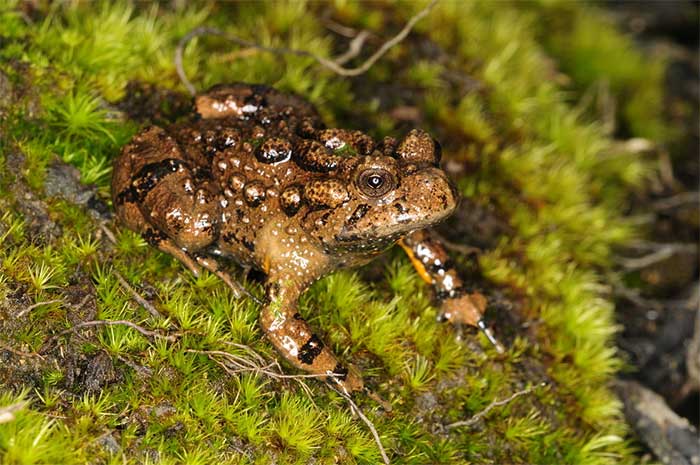
The species lives in mountains at elevations of 1,200 meters and above. It shelters in rock crevices and water-filled tree hollows, forages mainly at night and feeds on insects. Females are very rarely seen; most encounters are with males. (Photo: Luan Thanh Nguyen/Berkeley.edu).

Fire-bellied toads have a highly distinctive way of defending themselves. When threatened, rather than trying to flee, they flip over to flash their warning colors, a signal that they are highly toxic and that any predator foolish enough to swallow one will live to regret it. (Photo: Wikipedia).
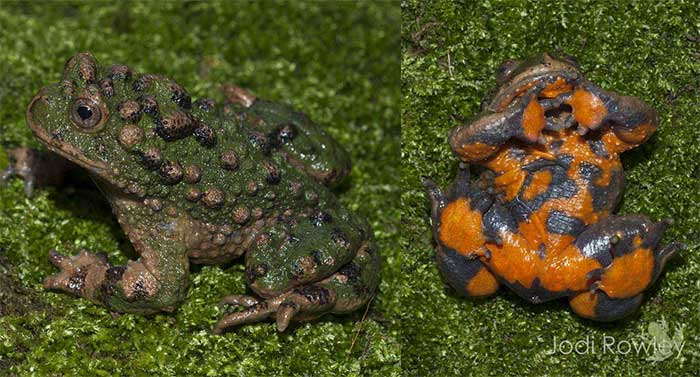
Perhaps it was this stubborn, defiant attitude in the face of stronger foes that so impressed Vietnamese people of old that they coined the phrase "gan lì cóc tía." That was also a time when fire-bellied toads were still present in many places and easy to come across. (Photo: Jodi Rowley).
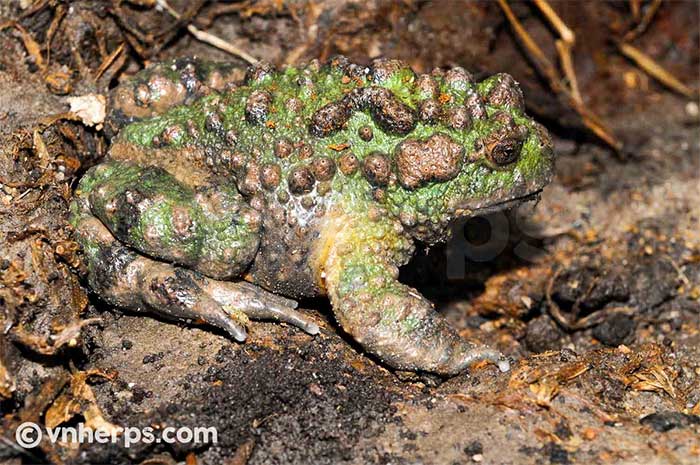
Today, the small-webbed fire-bellied toad has become a very rare amphibian, living only in scattered pockets across a small area of southern China and northern Vietnam. (Photo: Vnherps).
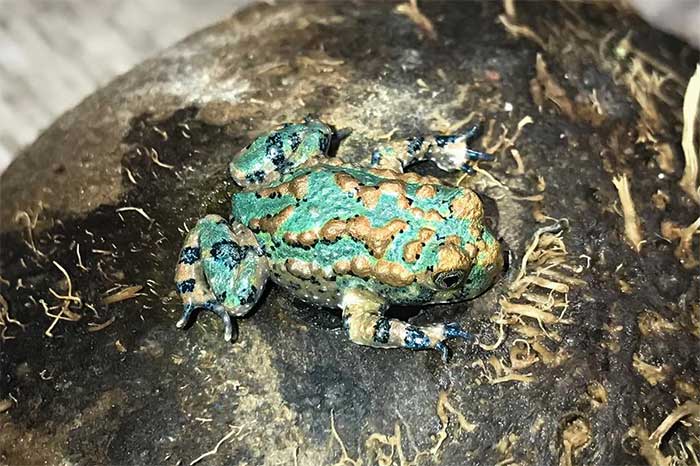
In 20th-century Vietnam, the species was recorded in Hà Giang (Tây Côn Lĩnh mountain; the former Hà Giang province, now part of Tuyên Quang), Lào Cai (Sa Pa) and Lai Châu in the far north, but today only one population remains, in the Hoàng Liên Sơn mountain range. The Vietnam Red Data Book lists it as Critically Endangered. (Photo: Bombina Facebook).
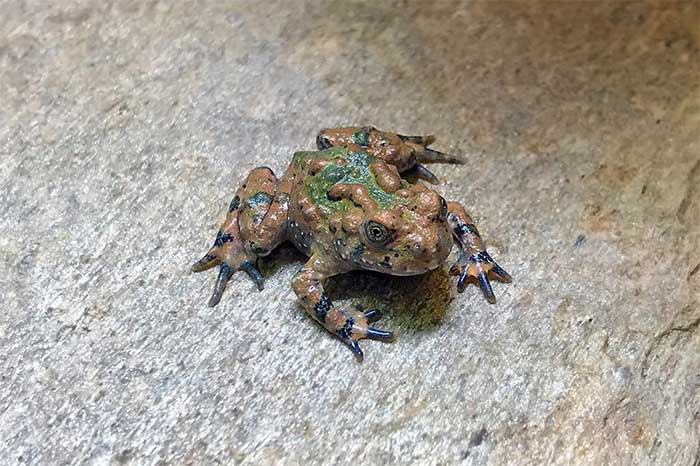
Without proper conservation measures, Vietnam's fire-bellied toad faces the risk of disappearing in the future. If that happens, the only legacy it will leave behind is the saying "gan lì cóc tía." (Photo: Bombina Facebook).
What to know about Vietnam's rare crocodile newt
Like the Tam Đảo newt, the Vietnamese crocodile newt (Tylototriton vietnamensis) is an exceptionally rare animal found only in Vietnam.
Close-up of a new snake species found only in Vietnam
A new rat snake species, Ptyas bachmaensis, has been recognized as endemic to Vietnam and has so far been recorded only in the country.

The animals with the weirdest hair in the world
The Victoria crowned pigeon, bearded pig and alpaca are among the animals whose striking head tufts look like bizarre hairstyles.
Treasure of the Trường Sơn Range: An extremely rare bird found in only two countries, flagged by the IUCN for urgent protection
The IUCN Red List urges urgent protection for the Vietnamese crested argus, a Critically Endangered pheasant at risk of vanishing from the wild.
Venomous snakes of Vietnam
Vietnam is home to nearly 200 snake species, 53 of them venomous, mostly vipers and elapids. Some can kill a person within a short time.
How to tell dugongs and manatees apart: Two rare look-alike sea mammals
Dugongs and manatees look remarkably alike, but a glance at the tail gives them away. Only the dugong lives in Vietnam's waters.