Why can't we hear while we're asleep?
Although our ears keep working normally, the brain acts as a filter, deciding whether we respond to a sound and wake up or simply keep sleeping.
If we do wake up, we may later remember hearing the sound; if we don't, it is as if we never heard anything at all.
This is a remarkable mechanism, because it protects our sleep so we aren't woken by everything that happens around us during the night.
But that doesn't mean the body completely “shuts its doors” to the outside world, since that would be very dangerous.
When a sound rings out nearby, the brain decides whether to wake you up or let you keep sleeping.
The brain reacts to loud noises
Loud noises wake us more easily than quiet ones. For example, the sound of someone dropping something hard on the floor at night can easily startle us awake, yet we may sleep right through the whine of a mosquito buzzing around us.
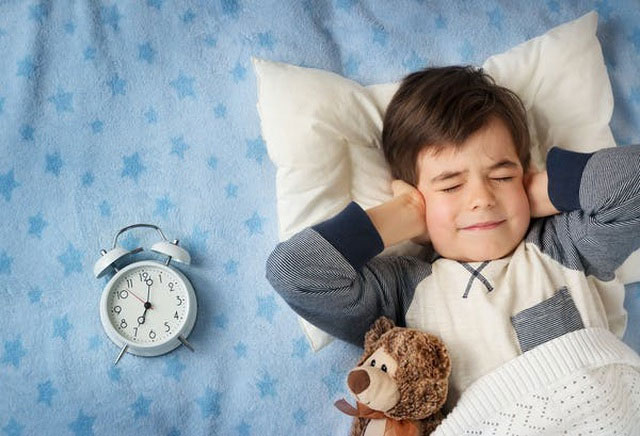
A loud alarm clock is more likely to wake you than a whisper right next to your ear.
Whether you wake up also depends on the type of sound
Unusual or important sounds are also more likely to wake us.
The brain treats unusual sounds as a threat and alerts us to the potential danger. This helps us decide whether we need to defend ourselves or run away if necessary.
Just imagine how important and protective that must have been for our ancestors, who slept out in the wild without houses like ours, surrounded by predators such as tigers and lions.
Fortunately, today we no longer have to worry the way our prehistoric ancestors did, but this protective mechanism is still very useful when loud or strange noises occur while we sleep, letting us judge whether we need to do anything.
The brain can also wake the body in response to sounds it considers important, such as our own name. We are more likely to wake up when someone calls our name than when they call someone else's.

You are more likely to wake up if your brain decides a sound is important, such as someone calling your name.
What about deep sleep?
Our sleep consists of cycles in which light sleep alternates with deep sleep. Each night we go through about 5–6 of these cycles, depending on how long we sleep.
During light sleep, we wake more easily than during deep sleep. Typically, we sleep more deeply in the first half of the night and more lightly in the second half. That is why a rooster crowing at the first light of dawn can wake us instantly, while earlier crowing went unnoticed because the brain ignored it while we were in deep sleep.
Everyone is different
People differ in how sensitive they are to sound.
If you are not sensitive to noise, family members chatting in the house while you sleep may not wake you at all. But people who are very sensitive to sound will find it very unpleasant and be unable to sleep with others murmuring around them.
If you are sensitive to sound, your brain will also be quick to decide to wake you up.

Why the Lunar New Year has no '30th day of Tết' for 8 straight years from 2025
From 2025, Vietnam sees eight Lunar New Years in a row without a 30th day of Tết. Here is the astronomy behind it.

Why is Hà Nội's Thê Húc Bridge painted red and facing the sun?
The Thê Húc Bridge in Hà Nội is painted red because the color symbolizes the sun, life, good fortune and happiness.

Why do Pitbulls, the "king of fighting dogs," so often lose to venomous snakes?
Other dogs can often overpower venomous snakes, but Pitbulls frequently pay a heavy price in such fights. Their aggressive nature is to blame.

Why is there no beef on the traditional Vietnamese Tết offering tray?
Traditional Tết offering trays feature chicken and pork but no beef. The reason lies in Vietnam's wet-rice farming civilization.