Common freshwater fish of Vietnam you should know
Freshwater fish are fish that live mainly in freshwater environments, such as rivers and lakes, with a salinity of less than 0.05%. These habitats differ greatly from the marine environment, chiefly in the salinity of the water. To survive in fresh water, fish need physiological adaptations.
About 41.24% of fish species are found in fresh water. This is mainly due to the rapid speciation that scattered habitats make possible. When dealing with lakes and ponds, scientists can use the same basic models of speciation as those used in the study of island biogeography.
Vietnam is also home to a rich and diverse array of freshwater fish. Below are some of the most common freshwater species in Vietnam — see how many you know:
Freshwater fish of Vietnam
- What are freshwater fish?
- Freshwater fish species in Vietnam
- Herring (cá trích)
- Common carp (cá chép)
- Bronze featherback (cá thát lát)
- Loach (cá chạch)
- Sheatfish (cá nheo)
- Walking catfish (cá trê)
- Canine catfish eel (cá ngát)
- Shark catfish (cá tra)
- Bagrid catfish (cá lăng)
- Croaker (cá đù)
- Kissing gourami (cá hường)
- Climbing perch (cá rô đồng)
- Tilapia (cá rô phi)
- Snakeskin gourami (cá sặc)
- Giant gourami (cá tai tượng)
- Striped snakehead (cá lóc)
- Marble goby (cá bống)
- White pomfret (cá chim trắng)
- Black carp (cá trắm đen)
- Grass carp (cá trắm trắng)
- Mud carp (cá trôi)
- Silver carp (cá mè)
- Swamp eel (lươn)
What are freshwater fish?
Freshwater fish are fish that spend almost their entire lives in fresh water (such as lakes and rivers) with a salinity of less than 0.05%.
About 41.24% of known fish species are found in fresh water. This reflects the rapid speciation made possible by scattered habitats; for ponds and lakes, scientists can apply the same speciation models used in island biogeography.
Freshwater fish need physiological traits that adapt them to their habitat. For example, their gills can diffuse dissolved gases while still retaining the sodium in their body fluids.
Meanwhile, their scales reduce the diffusion of water through the skin, which is why freshwater fish die easily if they lose many scales. In addition, the kidneys of freshwater fish are usually well developed, reabsorbing salts from body fluids before they are excreted.
Freshwater fish species in Vietnam
Below are some freshwater fish found in Vietnam that are worth knowing and that you might choose for your everyday meals:
Herring (cá trích)
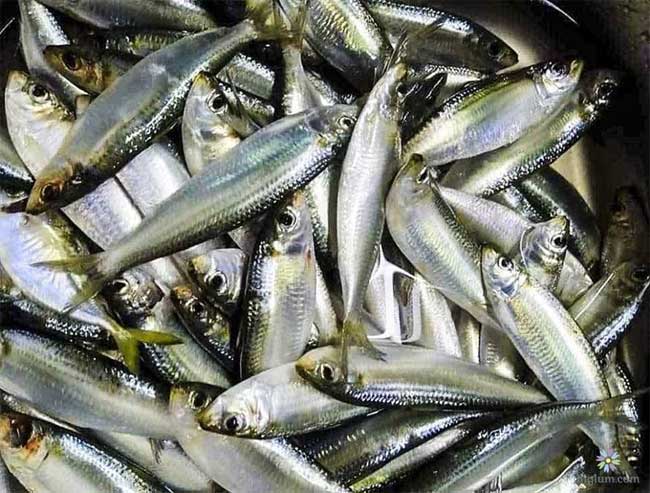
The herring, scientific name Sardinella, belongs to the herring family (Clupeidae). Its shape is quite similar to that of the cá mai (a small herring-like fish), but it is larger, with a long body, small bones, slightly bluish skin and jaws of equal length. Herring have small teeth, thin round scales that fall off easily, and a serrated ridge along the belly.
Herring usually live near the water surface and swim quite fast thanks to their strong tail. According to the records, herring belong to a group of small-bodied bony fish that survived the mass extinction at the end of the Cretaceous period, which is why they still exist today.
In Vietnam, people give herring different names depending on the form in which they are caught. Specifically, cá trích ve usually have a flat body and many bluish-white scales; above all, their flesh is white, rich and fragrant but very bony. Cá trích lầm, by contrast, have a round body and few scales, and their red flesh is more plentiful but not as tasty as that of cá trích ve.
In addition, coastal residents in central Vietnam often call small herring cá de, while larger ones are also called cá Mắt Tráo.
Common carp (cá chép)
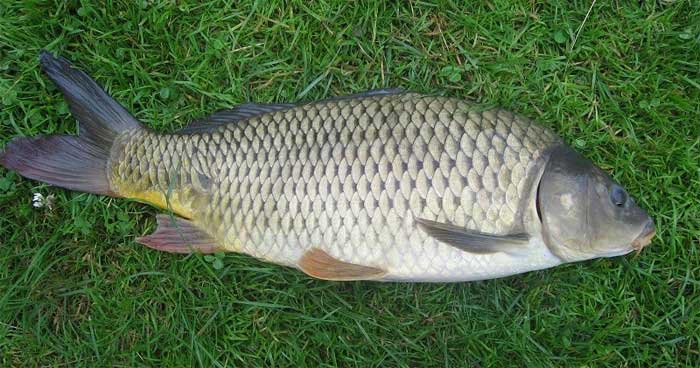
The common carp, scientific name Cyprinus carpio, belongs to the carp family (Cyprinidae) and is related to the goldfish. Common carp can grow up to 1.2 m long and weigh up to 37.3 kg, and can even live as long as 47 years.
Carp also come in many varieties with different traits, such as mirror carp (usually scaleless but with a single row of scales running along the body), scaled carp (an omnivorous fish) and leather carp (with scales only near the dorsal fin).
Bronze featherback (cá thát lát)
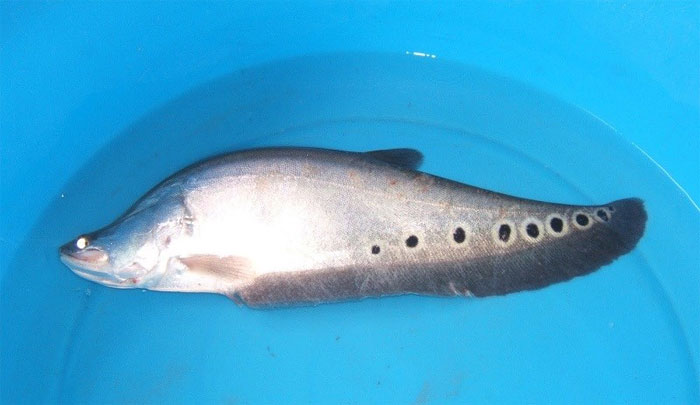
The bronze featherback, scientific name Notopterus notopterus, belongs to the featherback family (Notopteridae). It has a long (about 400 mm), flattened body, a very small tail and small scales covering the whole body. The mouth is fairly large and the snout short. On average the fish weighs about 200 g, sometimes up to 500 g.
The bronze featherback is usually gray on the back and silvery white on the belly, with yellow below the edge of the gill cover.
In Vietnam, this fish grows well, so yields are high; it is distributed mainly in the Đồng Nai River in southern Vietnam, the Mekong Delta (Đồng bằng sông Cửu Long), the central provinces,… and the Central Highlands (Tây Nguyên).
Loach (cá chạch)
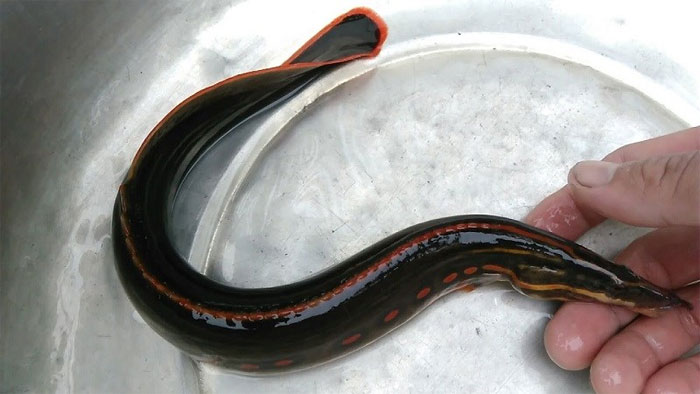
Loaches belong to the class of ray-finned fish (Actinopterygii). In shape, loaches look rather like eels, with a long body and numerous fleshy barbels around the mouth. Loaches are mainly distributed in northwestern Africa, Asia and Europe.
Sheatfish (cá nheo)
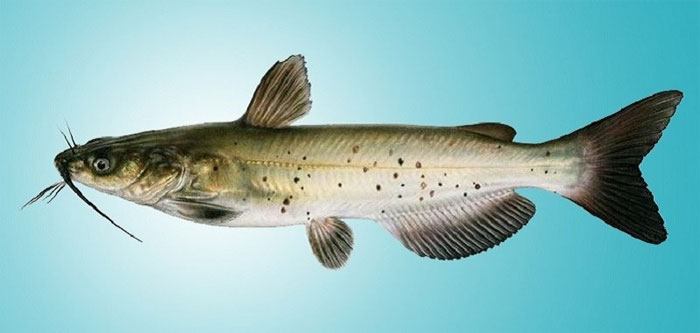
Sheatfish belong to the catfish order, scientific name Siluriformes, and live naturally in lagoons, ponds, rivers and lakes in Vietnam. In addition, the sheatfish family includes about 100 freshwater species found in eastern Europe and almost all of Asia, except the Arabian Peninsula and Siberia.
Sheatfish have smooth, scaleless skin, a small dorsal fin and a fairly long anal fin. The head is slightly flattened and the mouth wide, with two long barbels on the upper jaw and four short barbels on the lower jaw. Sheatfish range from 8 cm to 3 m in length, depending on the species.
Walking catfish (cá trê)
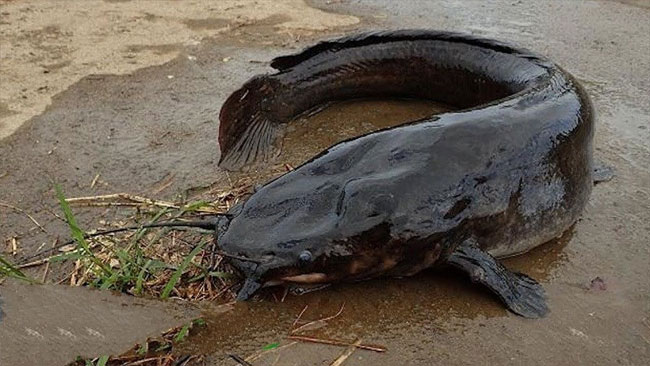
Walking catfish, or the airbreathing catfish family in general, go by the scientific name Clariidae, which comprises about 114 species, all living in fresh water. Many live in Southeast Asia, but the greatest diversity is found in Africa.
Each kind of walking catfish has a different body shape. For example, the black catfish (also called the Hong Kong catfish) has a long black body with smooth, glossy skin; the head is flat, while the body and tail tend to be laterally compressed; it has a wide mouth, sharp teeth and four pairs of long barbels; the eyes are small and the nostrils are set far apart.
The yellowish-gray catfish, meanwhile, has a flattened head and a round, slender body that tapers and flattens toward the tail, smooth skin and black fins with dark spots; its eyes are small and set wide apart, and it has a large mouth with four pairs of long barbels.
Canine catfish eel (cá ngát)
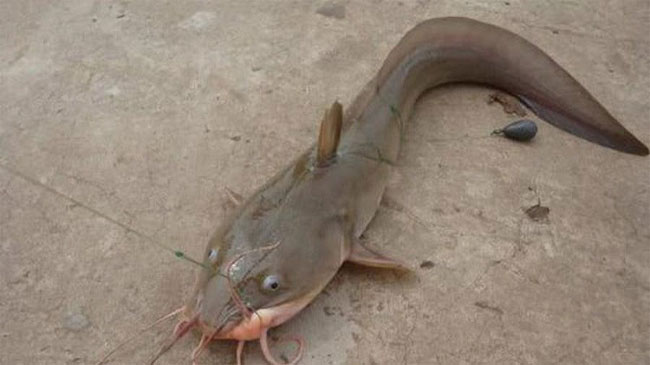
The canine catfish eel, scientific name Plotosus canius, belongs to the eeltail catfish family (Plotosidae). It can live in both fresh and brackish water, and its main spawning season usually runs from June to August each year.
The canine catfish eel looks quite similar to the walking catfish but is larger and has more barbels, and it lacks an adipose fin. Its elongated tail resembles that of an eel, with a pointed or bluntly rounded tip. Some species of eeltail catfish have venomous spines, so they must be carefully prepared before eating, especially the two sharp, hard spines beside the gills.
Shark catfish (cá tra)

The shark catfish (cá tra) belongs to the catfish order (Siluriformes). It can live in fresh and brackish water and is distributed across southern Asia. Its body is firm and scaleless and looks like that of the walking catfish, but without spines. The dorsal fin sits close to the head, is triangular and has about 5–7 fin rays along with 1–2 spines.
In Vietnam, shark catfish are found mainly in the Mekong (Cửu Long) basin and the basins of the large rivers in the far south. They have a flattened body, smooth skin and short barbels.
Bagrid catfish (cá lăng)
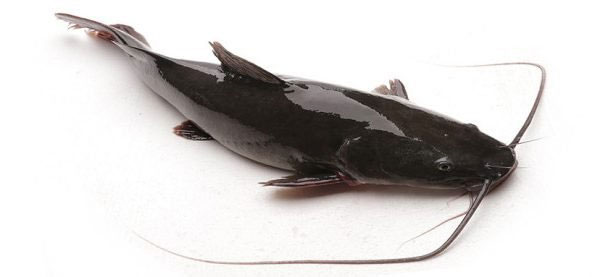
Cá lăng belong to a catfish family with about 245 species and can live in both fresh and brackish water, near the bottom or in muddy, silt-rich areas with slow-flowing water.
Cá lăng are relatively large, reaching up to 1.5 m in length and weighing 10–30 kg. The body is long and slender and scaleless, with a single spine at the front of the dorsal fin, serrated pectoral fins and an adipose fin. The head is slightly flattened, with four pairs of fairly long barbels.
Croaker (cá đù)
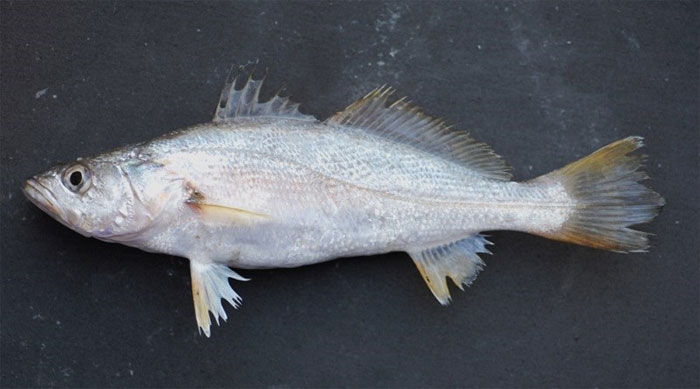
Croakers belong to the croaker family (Sciaenidae) in the order Perciformes, which has about 270 species; Vietnam has as many as 20, the most common being the silver croaker.
The croaker has a long, oval, slightly laterally compressed body, a large head and small teeth. The dorsal fin is divided into two parts: the front part has hard spines and the rear part is soft. Croakers are meaty, with few bones and rich, fatty flesh toward the rear of the body. The flavor is mildly sweet with a pleasant, nutty aftertaste.
Kissing gourami (cá hường)

The kissing gourami, scientific name Helostoma temminckii, also called cá mùi, belongs to the family Helostomatidae. It lives mainly in fresh water, even in harsh and polluted water, thanks to an accessory breathing organ. In Vietnam, kissing gourami are common in the Mekong Delta.
The kissing gourami is small and rather bony. Its flesh is white, rarely fishy, tender and very tasty.
Climbing perch (cá rô đồng)
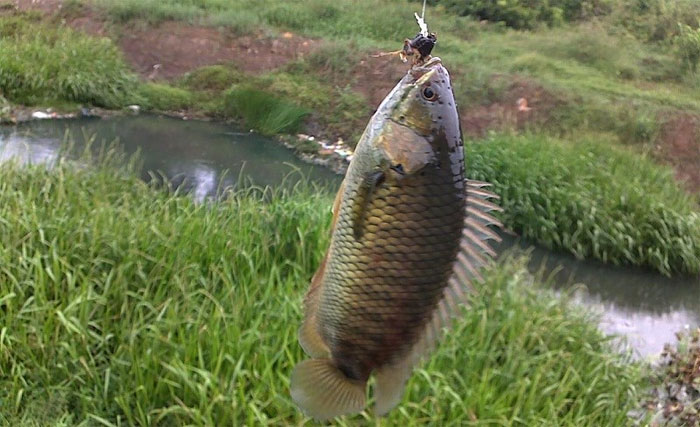
The climbing perch, scientific name Anabas testudineus, belongs to the climbing perch family (Anabantidae) and can live in fresh and brackish water such as rice paddies, ponds, marshes and irrigation ditches,…
Its color ranges from green to pale gray, with the belly lighter than the back. The edges of the scales and fins are light-colored. The gill cover is serrated, and the strong, sharp teeth are arranged in rows on both jaws. It can grow up to 250 mm long. Males usually have a slimmer, more elongated body than females.
The flesh of the climbing perch is fragrant, firm and slightly fatty, but very bony.
Tilapia (cá rô phi)
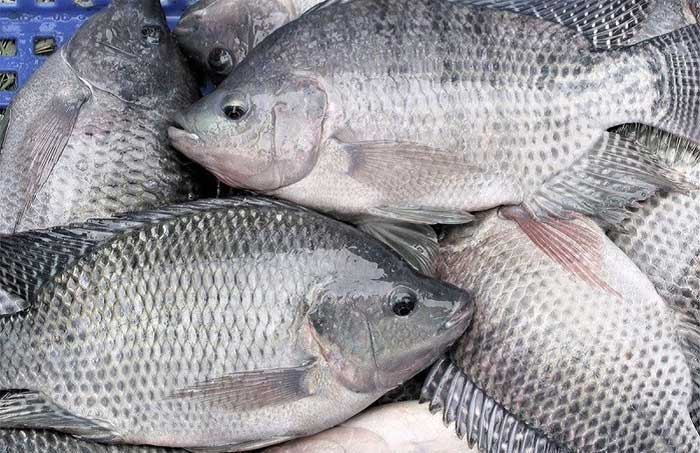
Tilapia belong to the family Cichlidae and come in many varieties, living mainly in canals, rivers, streams, ponds and lakes. The most common are red tilapia, Nile tilapia and blue tilapia. They can live in fresh water, brackish water and slightly acidic (alum-affected) water.
The tilapia's body is slightly purplish with shiny scales and 9–12 dark stripes running in parallel from the back down to the belly. It can reach 0.6 m in length and weigh about 4 kg; male tilapia grow faster than females.
Snakeskin gourami (cá sặc)
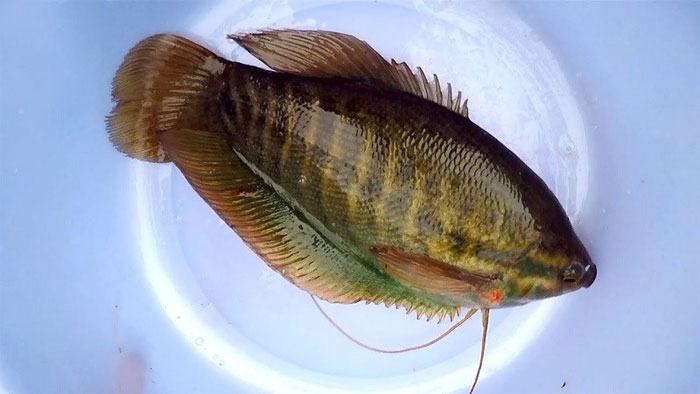
The snakeskin gourami, scientific name Trichogaster pectoralis, belongs to the gourami family (Osphronemidae) and is also known as the Siamese gourami, cá lò tho or cá rô da rắn. In Vietnam, it lives mainly in the south, in areas such as the former Kiên Giang province (now part of An Giang) and Cà Mau.
The body is flat and long. The pectoral fins are long; the dorsal fin is rounded in females but elongated in males; and the pelvic fins are thread-like and very sensitive.
In addition, male snakeskin gourami are more colorful than females, with a yellowish-brown sheen.
Giant gourami (cá tai tượng)
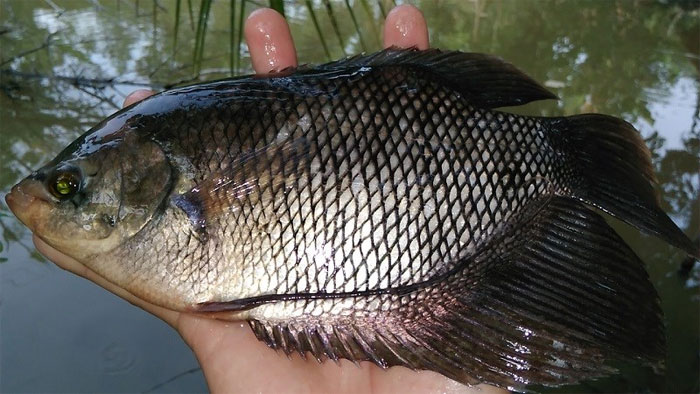
The giant gourami, scientific name Osphronemus goramy, belongs to the gourami family (Osphronemidae). In Vietnam, it lives mainly in the Đồng Nai and La Ngà rivers and can adapt to harsh conditions in both fresh and brackish water.
The giant gourami's body is laterally compressed, and its length is twice its height. It has a fairly wide mouth, a pointed snout and a long dorsal fin with soft fin rays.
Striped snakehead (cá lóc)
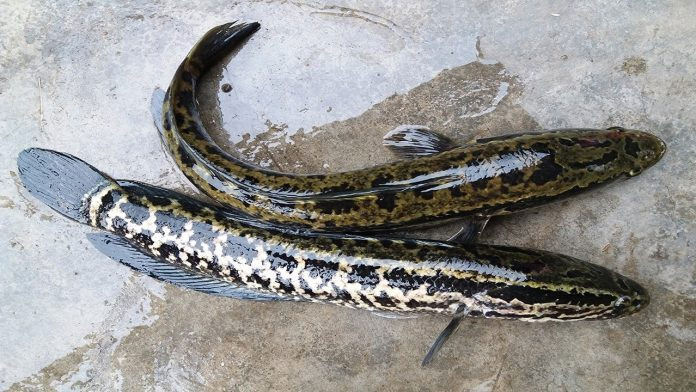
The striped snakehead, scientific name Channa striata, belongs to the snakehead family (Channidae) and is also known in Vietnam as cá tràu, cá quả, cá chuối, cá sộp or cá lóc bông. It usually lives in places with weak currents (still water) or in water bodies such as ponds, lakes, rice fields and canals,…
Striped snakeheads can weigh up to 5–7 kg and live as long as 10 years (4–5 years on average). The body is long and cylindrical, with a wide mouth and sharp teeth. Depending on where they live, snakeheads show different traits: those in shallow fields have scales on the head and a black back tinged with yellow, while those in deep water have scales on the head and a plain black back, with white scales on the belly.
Marble goby (cá bống)
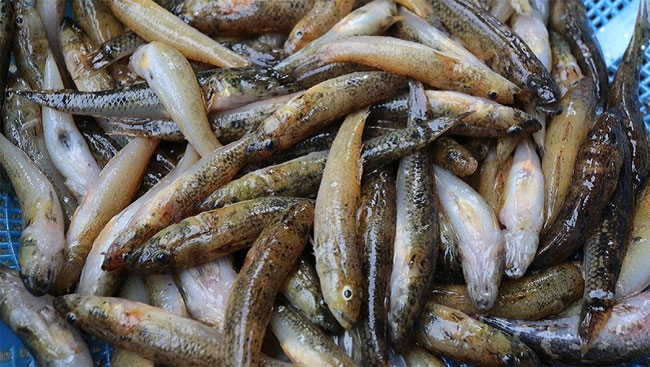
The marble goby, scientific name Oxyeleotris marmorata, belongs to the sleeper goby family (Eleotridae). In Vietnam, it is commonly found in the Mekong (Cửu Long), Vàm Cỏ and Đồng Nai rivers.
The marble goby has a rounded, spindle-shaped body that is black with a few brown markings. The head is large relative to the body, the teeth are sharp, and the black V-shaped tail makes it easy to recognize.
Gobies are very slimy, with a grayish back and glossy skin, large puffed gills and an average weight of 50–100 g. The marble goby is hardy, with thick, delicious flesh. When cooked, the flesh is pure white, like chicken, so it is firm and has a distinctive sweet taste.
White pomfret (cá chim trắng)
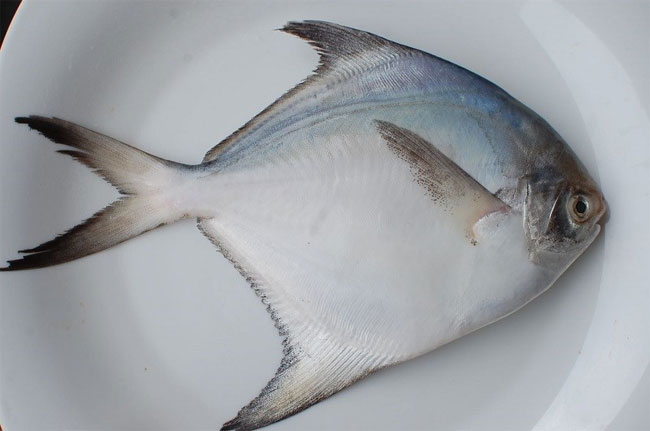
The white pomfret, scientific name Pampus argenteus, belongs to the family Stromateidae and lives mainly in Southeast Asia, South Asia and the Middle East.
The white pomfret has an almost flat body, a forked tail fin and long pectoral fins, with few scales. It weighs 4–6 kg. Its flesh is tender and tasty.
Black carp (cá trắm đen)
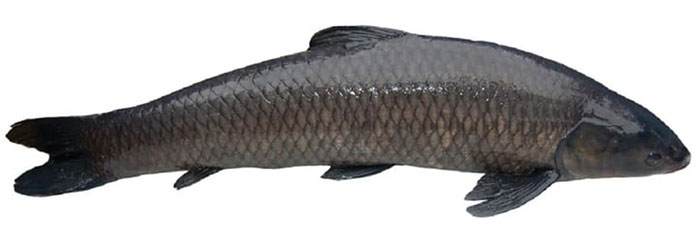
The black carp is also known in Vietnam as cá trắm cỏ xanh. It has a long, cylindrical body, pointed lips and no barbels; the back is black, the belly milky white, and the flesh white and firm, with large but few intermuscular bones. Black carp usually weigh about 3–5 kg.
Grass carp (cá trắm trắng)
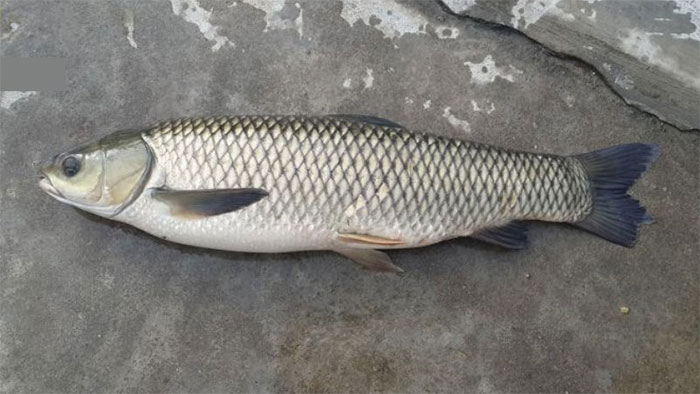
The grass carp, also called cá trắm cỏ, has a long, likewise cylindrical body, a rounded mouth, no barbels and a dark back; the whole body is pale yellowish, the belly ash-white, and the flesh soft with few bones. Grass carp usually weigh about 1–3 kg.
Mud carp (cá trôi)
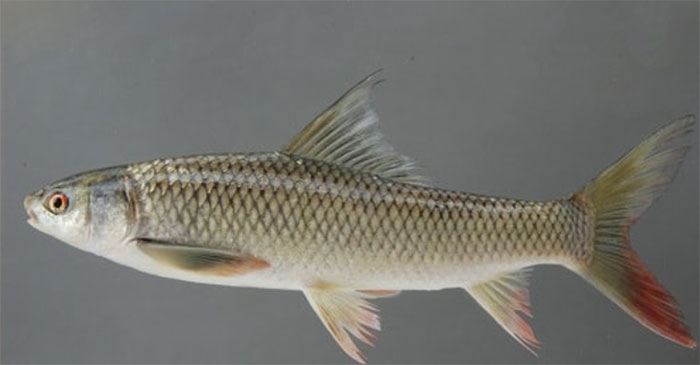
The mud carp has a well-proportioned body that tapers toward the tail. The head is plump and of moderate length; the snout is blunt and slightly protruding, without a fold. A groove separates the lower lip from the lower jaw. The top of the head is smooth, and the nostrils are closer to the eyes than to the snout. The gill openings are narrow and joined to the isthmus. A mud carp typically weighs from 800 g to 2 kg on average.
Silver carp (cá mè)
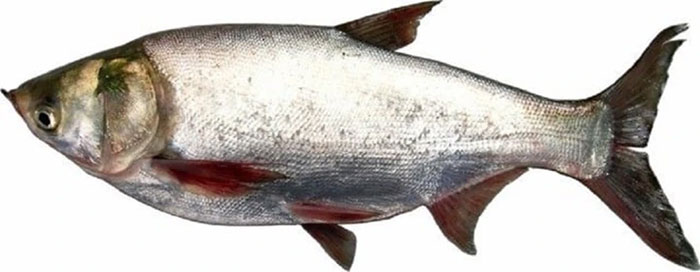
The silver carp has a large head, a flattened, long and slender body, and small white scales. Its body has glands that secrete a fishy odor, so it smells very fishy. This group includes the silver carp and the bighead carp.
Swamp eel (lươn)
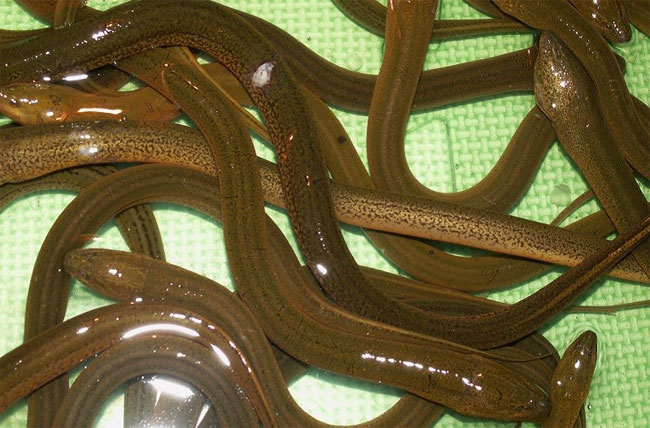
The swamp eel, scientific name Monopterus albus, belongs to the swamp eel family (Synbranchidae). It lives mainly near the bottom in warm fresh water, such as canals, swamps and rice paddies.
Swamp eels breathe through gills located in the abdominal cavity and intestine, and have no swim bladder. Their average length is 25–40 cm, sometimes up to 1 m. The body is cylindrical, the skin bare and scaleless, and the dorsal fin is joined to the tail fin and anal fin. The tail tapers to a point.
The mouth is large, both jaws have small teeth, and the eyes are small. The belly is white or light brown, while the back is brown.
- Photos of the biggest supermoon of 2023 shining brilliantly and dazzling astronomy lovers around the world
- "Mysterious creature" from Vietnam's deep sea identified by scientists as a new species
- Archaeologist digs up strange "dragon" in a field, expert says: "Report it to the police as soon as possible"
New snake species discovered in the former Đắk Nông province, Vietnam
Researchers have discovered a new mud snake species, Myrrophis dakkrongensis, in the former Đắk Nông province (now part of Lâm Đồng) in Vietnam.
Out hunting rat snakes, a man nearly grabbed a creature more dangerous than a king cobra
Hunting Indochinese rat snakes after rain, a snake catcher nearly grabbed the lookalike red-necked keelback, for which no specific antivenom is currently available in Vietnam.
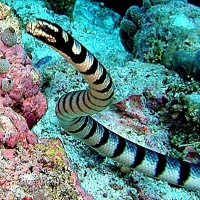
The world's most venomous snakes
From Belcher's sea snake and the inland taipan to the black mamba and Russell's viper, meet some of the most venomous snakes on Earth.
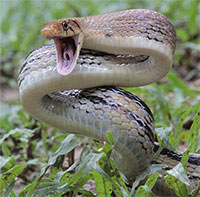
Fierce but non-venomous: the snake that helps Vietnam's farmers
The radiated ratsnake, widespread in Vietnam, is aggressive but has no venom. An excellent rat catcher, it is beneficial to agriculture.
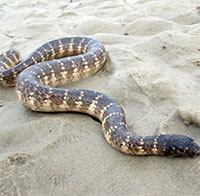
Meet the highly venomous sea snakes of Vietnam
Sea snakes are small to medium-sized ocean-dwelling snakes with paddle-like tails and venom potent enough to kill a human. Here are species found in Vietnam.
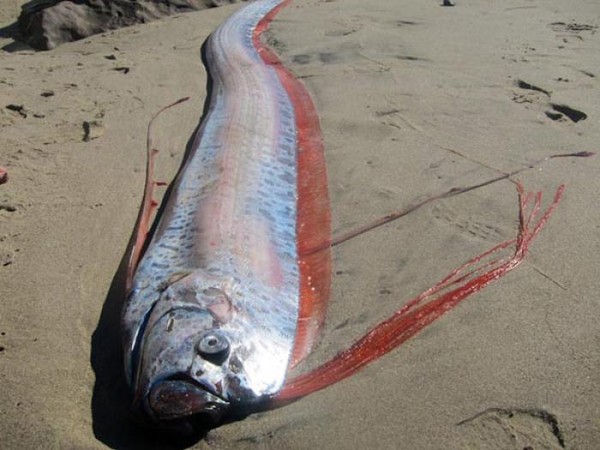
"Sea dragon" said to predict earthquakes washes up in Vietnam
Many believe an oarfish washing ashore is an omen of disasters and earthquakes. So what is the truth?