The world's most venomous snakes
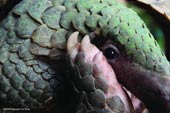
There are many snake species in the world. Some are harmless, but others are extremely venomous and can kill a victim almost instantly.
Ranking the world's most venomous snakes
1. Belcher's sea snake
Belcher's sea snake is the most venomous snake in the water and also the most venomous snake in the world. These snakes glide through the warm waters of the South Pacific and the Indian Ocean. Fishermen are their most common victims, encountering them when hauling nets up from the ocean.
"Belcher's sea snakes" can be found throughout the seas off Southeast Asia and northern Australia. Their diet consists mainly of catfish; the beaked sea snake will also eat pufferfish and other fish, and occasionally squid. Fortunately, fewer than a quarter of their bites deliver venom, and they are fairly docile.
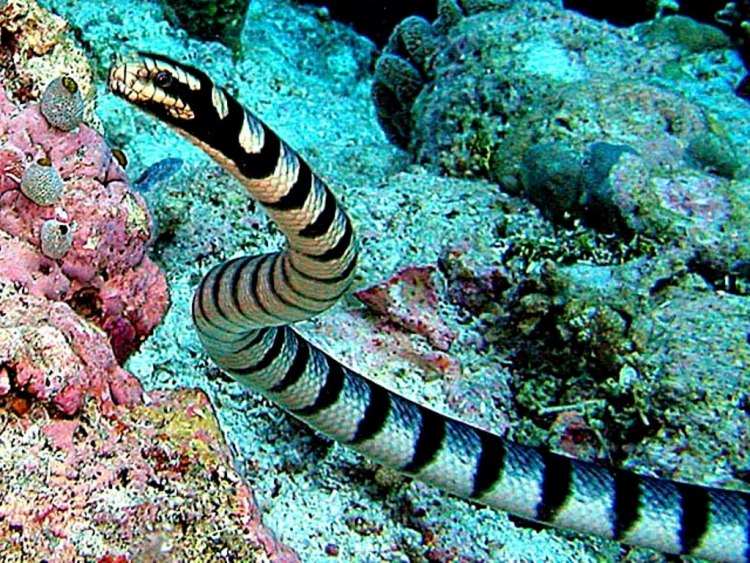
Belcher's sea snake is the most venomous species in the world
2. Inland taipan
The most venomous snake on land is the "fierce snake", also known as the "inland taipan" (scientific name: Oxyuranus microlepidotus), a reptile in the family Elapidae native to Australia. Its venom is the most toxic of any land snake in the world.
The maximum venom yield from a single bite is 110 mg, enough to kill 100 people or 250,000 mice. Its venom is 10 times as toxic as that of the Mojave rattlesnake and 50 times as toxic as that of the common cobra.
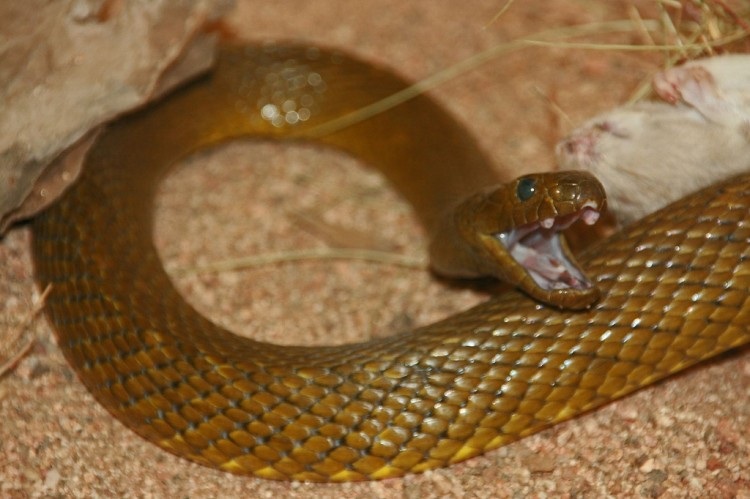
Inland taipan
This species has a remarkable ability to change its appearance: its color can shift between dark black, light brown and green depending on the season.
3. Rattlesnakes
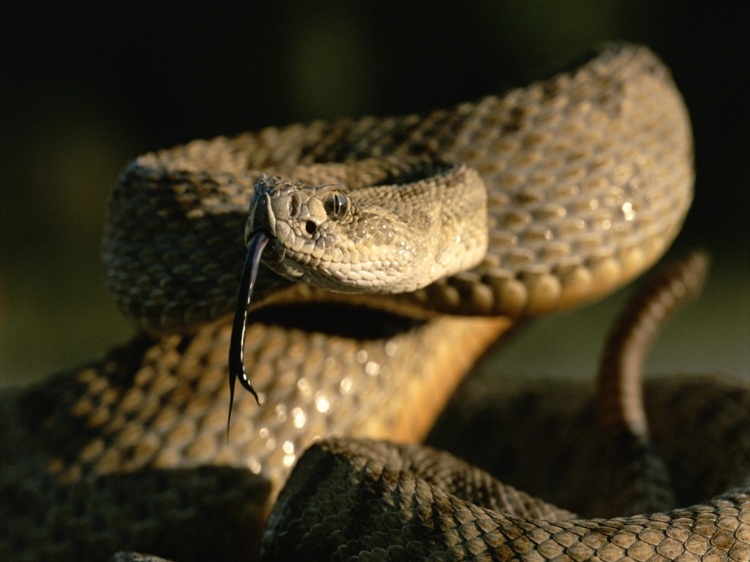
Rattlesnake
Found mainly in the Americas, rattlesnakes carry venom that can quickly paralyze the nervous system of prey such as rats, birds and other small animals, causing the victim's heart to stop just a few minutes after the bite.
4. Philippine cobra
The Philippine cobra can spit venom at an enemy up to 3 m away, and its prey dies within seconds. Despite this formidable weapon, the Philippine cobra attacks only when threatened.

Philippine cobra
5. Blue krait
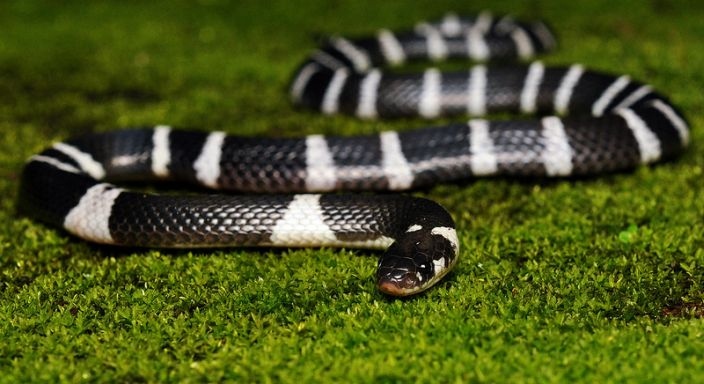
Blue krait
The blue krait is found widely in Southeast Asia and Indonesia. Victims bitten by this snake do not die immediately; instead they suffer hours of pain, breathing difficulties and convulsions before finally dying.
6. Eastern brown snake
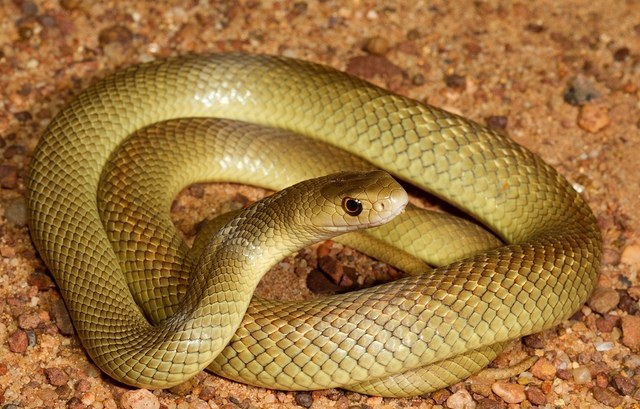
Eastern brown snake
This glossy brown snake is quite common in eastern Australia. Once it bites and injects its venom, its victim goes through the most terrible moments before dying.
7. Black mamba
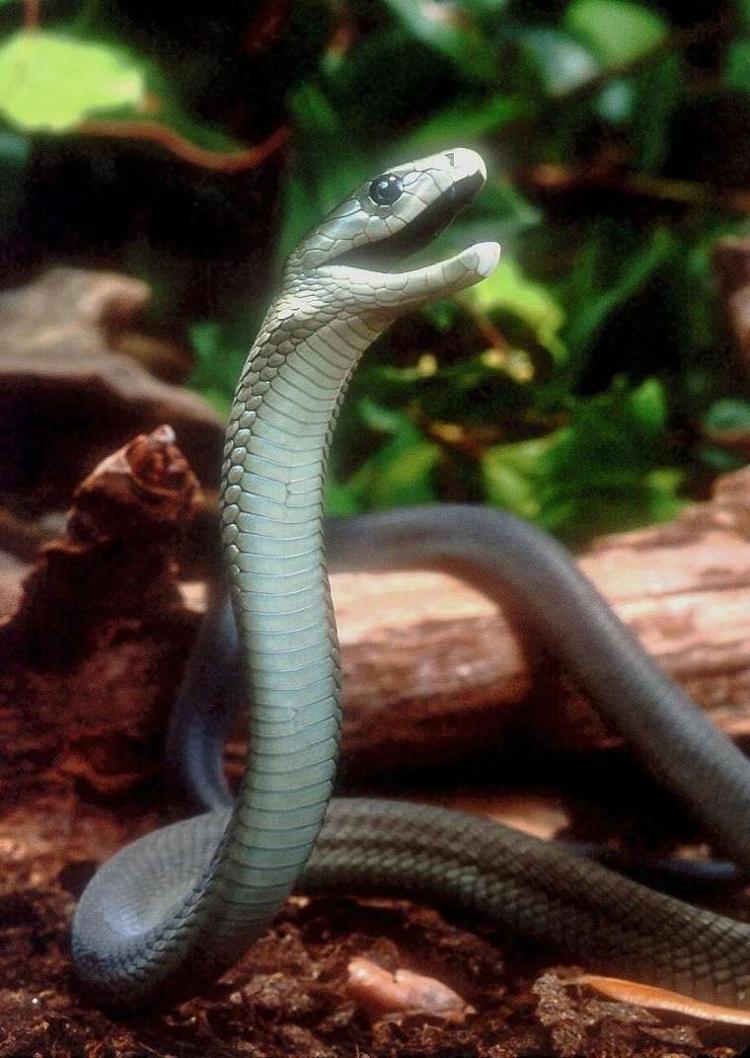
The black mamba is the fastest snake on the planet.
The black mamba is found widely across the African continent. It strikes with astonishing accuracy. It is the fastest snake on land, reaching speeds of 4.32 m/s to 5.4 m/s. Black mamba venom can kill a person within 30 minutes to 2 hours, causing drowsiness, neurological problems, paralysis and breathing difficulties.
8. Vipers
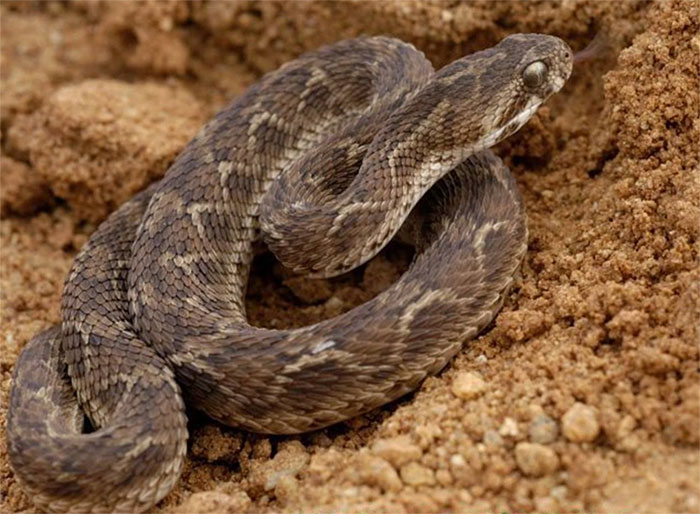
These snakes are found in almost every region of the world.
These snakes are found in almost every region of the world. However, the two most venomous species, the saw-scaled viper and the chain viper, are found mainly from the Middle East and Central Asia to South Asia, especially India, as well as China and Southeast Asia. They are very bad-tempered and usually hunt at night, especially after rain.
9. Tiger snake
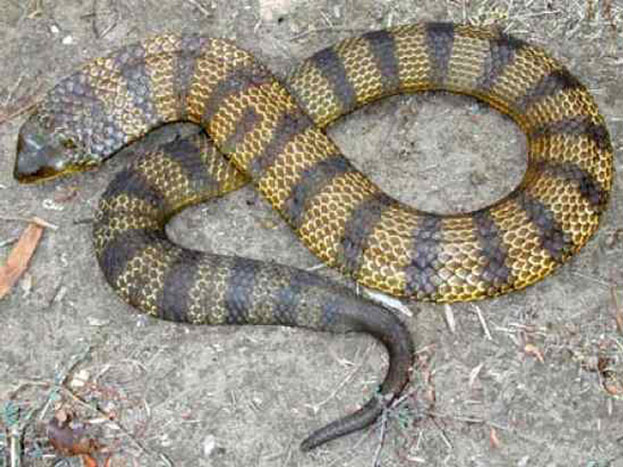
A tiger snake bite causes pain in the legs and neck, sweating, breathing difficulties and paralysis.
Tiger snakes are rather shy and usually flee despite their highly toxic venom. Tiger snakes are easy to find in Australia. Unlike other snakes, tiger snakes are fairly timid and tend to retreat when confronted, but they will “go wild” if cornered. A tiger snake bite causes pain in the legs and neck, sweating, breathing difficulties and paralysis. The death rate from untreated bites is very high, at 60-70%.
10. Boomslang
About 24 hours after being bitten on the thumb by a juvenile boomslang, herpetologist Karl Patterson Schmidt died of internal bleeding from his eyes, lungs, kidneys, heart and brain, according to a paper published in the journal Biochimica et Biophysica Acta in 2017.
The snake had been sent to Schmidt at the Field Museum in Chicago for identification. Like others in the field at the time (1957), Schmidt believed that rear-fanged snakes such as the boomslang (Dispholidus typus) could not produce a venom dose large enough to be fatal to humans. They were wrong.
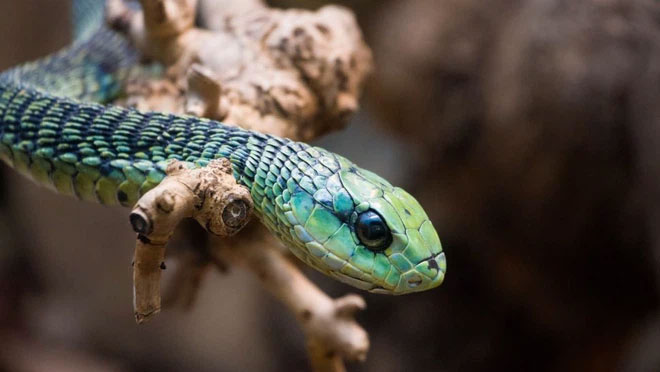
This snake lives mainly in Eswatini (formerly Swaziland), Botswana, Namibia, Mozambique and Zimbabwe.
The boomslang can be found across Africa but lives mainly in Eswatini, Botswana, Namibia, Mozambique and Zimbabwe, and it is one of the most venomous of the so-called rear-fanged snakes, according to the University of Michigan Museum of Zoology. Such snakes can fold their fangs back into their mouths when not in use. Like other deadly snakes, this species has hemotoxic venom that makes its victims bleed both internally and externally.
With its egg-shaped head, large eyes and bright green patterned body, the boomslang is quite eye-catching. According to the South African National Biodiversity Institute, when threatened the snake inflates its neck to twice its normal size, revealing a patch of brightly colored skin between its scales.
Death from a boomslang bite can be a gruesome process. As Scientific American describes it: "The victim suffers hemorrhaging in many muscles and the brain, and, to top it all off, blood begins to seep out of every orifice, including the gums and nostrils, and even the smallest cuts. Blood will also start to appear in the victim's feces, urine, saliva and vomit until they die." Fortunately, there is an antivenom for boomslang bites, provided the victim receives treatment in time.
11. Russell's viper
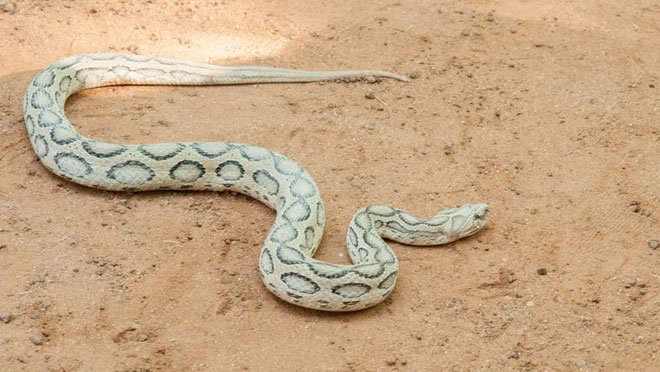
This species is considered one of the most dangerous vipers.
According to a study published March 25, 2021, in the journal PLOS Neglected Tropical Diseases, about 58,000 deaths in India each year are caused by snakebites, and Russell's viper (Daboia russelii), also known as the chain viper, is responsible for most of these deaths. This species is considered one of the most dangerous vipers.
In Sri Lanka, where this nocturnal snake likes to rest in rice paddies, it causes a very high death rate among rice farmers during the harvest season. Its venom can lead to a range of horrific symptoms: acute kidney failure, severe bleeding and multi-organ damage, researchers reported in the Handbook of Clinical Neurology in 2014. Some venom components involved in blood clotting can also lead to acute stroke and, in rare cases, symptoms similar to Sheehan's syndrome, in which the pituitary gland stops producing certain hormones. Victims often die of kidney failure.
12. Saw-scaled viper
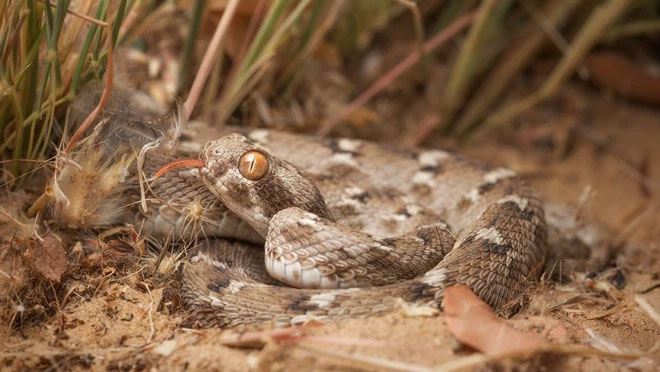
When threatened, this snake makes a "sizzling" sound by rubbing together its special serrated scales.
The saw-scaled viper (Echis carinatus) is the smallest member of India's "Big Four" venomous snakes, along with Russell's viper, the common krait (Bungarus caeruleus) and the Indian cobra (Naja naja), which are thought to be responsible for the largest share of snake-related deaths in the country.
According to a study published in 2013 in the Journal of Venomous Animals and Toxins including Tropical Diseases, instead of the "hiss" made by many other snakes, this species makes a "sizzling" sound by rubbing together its special serrated scales when threatened.
Video showing the hunting abilities of the world's most venomous snakes.
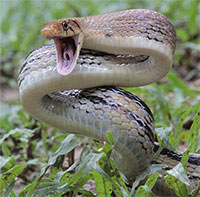
Fierce but non-venomous: the snake that helps Vietnam's farmers
The radiated ratsnake, widespread in Vietnam, is aggressive but has no venom. An excellent rat catcher, it is beneficial to agriculture.
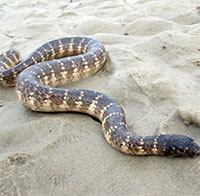
Meet the highly venomous sea snakes of Vietnam
Sea snakes are small to medium-sized ocean-dwelling snakes with paddle-like tails and venom potent enough to kill a human. Here are species found in Vietnam.
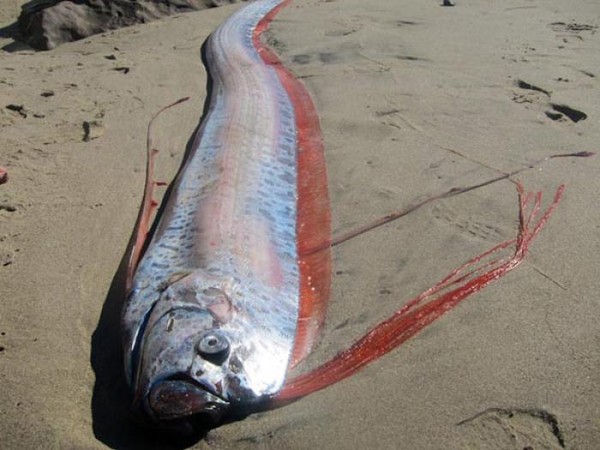
"Sea dragon" said to predict earthquakes washes up in Vietnam
Many believe an oarfish washing ashore is an omen of disasters and earthquakes. So what is the truth?
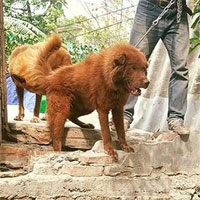
Vietnam's "four great national dogs": Which rare breeds make the list?
Vietnam's four native "national dogs" are the Bắc Hà dog, the Lài dog, the Hmong Bobtail and the Phú Quốc Ridgeback.
10 of Vietnam's rarest and most unusual birds
Vietnam's rich, diverse ecosystems are home to many rare birds, some with unusual names and distinctive calls.
Found only in Vietnam: the bizarrely evolved fish with a truly unique way of mating
The Mekong priapiumfish, endemic to Vietnam, was named one of the world's 10 strangest discoveries by National Geographic in 2012.