Meet the world's largest wild cattle, found in Vietnam: Up to 2 tonnes and a rare genetic treasure
This wild cattle species carries many valuable traits and is regarded as a rare genetic resource that needs to be conserved.
A rare gaur turns up
According to the newspaper Công an nhân dân (People's Public Security), from 2009 to early 2015 a bull regularly appeared during the rainy season, roughly from June to September, in Bạc Rây 2 village (Phước Bình commune, Bác Ái district, Ninh Thuận province in south-central Vietnam), part of the buffer zone of Phước Bình National Park. It joined local farmers' cattle herds and grazed alongside them on the grasslands at the forest edge. The bull stood about 1.7 m tall, measured more than 2 m long and weighed around 1 tonne.
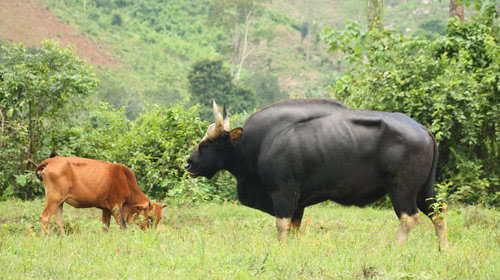
The wild bull that joined villagers' cattle herds was identified as a Southeast Asian gaur. (Photo: VTC News)
The animal's body was black and heavily muscled, with four white legs; instead of the hump seen on domestic cattle, it had a prominent muscular ridge running along its spine. It had a pair of large, sweeping horns with sharp tips pointing forward. Some people thought it was a wild water buffalo, while others insisted it was a feral cow. Forest rangers later came to observe and identify it, and confirmed that it was in fact a gaur.
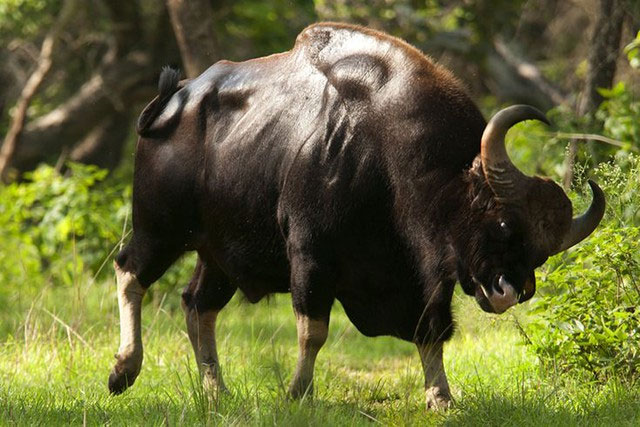
The Southeast Asian gaur is a wild cattle species with many rare and valuable traits. (Photo: Pixabay).
According to a report by the team of experts who studied it, the bull belonged to the Southeast Asian gaur (Bos gaurus) group, which is very aggressive. Its ferocity is said to be second only to that of the tiger. Gaur will readily attack if they discover a hunter's hiding place, and they always fight back to the end when they feel threatened. Being aggressive and enormous, gaur have almost no natural predators. On the grasslands of Bạc Rây, the bull became the undisputed master and won over the herd of domestic cows.
Fascinating facts about the Southeast Asian gaur
This animal is also known as the seladang (Malayan gaur) or the Indian bison, but in fact it is not closely related to the bison of Europe and North America.
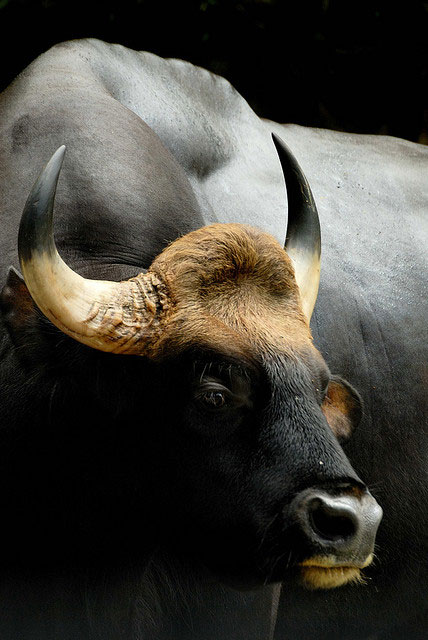
In Vietnam, ethnic minority communities call the Southeast Asian gaur "con min". (Photo: Pixabay).
According to VTV (Vietnam Television), in Vietnam ethnic minority communities call the Southeast Asian gaur "con min", meaning wild buffalo, because it resembles a water buffalo. Seen from the front, it looks like a buffalo, while from behind it looks like a cow. Gaur live in herds of 2 to 10 individuals. Old bulls often live alone or gather in small groups.
Its short, soft, glossy coat is dark brown or grayish black, with a slight bluish sheen on the back. The hair on the belly is longer and light brown. Females are usually reddish brown. The long tail is black.
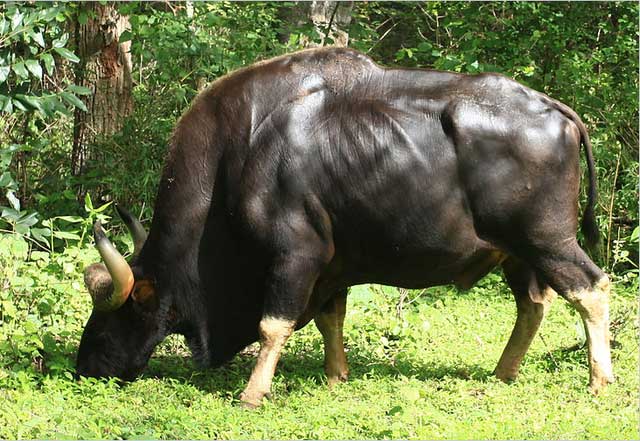
Seen from the front, the gaur looks like a buffalo; from behind, it looks like a cow. (Photo: Pixabay).
Gaur like to eat young leaves, tender bamboo shoots and freshly sprouted grass in upland fields or areas bordering forests. Zoologists around the world recognize the Southeast Asian gaur as the largest species of wild cattle on Earth. An adult bull can stand over 2 meters tall and weigh up to 2 tonnes, larger than both the wild Asian water buffalo and the North American bison. At this size, the gaur is the third-tallest land mammal, behind only the giraffe and the elephant. It also ranks fifth in body weight among land animals, after the elephant, the white rhinoceros, the Indian rhinoceros and the hippopotamus.
Southeast Asian gaur usually breed in June and July, producing 1 calf per year. Gestation lasts about 270 days, and a female gives birth once a year to a single calf. Gaur inhabit old-growth evergreen forest, dry dipterocarp forest, mixed bamboo forest and secondary forest on relatively flat terrain at elevations of 500 - 1500m above sea level.
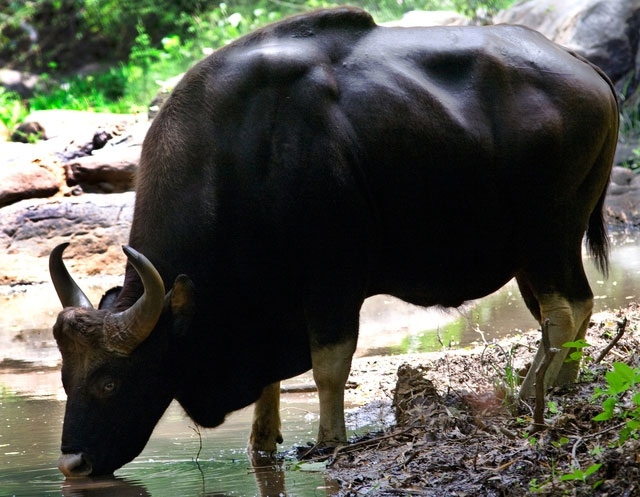
Zoologists around the world recognize the Southeast Asian gaur as the largest species of wild cattle on Earth. (Photo: Pixabay).
The Southeast Asian gaur carries many valuable traits, such as its large stature and strong tolerance of harsh climatic conditions…, and is regarded as a rare genetic resource that should be conserved and could be developed for livestock breeding.
The gaur has been listed as Vulnerable on the IUCN Red List since 1986. In 2016, the global population was estimated at no more than 21,000 mature individuals. Numbers have fallen by more than 70% over the past three generations, and the species is probably extinct in Sri Lanka and possibly in Bangladesh as well. In well-protected areas, however, populations are stable and growing.
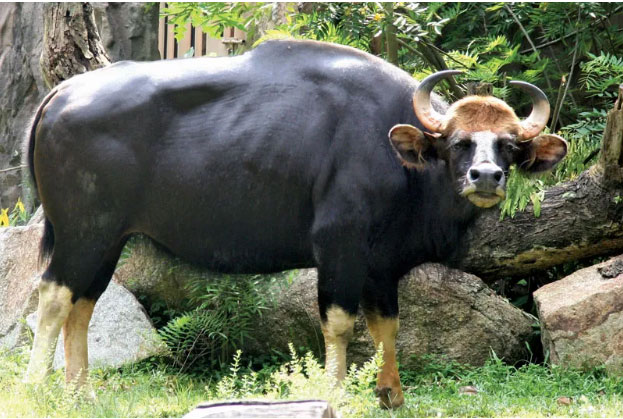
The gaur has been listed as Vulnerable on the IUCN Red List since 1986. (Photo: Pixabay).
Today, only about 300 gaur remain in Vietnam, found mainly in Mường Nhé National Park (Điện Biên province in the northwest), the mountain forests of the Tây Nguyên (Central Highlands), Chư Mom Rây National Park (Kon Tum), Cát Tiên National Park (Lâm Đồng) and the Phú Bài airport area (Huế). However, these herds face a high risk of being wiped out because of deforestation and the poaching of rare wildlife.
Gaur numbers continue to decline for 2 main reasons:
- First, deforestation is shrinking their habitat.
- Second, gaur are hunted for their gallbladders.
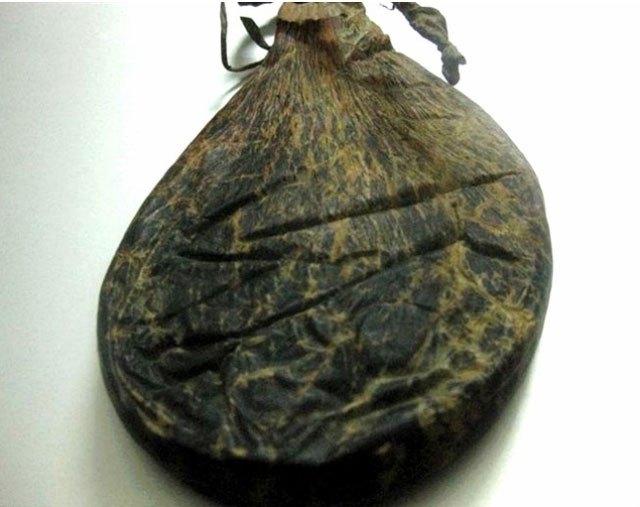
The gaur faces a high risk of extinction because of poaching for its gallbladder. (Photo: VTC News).
According to VTC News, many people believe that gaur bile can boost virility, strengthen sinews and bones, replenish vital energy, improve male sexual health and help treat many incurable diseases… Gaur bile is even rumored to be more potent than king cobra bile or bear bile. In reality, however, experts have shown that gaur bile is no different from the bile of water buffalo or cattle.
Moreover, the human body secretes only a small amount of bile, just enough to digest daily meals. Taking in extra bile from any animal beyond normal levels risks poisoning. Drinking bile from a diseased animal (one with a bacterial infection, typhoid, or an infestation of the liver fluke Fasciola gigantica in the liver and bile ducts) is even more dangerous. The gaur is a protected species in Vietnam: hunting, trading or consuming gaur and gaur products, including bile, is illegal and can lead to criminal prosecution.

The Malayan pit viper: A dangerous venomous snake common in Vietnam, dubbed a "living landmine"
Rather than flee from humans, the Malayan pit viper lies still, ready to strike anyone who comes too close or accidentally steps on it.
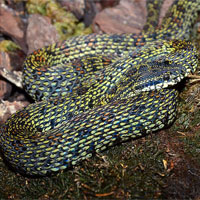
4 highly venomous snakes most often found on Fansipan
One of them is dubbed "Vietnam's king of warm-blooded prey". Meet four deadly pit vipers that live on Fansipan, Indochina's highest peak.
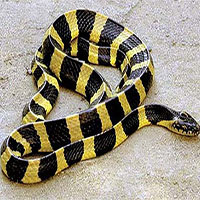
How to tell the banded krait from the Malayan krait
Vietnam is home to many highly venomous snakes, notably two "siblings": the banded krait and the Malayan krait. Here's how to tell them apart.
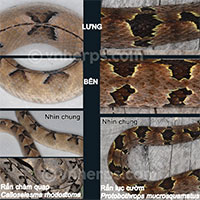
The highly venomous Malayan pit viper is easily mistaken for this snake: Here's how to tell them apart
Both belong to the viper family Viperidae, making them easy to confuse. Here are some quick ways to tell them apart.
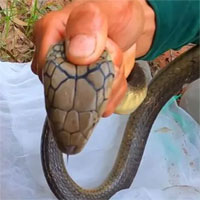
How to tell the king cobra, the common cobra and the oriental rat snake apart
Many accidents happen because people can't tell these snakes apart. Here's how to identify the king cobra, common cobra and rat snake.
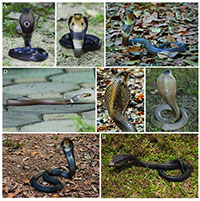
The highly venomous cobras that live in Vietnam
Four cobra species live in Vietnam, and all of them carry potentially lethal venom. Here is how to recognize them and what to do if you meet one.