4 highly venomous snakes most often found on Fansipan
One of them has been dubbed "Vietnam's king of warm-blooded prey". These snakes were described by Phùng Mỹ Trung, a seasoned forest wildlife researcher. In this article, we introduce each of the highly venomous species the researcher mentioned in a post on his personal page.
1. Jerdon's pit viper, Protobothrops jerdonii
Jerdon's pit viper (Protobothrops jerdonii) is on the list of Vietnam's most venomous snakes.
It typically lives in high mountain areas, which gives this reptile the greatest cold tolerance that herpetologists in Vietnam have ever recorded.
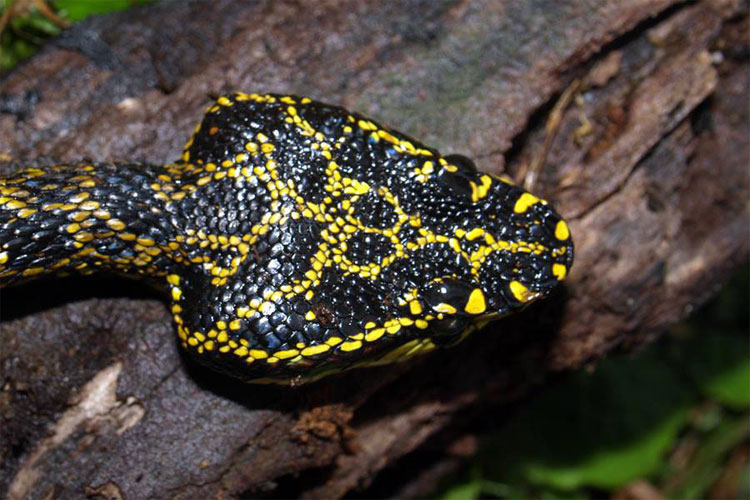
Its triangular head, with intricate patterns, signals deadly danger. (Photo: Phùng Mỹ Trung).
Forest biologist Phùng Mỹ Trung said he photographed this highly venomous viper when he came across it at an altitude of 2,900 meters on Fansipan, the "Roof of Indochina". The nearly 1-meter-long snake usually hunts along shallow streams in Hoàng Liên National Park in northern Vietnam's Lào Cai province.
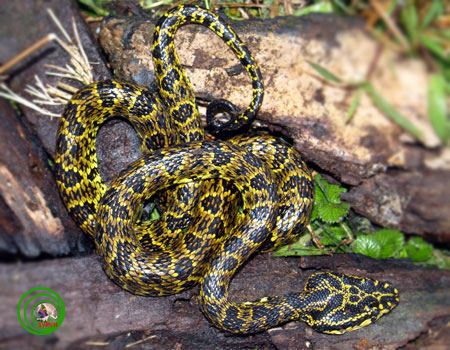
The fearsome markings of a Jerdon's pit viper photographed on Mount Fansipan. (Photo: Phùng Mỹ Trung/Vncreatures.net).
Jerdon's pit viper, known by the Latin name Protobothrops jerdonii, belongs to the viper family Viperidae. This forest-dwelling snake has a dangerously beautiful appearance: its whole body is covered in yellow-and-black patterned skin, and its triangular head is always ready to "snap up" prey in the blink of an eye.

Jerdon's pit vipers elsewhere in the world have intricate patterns with a jade-green sheen. (Photo: Johan Fredriksson).
The venom of this pit viper is cytotoxic. After a lightning-fast "strike", the victim's white and red blood cells are destroyed, causing internal bleeding and death within minutes.
2. Fea's viper, Azemiops feae
Also known as the white-headed viper, Azemiops feae, this member of the viper family is one of the few snakes that live at around 1,000 meters above sea level.
Azemiops feae is one of the most primitive vipers, and it is commonly found on Fansipan and in the mountains of Cao Bằng, Lạng Sơn and Vĩnh Phúc (at Tam Đảo) provinces in northern Vietnam.
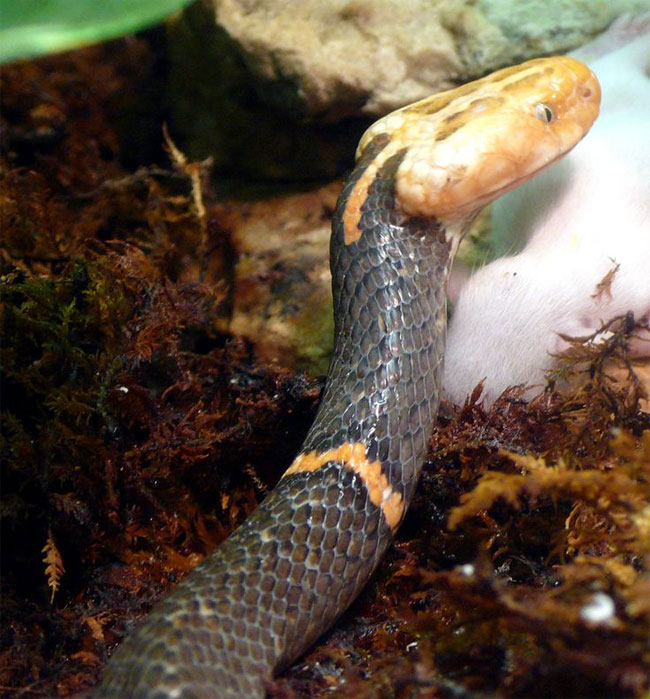
A white-headed viper elsewhere in the world. (Photo: Tim Vickers).
The strangest and most frightening feature of this 80cm-long snake is its silvery-white head, while its body is black with red edging.
Some populations elsewhere in the world are bright silver with pale yellow edging across the body, but the head remains silver/white or pale yellow.
The white-headed viper can produce both neurotoxins and cytotoxins, making it extremely dangerous to humans. Many experienced trekkers advise against provoking this species, as it is highly aggressive.
3. Mountain pit viper, Ovophis monticola
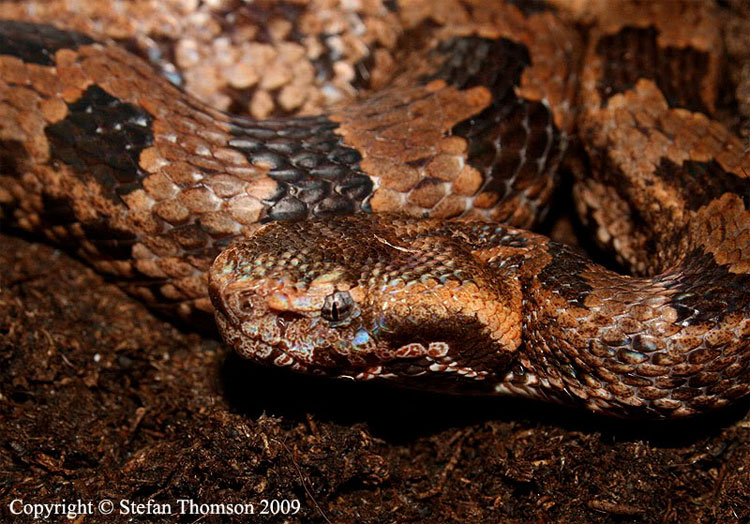
Mountain pit viper. (Photo: stefan thomson).
With a glossy brown body and intricate black markings, the mountain pit viper (Ovophis monticola), a nocturnal hunter, is one of the most fearsome "grim reapers" for forest creatures living at 1,500 meters above sea level.
With a triangular head "sharpened" by nature, this snake can deliver terrifyingly fast strikes once it picks up the scent of prey.
Although it is color-blind, the species may have an exceptional sense of smell, which is why it has been dubbed "Vietnam's king of warm-blooded prey".
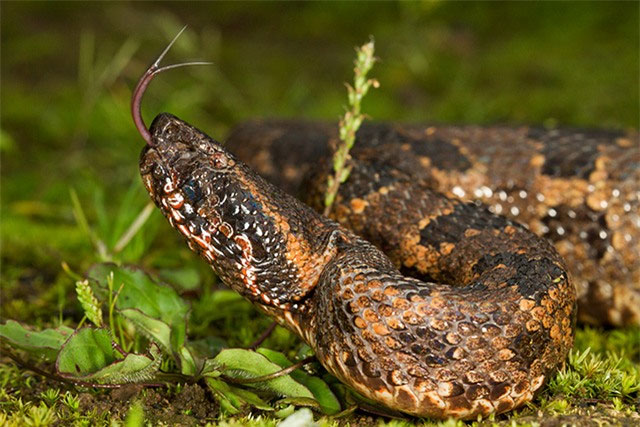
The mountain pit viper has an extremely keen sense of smell. (Photo: Felis.in).
Its favorite foods are rats, birds, lizards and the like.
In Vietnam, the species is found mainly in the provinces of Lào Cai, Yên Bái, Lạng Sơn, Gia Lai, Kontum and Lâm Đồng, among others.
4. Brown spotted pit viper, Protobothrops mucrosquamatus
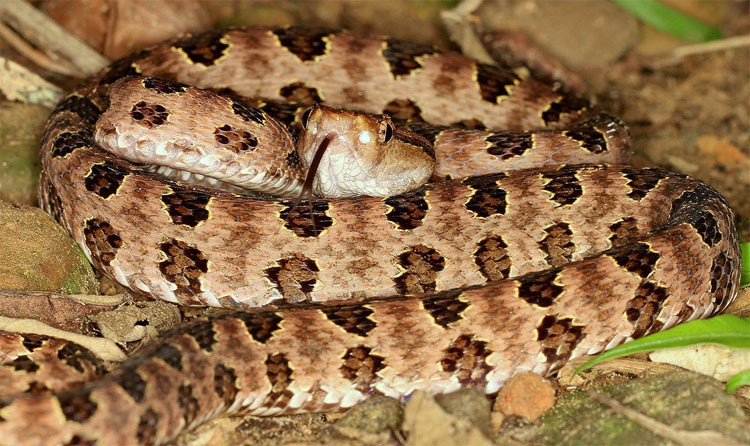
Brown spotted pit viper, Protobothrops mucrosquamatus. (Photo: Picssr.com).
Commonly encountered in mountain areas 1,000 meters above sea level, the brown spotted pit viper (Protobothrops mucrosquamatus) is also a fairly common snake on Fansipan.
The brown spotted pit viper grows to a maximum length of 112cm. Its entire body is covered in dark brown and light brown markings.
This species hunts at night along stream banks and shallow streams, and its favorite prey includes frogs and small carnivorous mammals.
In Vietnam, it is found in large numbers in Hà Giang, Lạng Sơn, Vĩnh Phúc, Nghệ An, Gia Lai and many other areas.
*This article uses material from forest biologist Phùng Mỹ Trung, Vncreatures and Wikipedia.
How to tell the banded krait from the Malayan krait
Vietnam is home to many highly venomous snakes, notably two "siblings": the banded krait and the Malayan krait. Here's how to tell them apart.
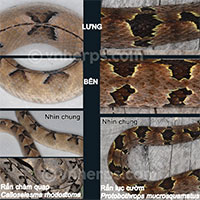
The highly venomous Malayan pit viper is easily mistaken for this snake: Here's how to tell them apart
Both belong to the viper family Viperidae, making them easy to confuse. Here are some quick ways to tell them apart.
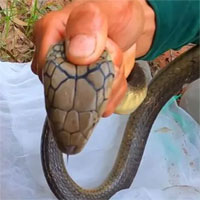
How to tell the king cobra, the common cobra and the oriental rat snake apart
Many accidents happen because people can't tell these snakes apart. Here's how to identify the king cobra, common cobra and rat snake.
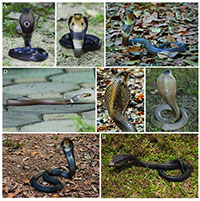
The highly venomous cobras that live in Vietnam
Four cobra species live in Vietnam, and all of them carry potentially lethal venom. Here is how to recognize them and what to do if you meet one.