How to tell the banded krait from the Malayan krait
Vietnam is home to many venomous and highly venomous snakes, most notably the two "siblings" known locally as the cạp nong and cạp nia. The banded krait is a protected species in Vietnam, and hunting, trading or consuming it is illegal. But the cạp nong and cạp nia are extremely venomous and their bites can be fatal if not treated promptly in hospital.
The cạp nia and the cạp nong both belong to the genus Bungarus (kraits). They look quite alike, and their venom is just about as dangerous. Both are members of the family Elapidae and share a similar size and appearance, so people tell the cạp nong and the cạp nia apart by the different colors of their bodies.
1. The banded krait (cạp nong) - yellow
The cạp nong, also called the black-and-yellow snake, "rắn ăn tàn", "tu cáp đổng" or "ngù tắm tàn"... (binomial name: Bungarus fasciatus), is a krait species found in India, Bangladesh, southern China and Southeast Asia. It is the longest species in the krait genus.
This is a venomous snake. The banded krait occurs throughout the Indochinese subregion, the Malay Peninsula and southern China.
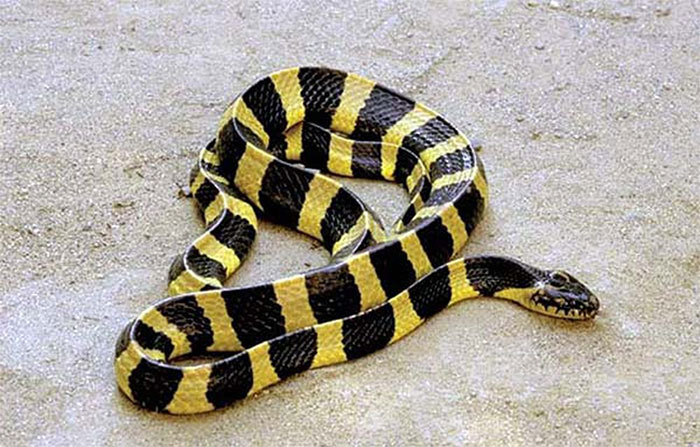
The banded krait is marked with fairly even black and yellow bands.
Banded kraits live in many kinds of habitat, from earthen hills, open forests and grasslands to stream banks and hillside farm plots. They shelter in termite mounds and rodent burrows, in tree hollows and rock crevices.
Banded kraits live alone. By day they lie coiled up in burrows or clumps of grass and are usually very sluggish. They are often seen when it rains. At night they become active and forage along rice-field embankments near forests, along streams and around pools of water. Rather than chasing prey, they usually lie in wait for it to pass by. They are good swimmers and often crawl toward firelight.
The average body length is over 1 m. Its identifying feature is its fairly even black and yellow bands, which alternate along the body and make this snake very conspicuous.
The banded krait's head is large and short, with round eyes. Its tail is short with a blunt tip, and there is a raised ridge running along the middle of its back. Its venom is said to be so potent that it surpasses that of the cobra.
The scales along the banded krait's spine are hexagonal and larger than the scales on its sides.
2. The Malayan krait (cạp nia)
The cạp nia, also known as the "rắn hổ khoang" or "silver-ringed snake" (binomial name: Bungarus candidus), is a krait species in the family Elapidae. It was described by Linnaeus in 1758.
The species is found in Cambodia, Indonesia (Java, Sumatra, Bali, Sulawesi), Malaysia (Malaya), Singapore, Thailand and Vietnam.
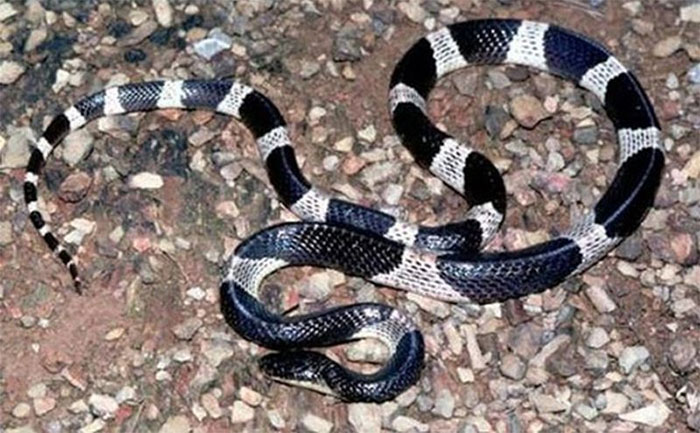
The Malayan krait, by contrast, has black and grayish-white bands.
Like the banded krait, an adult Malayan krait grows to more than 1 m long, and its venom contains highly potent neurotoxins that can kill a person if the bite is not treated promptly.
The Malayan krait, by contrast, has black and grayish-white bands. Its body is triangular in cross-section, and the section from the flanks down to the tail is fairly flat, tapering to a pointed tip.
Malayan kraits are usually found in grasslands and dense forests.
The highly venomous Malayan pit viper is easily mistaken for this snake: Here's how to tell them apart
Both belong to the viper family Viperidae, making them easy to confuse. Here are some quick ways to tell them apart.
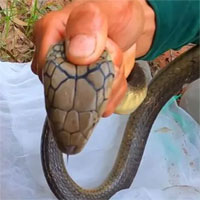
How to tell the king cobra, the common cobra and the oriental rat snake apart
Many accidents happen because people can't tell these snakes apart. Here's how to identify the king cobra, common cobra and rat snake.
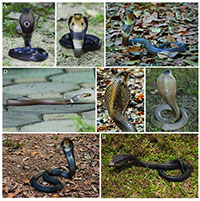
The highly venomous cobras that live in Vietnam
Four cobra species live in Vietnam, and all of them carry potentially lethal venom. Here is how to recognize them and what to do if you meet one.
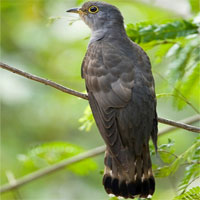
The truth about Vietnam's strange "tie the girl to the post" bird
Beyond its unusual name, the Indian cuckoo, called "bắt cô trói cột" in Vietnam, has many curious traits.
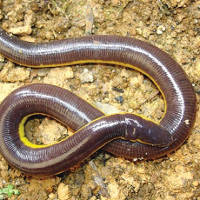
Half frog, half snake, half worm: The bizarre caecilians of Vietnam
Vietnam's 'worm frogs' are legless amphibians so snake-like that many people are startled the first time they see one.
Southeast Asia's treasure: A rare animal found in only 9 countries, and good news from Vietnam
The critically endangered Sunda pangolin lives only in Southeast Asia, including Vietnam, and is among the world's most trafficked mammals.