The highly venomous Malayan pit viper is easily mistaken for this snake: Here's how to tell them apart
Both belong to the viper family Viperidae, which makes them very easy to confuse.
The brown spotted pit viper (Protobothrops mucrosquamatus) and the Malayan pit viper (Calloselasma rhodostoma) are both dangerous vipers found in Vietnam. They look quite similar, so they are easily mistaken for each other.
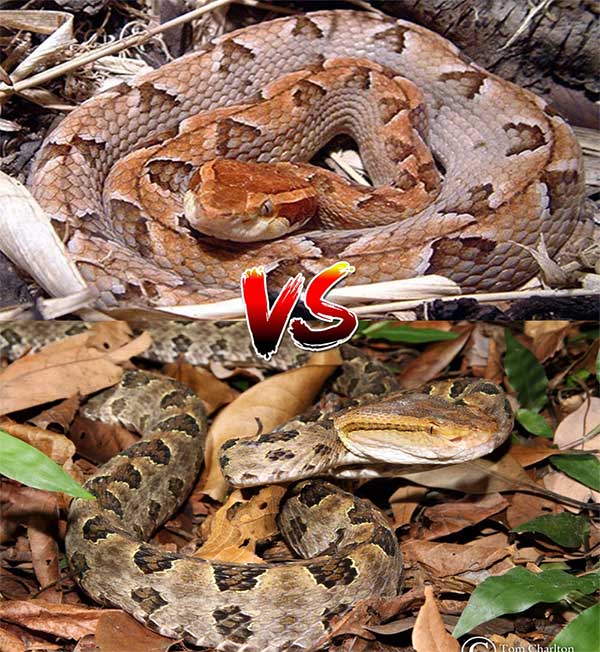
Can you tell which is the brown spotted pit viper and which is the Malayan pit viper?
Although both belong to the viper family Viperidae, they belong to the same pit viper subfamily but to two different genera. In fact, each has distinctive morphological and anatomical traits that researchers can tell apart with ease.
For most people, however, they look "pretty much alike," so this article will help readers identify them easily should they ever come across one. Let's take a closer look through the following images.
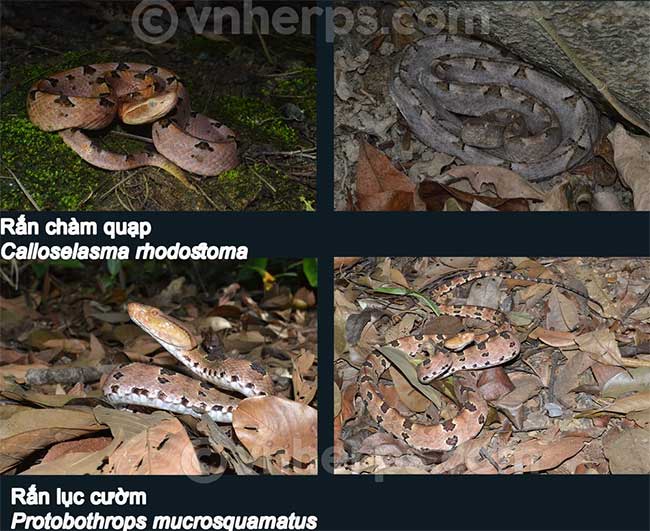
The two snake species look quite similar. (Photo: VNherps)
1. When identifying snakes, geographic location is an extremely important factor. The two species live in fairly separate areas, so where a snake is found can help us identify it more accurately.
Specifically, the brown spotted pit viper ranges from northern Vietnam south to Lâm Đồng, a province in the Central Highlands, while the Malayan pit viper is found from the south as far north as Gia Lai province, also in the Central Highlands. Their ranges overlap only slightly, in the provinces between Lâm Đồng and Gia Lai, so if a snake is found there, the following features also need to be considered.
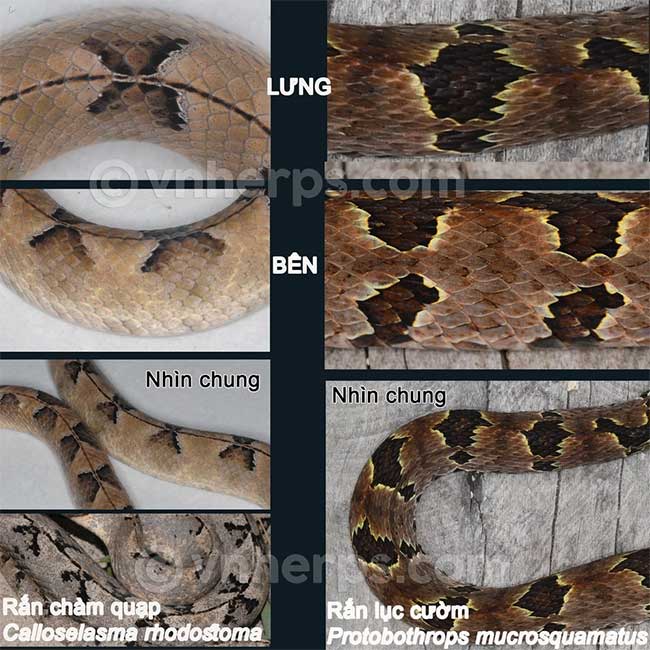
The dorsal patterns of the two species are very different. (Photo: Vnherps)
2. The brown spotted pit viper is generally more elongated, with a slenderer tail, and in particular its pattern looks denser and more irregular than that of the Malayan pit viper. The Malayan pit viper's markings, by contrast, are triangular, resembling a pair of butterfly wings or a symmetrical letter X.
Next is the difference in the head scales: the brown spotted pit viper's head is covered in small, granular scales (a characteristic feature of most vipers), whereas the Malayan pit viper has large, plate-like scales similar to those of water snakes.
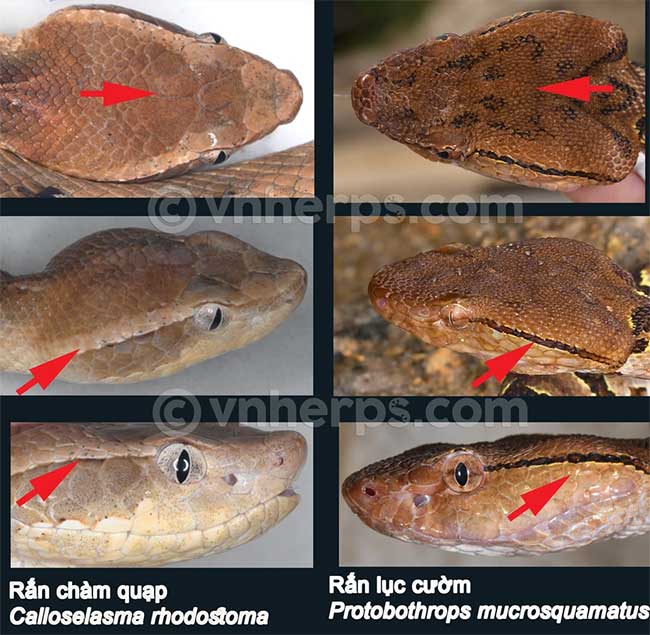
The Malayan pit viper's head scales are larger than those of the brown spotted pit viper. (Photo: Vnherps)
We can also identify them by looking at the stripe running behind the corner of the snake's eye. The brown spotted pit viper has a bold dark stripe on each side of the head, while the Malayan pit viper has a pale stripe, with the cheek area below only slightly darker.
The snout of the brown spotted pit viper is also rather blunt, whereas the Malayan pit viper's is distinctly upturned. These are some quick ways to tell the two species apart. Both are venomous snakes whose bites can easily cause tissue necrosis, so take care around them.

How to tell the king cobra, the common cobra and the oriental rat snake apart
Many accidents happen because people can't tell these snakes apart. Here's how to identify the king cobra, common cobra and rat snake.
The highly venomous cobras that live in Vietnam
Four cobra species live in Vietnam, and all of them carry potentially lethal venom. Here is how to recognize them and what to do if you meet one.

The truth about Vietnam's strange "tie the girl to the post" bird
Beyond its unusual name, the Indian cuckoo, called "bắt cô trói cột" in Vietnam, has many curious traits.
Half frog, half snake, half worm: The bizarre caecilians of Vietnam
Vietnam's 'worm frogs' are legless amphibians so snake-like that many people are startled the first time they see one.
Southeast Asia's treasure: A rare animal found in only 9 countries, and good news from Vietnam
The critically endangered Sunda pangolin lives only in Southeast Asia, including Vietnam, and is among the world's most trafficked mammals.
The harmless snake often mistaken for a deadly venomous one in Vietnam
A small, harmless snake found across Vietnam is often needlessly killed because it is mistaken for a deadly venomous species.