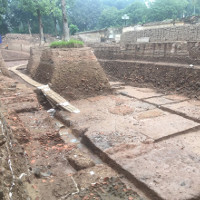
Thousand-year-old jar burials found in irrigation reservoir bed in Vietnam's Quảng Ngãi
More than 20 burials, along with stone farming tools and jewelry dating back 3,500 years, have been cleaned and restored after more than 10 years of excavation at Nước Trong reservoir.
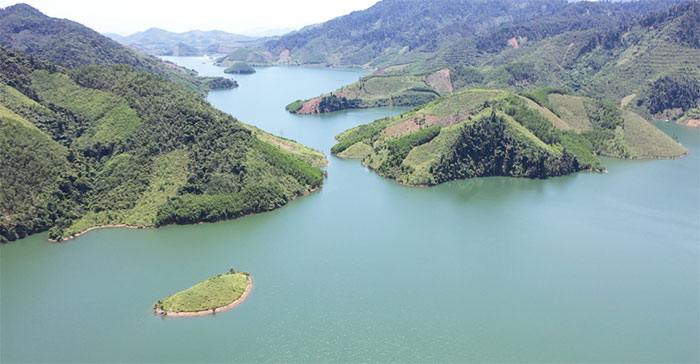
Nước Trong reservoir in the former Sơn Hà district of Quảng Ngãi province, central Vietnam, lies on the Tang River. It has a catchment area of 460 km2, with a water surface of 12 km2, and is one of the four largest irrigation reservoirs in central Vietnam. Construction was launched in 2007 by the then Ministry of Agriculture and Rural Development. While the site was being cleared for the project, cultural authorities and archaeologists discovered settlement remains, burials and objects made of stone, bronze, iron, glass and pottery in the Tang River valley within the reservoir area.
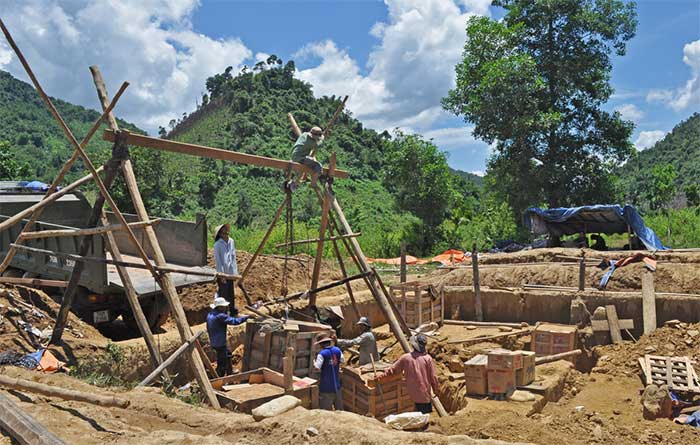
More than 10 years ago, 54 burials were excavated, encased in plaster inside wooden crates and moved to the Quảng Ngãi General Museum (Bảo tàng Tổng hợp tỉnh Quảng Ngãi) for safekeeping.
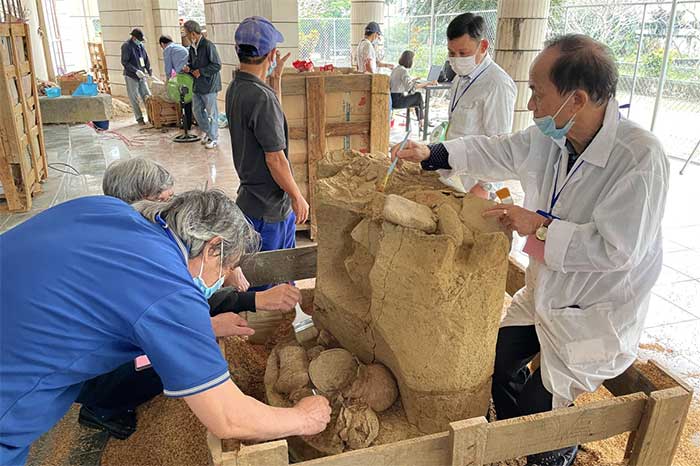
The jar burials were cleaned and restored in 2021 and 2022. The technical process included removing the soil stuck to the burial jars, restoring them, treating and conserving the pottery, bronze and iron objects inside, and dating the burials...
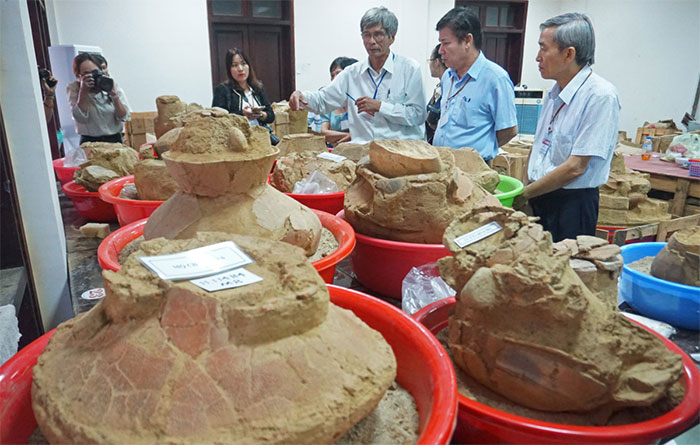
On October 25, the Quảng Ngãi Department of Culture, Sports and Tourism (Sở Văn hóa, Thể thao và Du lịch) wrapped up the project to process (clean, restore and study) the artifacts from Nước Trong reservoir.
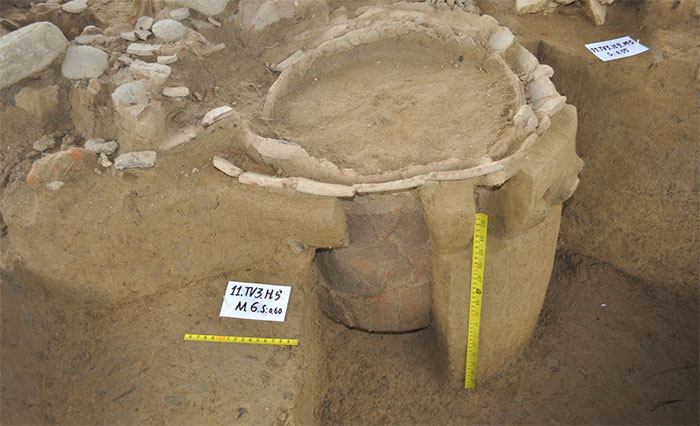
Jar burials excavated 10 years ago from the bed of Nước Trong reservoir. Associate Professor Nguyễn Khắc Sử of the Institute of Archaeology (Viện Khảo cổ học) in Hanoi said these are graves of pre-Sa Huỳnh inhabitants as well as graves belonging to the Sa Huỳnh culture. The Sa Huỳnh people buried their dead close to where they lived; later, as communities grew and beliefs changed, they moved their graves farther away from their homes. Nước Trong reservoir lies about 100 km west of An Khê lagoon (in the former Đức Phổ town), where the first Sa Huỳnh culture sites were found, and similar jar burials have been found there as well.
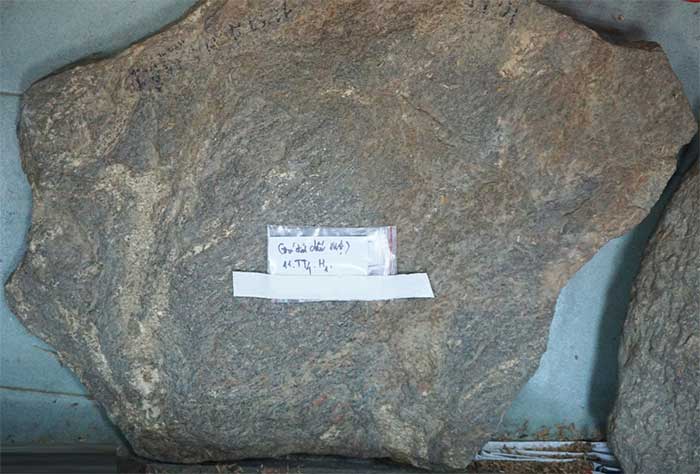
Ancient people used stones to mark the graves.
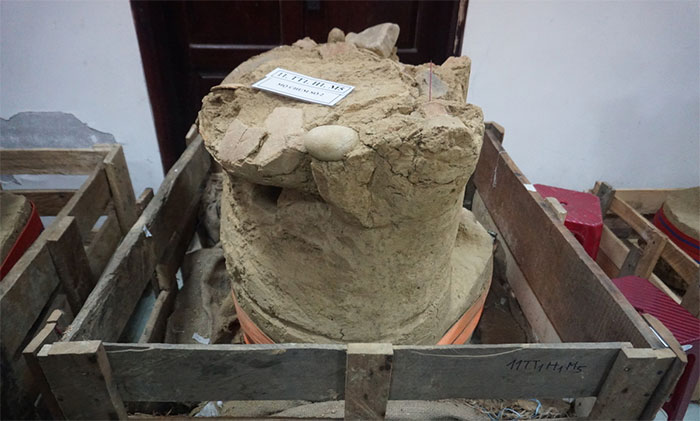
A burial jar after restoration. Dr. Đoàn Ngọc Khôi, deputy director of the Quảng Ngãi General Museum, said that among the jar burials found, 19 are coffin-shaped. These graves held cremated remains, along with stone tools, jewelry and pottery. Besides the 19 coffin burials, there are 6 earth burials, in which the bodies were buried directly in the ground, laid out straight with pottery placed around them.
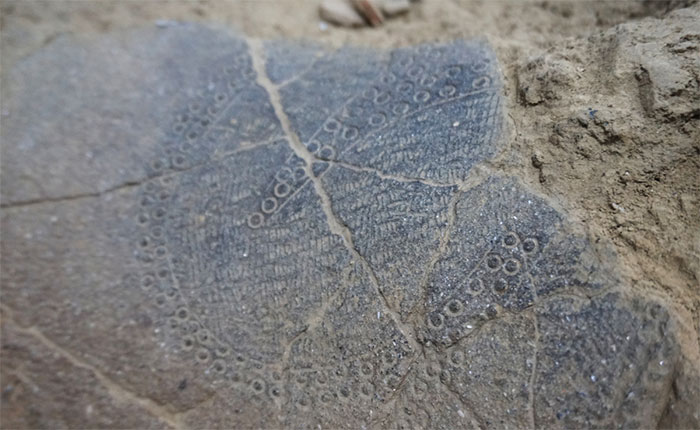
According to archaeologists, ancient people used naturally occurring tubes to impress circular patterns on the graves, reflecting both an aesthetic sense and the status of the deceased.

The burial jars come in several shapes: spherical, cylindrical, egg-shaped and vase-shaped. Some jars have no lid, while others are covered with lids shaped like food covers, basins or truncated cones...
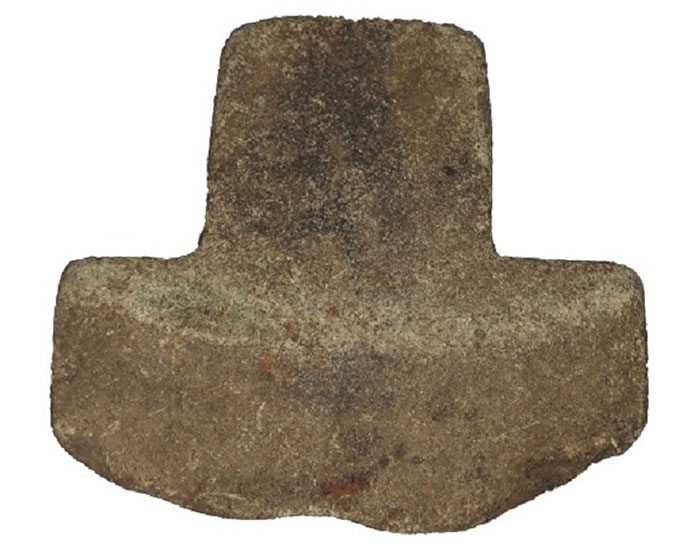
A stone axe was among the grave goods. The graves also commonly contained grinding slabs, pounding slabs, pestles for crushing the shells of seeds and nuts, and pottery.
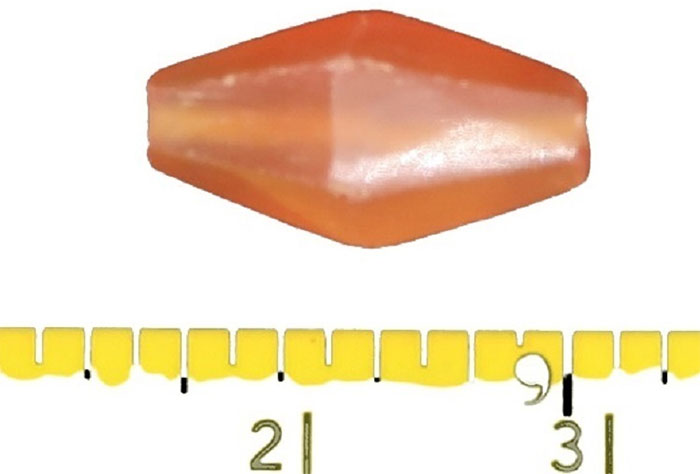
A piece of agate jewelry from a burial at Nước Trong reservoir. Agate is the most common variety of chalcedony, a form of quartz, and has been exploited by humans for thousands of years BCE.
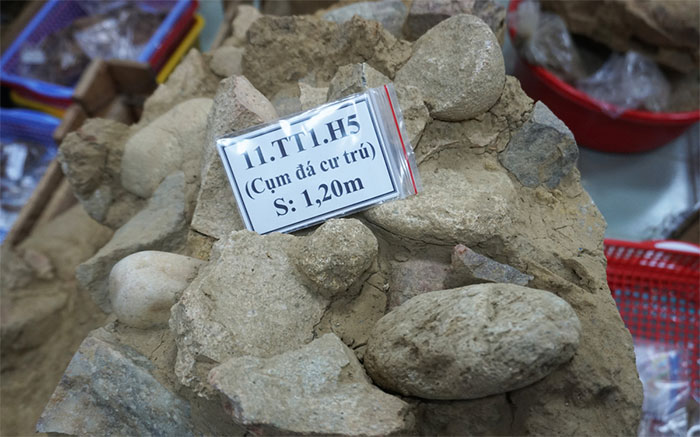
A cluster of stones once used as farming tools by the Sa Huỳnh people at Nước Trong reservoir. The Sa Huỳnh culture (2,000-3,000 years ago) is one of Vietnam's three ancient civilizations. It was first discovered in 1909 near An Khê lagoon (in the former Đức Phổ town). Later studies concluded that the Sa Huỳnh cultural sphere stretched across central Vietnam, with Quảng Ngãi and Quảng Nam (now part of Đà Nẵng city) as its core. The Quảng Ngãi Provincial People's Committee asked the culture sector and scientists to continue studying and processing the remaining artifacts from Nước Trong reservoir and to come up with a plan to display the restored jar burials to promote the value of this heritage.
Second ancient bronze drum discovered in Quảng Ninh, Vietnam
A family in Quảng Ninh, northeastern Vietnam, unearthed a 14th–15th-century bronze drum buried over 1 m deep while building an embankment.

9,000-year-old grave of a young female hunter could rewrite prehistory
A 9,000-year-old grave in Peru holds a woman aged 17-19, buried with the stone tools she carried on her hunts.

Stunning discovery behind secret doors inside Egypt's Great Pyramid
Two secret "doors" inside the Great Pyramid of Giza may conceal a hidden chamber of the pharaoh Khufu, but their true purpose remains a mystery.

Oldest evidence of mammals feeding on dinosaurs found on Mamenchisaurus fossil
Tooth marks on a 160-million-year-old Mamenchisaurus neck rib from China are the oldest known evidence of mammals feeding on dinosaurs.
Rhinoceros sinensis fossils found near Rục community in Vietnam
Two Rục men found three Rhinoceros sinensis fossils, 30,000 to 50,000 years old, in a cave in Phong Nha-Kẻ Bàng National Park, Vietnam.
Prehistoric human remains unearthed in Southeast Asia's largest volcanic cave system
Archaeologists have uncovered dozens of ancient human remains in Vietnam's Chư Bluk volcanic caves, the largest volcanic cave system in Southeast Asia.