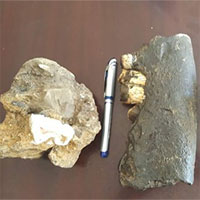
3 ancient mammal species that appeared after the dinosaurs died out
Researchers at the University of Colorado Museum of Natural History in Boulder, Colorado, examined the teeth and lower jaws of 29 archaic hoofed mammals, known as condylarths, from early Paleocene deposits in Wyoming's Great Divide Basin.
Using phylogenetic methods, the authors identified anatomical differences between the species and worked out how they were related to one another and to other Paleocene species in North America. In the process, the scientists identified three previously unknown archaic mammals among the specimens, which they named Miniconus jeanninae, Conacodon hettingeri and Beornus honeyi.
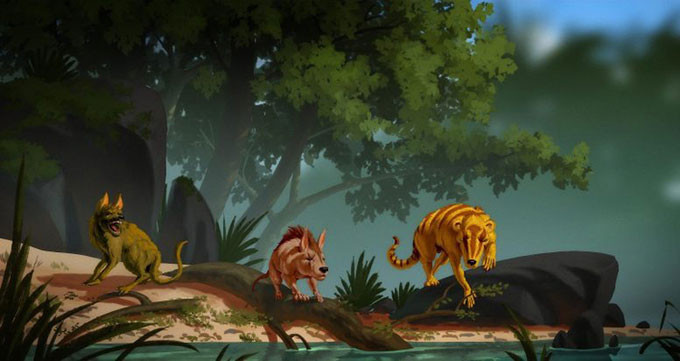
Conacodon hettingeri, Miniconus jeanninae and Beornus honeyi (left to right). (Photo: Banana Art Studio)
All of them belong to the periptychids, an extinct family of placental mammals. The largest of the three, Beornus honeyi, named after Beorn, a character in J.R.R. Tolkien's "The Hobbit, or There and Back Again," was about the size of a modern house cat — considerably larger than the earliest mammals that lived alongside dinosaurs at the end of the Cretaceous period.
According to the researchers, mammals began evolving rapidly after the dinosaurs died out.
"When the dinosaurs went extinct, access to food and other environmental resources allowed mammals to evolve rapidly, diversifying in anatomy and increasing in body size," lead author Madelaine Atteberry of the Department of Geological Sciences at the University of Colorado said in a statement.
"They clearly seized the opportunity, as we can see from the diversity of new mammal species that appeared within a relatively short time after the mass extinction," she added.
The new species differ from other condylarths in the structure of their teeth: they have distinctive "inflated" cheek teeth and unusually prominent vertical enamel ridges. The researchers believe the animals were omnivores whose teeth allowed them to efficiently grind both animal and plant food, although the authors do not rule out that plants made up the bulk of their diet.
Atteberry said: "Previous research suggested that mammal diversity in western North America was relatively low during the first few hundred thousand years after the extinction of the dinosaurs, but the discovery of three new species in the Great Divide Basin points to rapid diversification."
The authors note that the periptychid condylarths they studied make up only a small fraction of the more than 420 mammal fossils found in the Great Divide Basin, and suggest that descriptions of several more new Paleocene mammal species will follow in the near future.
Bizarre ancient tomb with stone statues nearly 10m tall in Turkey
Mount Nemrut, one of Turkey's most famous archaeological sites, is strewn with toppled colossal statues that lend it an air of mystery.
Australia's largest pterosaur discovered, with a wingspan of up to 7 meters
A fossil over 100 million years old from Queensland reveals a new giant pterosaur species with an estimated wingspan of up to 7 m.
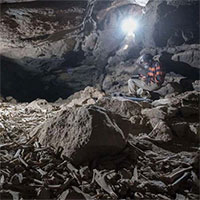
Cave packed with bones hoarded by hyenas for thousands of years, including prehistoric human remains
Researchers believe a huge pile of bones in a Saudi Arabian lava tube was dragged there by striped hyenas over thousands of years.
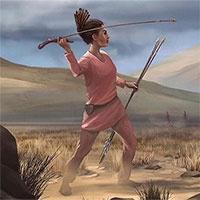
9,000-year-old grave of a young female hunter could rewrite prehistory
A 9,000-year-old grave in Peru holds a woman aged 17-19, buried with the stone tools she carried on her hunts.

Stunning discovery behind secret doors inside Egypt's Great Pyramid
Two secret "doors" inside the Great Pyramid of Giza may conceal a hidden chamber of the pharaoh Khufu, but their true purpose remains a mystery.
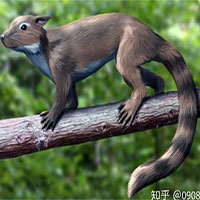
Oldest evidence of mammals feeding on dinosaurs found on Mamenchisaurus fossil
Tooth marks on a 160-million-year-old Mamenchisaurus neck rib from China are the oldest known evidence of mammals feeding on dinosaurs.